-
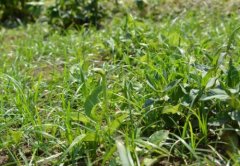
Detailed Guide to Growing Pinellia ternata: Planting Methods and Difficulty Analysis
The tubers of Pinellia ternata are the source of the Chinese medicine "Banxia" (Pinellia ternata). Because it is toxic when used raw, it is mostly used only after processing. This image is taken from the Traditional Chinese version of Wikipedia and is not a specimen I grew myself. The better-known relative of Pinellia ternata is generally the plant commonly known as "plowshare grass," Typhonium divaricatum (Typhonium blumei).
-

What are the other names of processed Pinellia tuber (Fa Banxia), which can dry dampness and transform phlegm, and what is its price per jin?
Processed Pinellia tuber (Fa Banxia) is commonly found in China's Sichuan, Jiangsu, Hubei, Anhui and other places, generally harvested and marketed in summer and autumn, and is a common Chinese medicinal material. The skin color of processed Pinellia tuber is pale yellowish-white, yellow or brownish-yellow, and its texture is relatively crisp. For cough and asthma, excessive phlegm, dizziness
-
How to Propagate Pinellia ternata? A Detailed Guide to Common Propagation Methods
Pinellia ternata, also known as Diwen, is a medicinal herb with effects of drying dampness and resolving phlegm, descending adverse qi and stopping vomiting, and reducing boils and swellings when used fresh. It is cultivated in many regions, so how is Pinellia ternata propagated? 1. Tuber propagation: After Pinellia ternata has been cultivated for 2-3 years, the underground tubers can be dug up after the seedlings wither in June, August, and October each year. Select small tubers with a transverse diameter of 0.5-1 cm that are robust and free of pests and diseases for use as seed. Mix the seed tubers with fine sandy soil of moderate moisture, store them in a ventilated and cool place, and take them out for planting in winter of the same year or spring of the following year. Spring planting is preferable; autumn and winter planting yields low output. Spring planting should be done early rather than late. In the warm Jiangnan region, drilling in rows can be done in mid-December on finely raked and leveled beds. With a row spacing of 12-15 cm and a plant spacing of 5-10 cm, open furrows about 10 cm wide and about 5 cm deep, and arrange two staggered rows in each furrow, placing the buds upward in the furrow. After planting, apply a layer of mixed fertilizer soil on top (made by evenly mixing decomposed compost and barnyard manure with human and livestock manure, burnt soil ash, etc.). The dosage is about 2000 kg per mu. Then, lift the furrow soil to cover it, about 15-7 cm thick. About 100 kg of seed tubers are needed per mu. Properly dense planting of Pinellia ternata results in uniform seedling growth and high yield. If too dense, the seedlings grow weakly and weeding is difficult; if too sparse, there are few seedlings and many weeds, and the yield is low. The covering soil should also be moderate. If too thick, emergence is difficult, and although the bulbils will be large in the future, they often form in the soil and are not easy to harvest; if too thin, the seed tubers are prone to shrinking and cannot germinate. After planting, if dry weather occurs, water promptly and always keep the soil moist. <p style="text-indent:2em;">2. Bulbil propagation</p> <p style="text-indent:2em;">Each stem and leaf of Pinellia ternata bears 1 bulbil. The quantity is sufficient, germination is reliable, and the maturity period is early, making it the main propagation material. In summer and autumn, when the old leaves are about to wither, the bulbils have matured and can be collected for propagation. Dig holes and sow at a row spacing and plant spacing of 10*8 cm, planting 2-3 grains per hole. They can also be propagated by covering with soil in place, that is, each time a batch of seedlings withers, cover with soil once, to the extent that the bulbils are not exposed. At the same time, apply an appropriate amount of mixed fertilizer. This can not only promote the germination and growth of bulbils, but also add fertilizer to the mother tubers, achieving two goals at once and helping increase yield.</p> <p style="text-align: center;"></p> <p style="text-indent:2em;">3. Seed propagation</p> <p style="text-indent:2em;">Pinellia ternata over 2 years old can bloom and bear fruit successively from early summer to autumn and winter. When the spathe turns yellow and droops, collect the seeds and store them in wet sand. In early to mid-March to April of the following year, drill shallow furrows on the seedbed at a row spacing of 5-7 cm, sow the seeds, cover with 1 cm thick fine soil after sowing, and cover with grass to keep warm and moist. Seedlings can emerge in about half a month. However, the emergence rate is relatively low, so it is generally not used in production.</p>
-
How to Plant Pinellia? These Planting Secrets You Need to Know
Summary Pinellia is generally sown in spring from February to April. A hotbed can be used to sprout the seed tubers, with the sprouting temperature kept at around 20°C. When the bud sheaths turn white, transplant them. Before transplanting, the soil needs to be watered thoroughly, then the seed tubers with buds are transplanted into the plowed soil.
-
Key Technical Points and Experience Summary for Growing Pinellia ternata (Drought Pinellia)
Abstract Site selection: Choose fertile, loose, well-drained sandy soil; it can be planted on gentle slopes, flat land, or in orchards. Propagation methods: corms and bulbils. Management: Apply topdressing in time, do a good job of drainage and irrigation, earthing up, and flower bud removal. Pests and diseases: Prevent and control corm rot, leaf curl disease,
-
Pinellia Planting Time, Growing Environment, and High-Yield Cultivation Techniques
Everything is difficult at the beginning, and a good beginning is half the battle. This is roughly true for anything, and the most important thing when planting Pinellia is to choose a good planting time for it, so as to lay a solid foundation for the future Pinellia planting process.
-
Detailed Explanation of Key Points for Planting and Cultivating Dry Pinellia
Dry Pinellia is what we usually call Pinellia, and the existence of this term is mainly to distinguish it from water Pinellia. The planting of Pinellia and the planting of general medicinal herbs are largely similar overall, but the details are what determine success or failure, so when learning
-
What are the control methods for Pinellia tuber rot?
Pinellia tuber rot causes huge losses to Pinellia production, so we must do a good job of preventing and controlling Pinellia tuber rot to ensure the production efficiency of Pinellia. What are the symptoms and characteristics of Pinellia tuber rot? Let's find out together below.
-
Control Methods for the Three Common Diseases of Pinellia
The three common diseases of Pinellia are: tuber rot, viral disease (leaf-curling disease), and damping-off (leaf-scald disease). These three diseases severely affect the planting returns of Pinellia, so how do these three diseases form? How should they be controlled? Below we will
-
How to cultivate Pinellia ternata for high yield? A detailed explanation of the key planting techniques
Just from the name Pinellia ternata, it is hard for us to know what it is. In fact, it is a fairly common traditional Chinese medicine. There are many kinds of traditional Chinese medicine in our country, and it is quite normal that we have never even heard of many of them. But for growers, if they want
条件筛选