-

What Is the Price of Wild Chukar Partridge? Protected Animal Status, Differences from Francolin, and Nutritional Value
The chukar partridge, also known as the Dora chicken, red-legged chicken, cackling chicken, and American francolin, feeds on the tender buds and leaves of herbaceous plants and shrubs, berries, seeds, moss, lichen, and insects. So how much does a wild chukar partridge cost? Is it a protected animal? What are the ways to cook it? From
-
How much does a snowcock cost per bird? Medicinal value and nutritious ways to eat it explained
There are 5 species of snowcock in total, and they are the highest-distributed partridge in the world, with very high nutritional value and medicinal value. So how much does it cost per bird? What medicinal value does it have? How is it eaten for the most nutrition? It is reported that the current market price of snowcock is 80 to 100 yuan per bird. One laborer can raise and manage 2000 birds, and 3 batches can be raised in 1 year, so its economic benefit is very considerable. One lao
-
How much does a Partridge chicken cost per bird or per jin? What is the difference from a free-range chicken?
The Partridge chicken is a native Chinese chicken breed, originating from Wenshang County, Shandong Province. It is a dual-purpose breed for both eggs and meat. So how much does it cost per bird (per jin), and what is the difference from a free-range chicken? From Uncle Wang, a Partridge chicken farmer in Wenshang County, we learned that,. Partridge chickens fall into three categories: the meaty ones with thick legs weighing over 5 jin sell for 7 yuan per jin; those kept mainly for laying eggs and weighing under 3 jin have no buyers; the free-range type is the most expensive, generally yellow Partridge chickens at wholesale prices of 15 to 16 yuan per jin, because Partridge chickens never grow very large, and a free-range chicken generally costs 50 yuan. <p style="text-align:center"></p> <p style="text-indent:2em;"><span style="color:#FF0000">What is the difference between a Partridge chicken and a free-range chicken?</span></p> <p style="text-indent:2em;">The grass chicken, also called free-range chicken or native chicken, consists mainly of sexed cockerels from layer breeds, local crossbred laying hens, and occasionally crosses between Sanhuang chickens and local native breeds; compared with fast-growing broilers, it has a long growth period, grows slowly, has good meat quality and is easy to raise.</p> <p style="text-indent:2em;">The Partridge chicken is a dual-purpose egg-and-meat breed originally from the United States. It has an oval, large body and a single comb. In China, the Partridge chicken is called barred plumage, with black-and-white alternating feathers and stripes of uniform width. It lays many eggs, 180 to 200 eggs per year, with eggs weighing 50 to 60 grams and reddish-brown shells. The Partridge chicken has excellent meat quality, fragrant, tender and fresh, and is especially suitable for making soup. Its nutritional value is high: the meat contains up to 21.7% crude protein, contains eleven amino acids essential to the human body, glutamic acid as high as 3.58%, and vitamin A and E content 3 to 5 times higher than that of meat-type broilers.</p> <p style="text-indent:2em;"><span style="color:#FF0000">Appendix: Selecting Partridge free-range eggs</span></p> <p style="text-indent:2em;">1. Partridge free-range eggs have a long laying cycle; the Partridge chicken is a rare poultry breed, and it lays only one Partridge free-range egg every 2-3 days, while ordinary chickens lay one egg a day.</p> <p style="text-indent:2em;">2. The nutritional value of Partridge free-range eggs is high, still a little higher than that of ordinary free-range eggs; the yolks of Partridge chicken eggs are rounder and thicker, and the whites are glossy and thick. The yolks contain more lecithin, biological protein, vitamins and so on. They are low in cholesterol and more suitable for special groups such as pregnant women, infants and young children, children and the elderly.</p> <p style="text-indent:2em;">3. When selecting, Partridge free-range eggs are generally smaller than ordinary eggs, with whiter shells, and the whites are thicker than those of ordinary eggs. The yolk is yellow, while that of ordinary eggs is somewhat reddish</p>
-
How to tell a hornet from a honeybee, and how to reduce swelling after a hornet sting?
The hornet, scientific name "wasp", also called "horse bee" or "yellow wasp". It has a large body and long body with strong toxicity, and is a holometabolous animal, going through four stages in its life: egg, larva, pupa, adult, and the body appearance differs at each stage. The female wasp has a long, thick stinger at the end of its tail
-
Orchid Fables, Part One: Savoring the Profound Lessons in the Stories
Yuesha Yi Hybrid Orchid Company selected some orchids of excellent appearance and took them to a master for appraisal. The master glanced at them. "Hybrids, right?" "Yes," said the hybrid company. "Hybrids are just like that, neither fish nor fowl," said the master! After hearing this, the hybrid company felt very forlorn, so it planted those varieties back in the mountains...
-
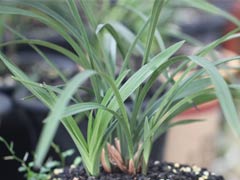
How to grow orchids? A collection of practical care experience, part one
Many beginners don't know how to grow orchids. An experienced grower has put together a collection of orchid-growing experience in three parts, each summarizing the key points of orchid care from a different angle, very suitable for beginner growers....
-
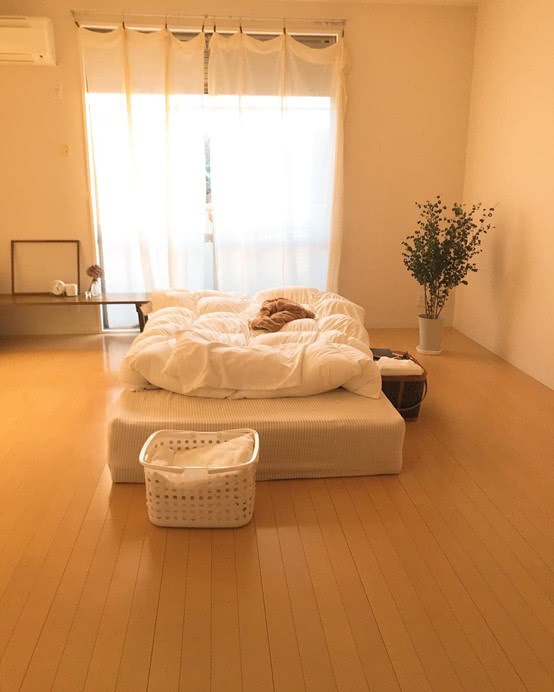
A look inside a 10 sq m Japanese girl's rental apartment, where her whole life runs on just one basket
What Xiaolu wants to share with you today is a 10 sq m Japanese girl's small rental home. While others are still competing over buying power, she is like a breath of fresh air, and her small home contains almost nothing but these things. She advocates minimalism, owning only...
-
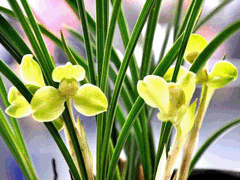
Practical Tips for Preventing Stem Rot, Part One of the Series
One of the Best Tips for Preventing Stem Rot
-
Appreciation of Cymbidium goeringii Plum-petal and Narcissus-petal Varieties (Part One): The Flower That Waits for You
The Flower That Waits for You: Appreciation of Cymbidium goeringii Plum-petal and Narcissus-petal Varieties (Part One)
-
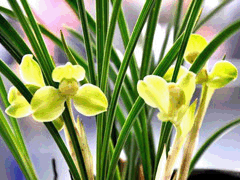
An Informal Discussion on Wild-Collected Orchids, Part One: Getting to Know Wild-Collected Orchids
An Informal Discussion on Wild-Collected Orchids, Part One
条件筛选