How to grow orchids? A collection of practical care experience, part one
Many beginners don't know how to grow orchids. An experienced grower has put together a collection of orchid-growing experience in three parts, each summarizing the key points of orchid care from a different angle, very suitable for beginner growers.
"No intentional plagiarism, purely for self-study. Thanks to Mi Lan and Xiaozhi Orchid Garden."
I. General Principles
If an orchid grows poorly, there must be a problem with the environment, the planting method or the management, so you need to understand the nature of orchids, find the problem and improve it.
Wei Chang's views on the interrelationships of light, water, fertilizer and planting materials for orchids are as follows:
Growers often complain that the roots grow poorly and blame the planting medium, fertilizer and watering, but in fact the root cause is still not understanding the nature of orchids. To get good roots, light is essential. Light is the driving force behind root development. The stronger the light, the more water evaporates from the leaf surface, and the more nutrients are consumed, prompting root development so as to increase water and nutrient uptake.
This is just like people: if you exercise a lot, you also eat and drink a lot. As long as nutrition keeps up and you eat well, drink well and sleep well, it's hard not to be strong and healthy. If a person sits in an office all day, enjoys air conditioning, rides a car everywhere, has everything done for them, eats delicacies from land and sea, and never exercises, then despite being big they have plenty of ailments; conversely, if they only do heavy physical labor and intense exercise while nutrition doesn't keep up, not eating or drinking enough, it's also hard to have a strong body.
All things in the world are connected; once you understand one thing, you understand a hundred. Balance is the true way. Once you grasp this principle, it isn't hard to work out the management method best suited to your own environment. If your fertilizer is on the rich side, then increase the light accordingly; if the planting medium is on the fine side and holds water strongly, then also increase the light accordingly; conversely, if the medium is coarse and on the lean side, reduce the light appropriately, and it's fine to supply a little less water too; if the medium is coarse and the ambient light is strong, then increase both the amount of fertilizer and the amount of water, to avoid the orchid leaves becoming thin and yellowing from excessive consumption... In nature, for the same plant species, shade-grown roots are few while sun-grown roots are vigorous; this is almost an ironclad rule. Don't believe it? Just find a patch of lawn and observe. Even if you grow orchids in field soil, someone who understands the principle can still grow them well. Planting medium can be found anywhere; the key lies in management.
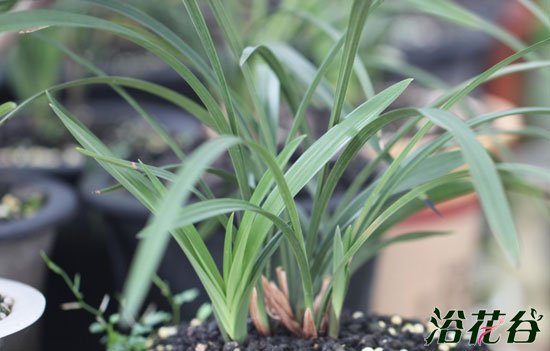
After reading the above material several times, you will discover where your own orchid-growing problems lie. My orchid-growing environment is a balcony, using an open style with no humidification. Under strong light and high temperature, the transpiration of the orchids is very vigorous. Although I leave 1.5 cm of water at the bottom of the cup and water thoroughly at dusk, hoping to replenish the water the orchids lose, the orchids still grow slowly and the shoots cannot all develop. I have already increased the fertilizer, but the orchids still grow very slowly. This shows that the water replenishment for the orchids is insufficient, so on sunny days (temperature above 33°C), I now water 2-3 times a day. After changing the watering, the new shoots grow faster and new roots keep emerging. This shows that the watering management method is correct. So watering and fertilizing must be decided by the orchids' needs, and to judge the orchids' needs, you mainly use your eyes to observe the orchids' growth and make a comprehensive judgment.
You need to identify the differences in the environment and adopt different growing and management methods. Actually, orchids are very rigid things: as long as the conditions for survival and growth are met, orchids are easy to grow; if the above conditions cannot be met, orchids will fail to grow, fail to bloom, or sicken and die. So when the environment differs, the growing and management methods differ. Here are two examples to illustrate:
1. Planting material and method. Senior Wang Lizhang often says that the material used for orchids must be loose, breathable and free-draining for the orchid roots to grow well. In this setup the environment maintains 85% humidity, and air circulates through the space, carrying stale air out of the pot. With the above conditions, the orchid roots grow white and clean and grow very well. But on an open-space balcony, since there is no humidifier or water wall for cooling, if the material is also loose, breathable and free-draining, the hot, dry air on the balcony will easily enter the pot and steam-scald the orchid roots, causing root rot, and naturally the orchids won't grow well.
2. Use of fertilizer. Senior Wang mentions watering with Huabao diluted 5000 times, but when I fertilize with the above method, in summer I often find coffee-colored fertilizer burn at the leaf tips, the midrib, the leaf center and the edges of the shoot husks. This is because in an environment without humidification, the fertilizer is affected by sunlight, temperature and wind, becoming concentrated and causing fertilizer burn. Of course, Senior Wang mentions that it is best to fertilize between 1 and 3 in the morning, when the temperature is lowest in the day and there is dew so the humidity is relatively high, and to water once more before the sun comes out, which can avoid fertilizer burn. But getting up in the middle of the night to fertilize is really too hard. Think about Senior Wang's 85% humidity and temperature below 28°C - when does my open balcony ever have such conditions? I thought of only after a summer afternoon thunderstorm, or after a typhoon, when the humidity in the air is very high and the temperature is lower. I quickly fertilize, and before the temperature rises the next day, I wash the leaf surfaces once more with water. Using this method, the orchid leaves no longer show fertilizer burn. As for spring and autumn, when the daily high is below 29°C, I fertilize on sunny mornings half an hour after watering.
When learning from others' successful orchid-growing experience, you must understand it comprehensively, not learn it one-sidedly. Everyone's environment is different, so the growing and management methods for orchids differ. Therefore, to learn from others' successful orchid-growing experience, you should comprehensively understand the growing environment, the species, the pots, the planting material, watering, pest control, sterilization... and so on, and use your own orchid-growing experience to improve your orchid growing and management methods. For example, when I saw Senior Zhu Dayong's planting material and method, I had great doubts in my heart: with this kind of material, growing orchids on my balcony would definitely cause root rot. Because over more than 10 years of experience, I have tried many organic materials, and without spraying pesticides and fungicides, none could overcome the problem of root rot. So in the end I had no choice but to use Zhijinshi (orchid stone) and water-absorbing foam to grow them. But looking at Senior Zhu's roots, they were all grown very well. There was a blind spot I couldn't see. Later, Senior Zhu published the treatment method for the planting material, and only then did I realize that my understanding of treating organic materials was insufficient and needed strengthening. The treatment method for the Zhilanbao material is as follows:
1. The Xiantu (immortal soil) I buy is only shipped to me after the seller has found a suitable soil layer.
2. Zhijinshi must be soaked for more than half a month, with two water changes in between.
3. The bark must be bought thick and solid; after sieving it must also be soaked for half a month, with one water change in between.
4. Rinse and dry until half-dry, put into a plastic bag, and sun-expose for half a month.
5. Most crucial, especially for those using plastic pots: do not use very round granules as the bottom layer, as they easily clog the round holes very tightly. The chosen material should hold water even better than Zhijinshi.
6. Because only in this way can the planting medium in the pot dry and moisten in sync. This kind of material is rarely found; I have consulted many orchid growers, and there is almost none of this material in the cities where they live. As for what this material is, figure it out yourself, hahahaha.....
7. This material doesn't cost money to buy, but processing it is very laborious: it must be soaked for more than a month, with many water changes in between. I originally thought of selling some planting medium to make money, but once I really did it, it was not the same as I had imagined. Too tedious - this is the main reason it cannot be mass-produced.
My understanding of the production process of Zhilanbao:
1. Zhijinshi must be soaked in water for more than half a month, with two water changes in between. This is to wash off dust, let it fully absorb water, and eliminate its "fire" (heat); if used directly, the large Zhijinshi granules do not easily absorb water, and later watering will not easily wet them.
2. Buy thick and solid bark; after sieving, soak in water for half a month, with one water change in between. This is to wash off the bark dust and soak out the organic matter in the bark, avoiding the bark later generating high heat from fermentation that damages orchid roots. Soaking the bark in water can also drown the pests and eggs in the bark.
3. Rinse and dry until half-dry, put into a plastic bag, and sun-expose for half a month. This uses the heat generated by the sun to thoroughly kill pests and sterilize the material and to let the material ferment - truly a good method.
4. The fifth is the most crucial, especially for those using plastic pots: do not use very round granules as the bottom layer, as they easily clog the round holes very tightly, causing poor drainage. The bottom-layer material must hold water even better than Zhijinshi. This point is really important: use the most water-absorbing material at the bottom of the pot, so the bottom of the pot is the wettest; because roots have a tendency to grow toward moisture, the roots will grow toward the bottom of the pot, and even when the pot surface is dry, the pot bottom is still not dry, so the orchid roots won't be damaged by dryness, and the crystal (root tip) parts will grow in better condition.
The treatment of organic materials requires rich experience to determine whether the material has fermented completely. Material that has not fermented completely, when exposed to high temperature and high humidity, will have bacteria accelerate decomposition and produce high heat, damaging orchid roots and causing root rot. Therefore, after organic materials are treated, you must also look at whether the environment is dry or humid to match an appropriate proportion of inorganic material. Of course, after planting is finished, you must also sterilize and treat for pests according to the season, and after a year you must look at the orchids' growth to adjust the materials for growing orchids next year. So when learning from others' growing experience, if you only learn one-sidedly about the planting material without learning the material treatment and the subsequent sterilization management, this is also the main reason ordinary people fail at growing orchids - looking only at one part and not paying attention to the whole.
You must adjust the daily management of orchids according to seasonal changes. Orchids originally grow on mountains, in mid- and low-altitude mountain areas, in a ventilated environment with temperatures not exceeding 30°C and humidity of 60-80%. So in the wild, orchids need no care from people and grow well on their own. After orchids come down from the mountain, they face summer temperatures above 30°C, and humidity keeps dropping as temperature rises, so temperature and humidity keep changing through spring, summer, autumn and winter. Therefore only the grower can adjust things to keep dryness and moisture in balance. The water plants, pots, planting materials, fertilizing, sterilization and watering mentioned earlier all differ with environmental changes. So if your orchids currently grow without root rot, without disease and with good growth, it means your orchid-growing technique has matured, and it's best not to make any more changes. If the orchids grow poorly, think carefully about where the problem lies and make adjustments in management:
(1) After buying an orchid, see whether it is a qiyelan (odd-leaf orchid), hualan (flower orchid) or yilan (variegated orchid). Flower orchids or odd-leaf orchids should be placed in a spot with stronger light and good ventilation; variegated orchids should be placed in a spot with weaker light and higher humidity.
(2) Orchids placed in strong light with good ventilation should use pots without holes, and the material should mainly retain moisture; conversely, orchids placed in weak light with high humidity should use pots with holes, and the material should mainly be dry and airy.
(3) If the temperature in a humid environment does not exceed 30°C, you can use organic materials and strengthen sterilization; then, because there are nutrients, the orchids grow well. If the temperature on the balcony exceeds 30°C high heat, you must use inorganic materials for planting, to avoid high-temperature bacteria fermenting the organic matter and causing root rot. When growing in inorganic materials, fertilize lightly and often, and only then will the orchids grow well.
(4) Through the four seasons of spring, summer, autumn and winter, adjust light, watering and fertilizing methods according to seasonal temperature changes, and do not remain unchanging.
(5) There are many kinds of orchids, so you must understand the place of origin of the orchid - its temperature, humidity and sunlight conditions. During cultivation, the closer the environment is to the conditions of the place of origin, the more smoothly the orchid will grow. If you grow orchids on a balcony and a certain kind of orchid dies again and again, it's best not to grow it anymore - unless you change the orchid-growing environment, no matter how you grow it, it won't grow well. (6) The most important thing in balcony orchid growing is maintaining humidity at the roots. If you cannot maintain moist conditions all year round, the roots will be damaged by excessive dryness, causing root rot, and the orchid will get smaller year after year and finally die. So place another orchid pot outside the orchid pot, with a water-absorbing filter cotton in between, and this can improve the insufficient humidity inside the pot. Because the orchid roots have moisture, they grow in good condition, the roots are white and clean and the root tips are intact; then the orchid can absorb water and nutrients and will grow more and more vigorously.
Cultivation and management must follow nature. To grow orchids, first grow the roots. Growing strong, good orchid roots is one of the pursuits of orchid growers everywhere. Orchid roots both absorb nutrients and excrete harmful substances. Orchid root growth has a tendency toward water and air, and has adaptability and variability. More water and more fertilizer make orchid roots thick and short; less water and less fertilizer make orchid roots thin and long. Orchid root growth needs water, and even more needs oxygen, so the orchid pot must go through dry and wet cycles and must not stay constantly wet without drying. Only a natural environment, appropriate fertilizer and water, loose planting medium and enough time can grow strong, good orchid roots. First, simplicity. Although orchid cultivation is broad and profound, it can also be simplified, turning difficulty into ease, from simple to complex to simple - the more you grow, the simpler it becomes. Only simple methods can be effective for the long term. Second, nature. Orchid cultivation must follow nature; only by being natural is there the least interference with the orchids, and the orchids' vigor and resistance are also best. Third, the middle way. Orchid cultivation, like orchid appreciation, must also adhere to the middle way; in management you must not overdo or underdo. Fourth, system. Orchid cultivation is a systematic project; its aspects are interconnected, mutually influencing and interacting, so in management you cannot attend to only one aspect and ignore the others. Fifth, details. Orchid cultivation must pay attention to details; some seemingly inconspicuous details often affect orchid growth and determine the success or failure of orchid cultivation.
You should use the concept of a greenhouse to grow orchids, not build a greenhouse to grow orchids. Orchid growth has certain requirements for temperature, humidity, sunlight intensity and ventilation. If, when cultivating orchids, you exceed their temperature range too much (too hot or too cold), then the orchids will only die or grow poorly. The closer you are to these conditions, the better the orchids will grow and bloom. So you should use the perspective of a greenhouse to transform our orchid-growing environment. First observe what the orchid-growing environment lacks, and supplement whatever is missing, improving the orchid-growing environment at the lowest cost.
Collection of experience:
1. Shanghai, 10th floor, semi-enclosed balcony, mainly plastic pots. Planting medium: bark, Xiantu and Zhijinshi, one third each. The last watering was 4 days ago, and the pot surface is starting to dry. Last night, I used 1200-times abamectin and watered with it as if it were water. After that, I kept an electric fan on the high setting the whole time; this morning I switched it to the low setting but did not turn it off. My takeaway is that the yellow plum rainy season is actually the golden season for orchid growth; don't be afraid of the two rots and dare not water. As long as ventilation is good, water boldly and without worry, and I always water with a showerhead, pouring it right over the top. With plenty of water, the plants can grow happily, sprout and root.
2. Third-floor south-facing balcony. Planting medium: Xiantu 60, Zhijinshi 20, oak bark granules and tree-fern fiber 20, plastic pot. Watering: water according to the weather; when the pot surface is dry, water. Tap water, watered heavily with a shower. When you water, water thoroughly. Fertilizing: place 10-20 granules of Osmocote on the pot surface, and during the growing season apply Huabao No. 2 liquid fertilizer diluted 3000 times once every 10 days.
3. Third-floor balcony, facing southeast, no heating in winter. From 8 a.m. to about 1 p.m. there is 4-5 hours of direct sunlight, and the rest of the time is diffuse light. Sealed plastic-steel glass windows, two intake/exhaust fans inside and out, intake at the upper left, exhaust at the upper right, plus a larger-diameter internal circulation micro-fan running 24 hours a day. Shading paper is stuck on the glass, filtering out about 30-50% of the light. Water directly with tap water, using a showerhead. Watering principle: when the pot surface looks dry, water thoroughly. The excess water flows into a trough, and when it is full, it is poured out. Humidity 40-80%, temperature 4-32°C. Tap water pH 7.4. The vast majority of my spring orchids and cymbidiums are grown here, and I am satisfied with the vernalization and growing environment. Planting medium ratio: Xiantu about 20%, Zhijinshi or fired-clay granules about 20%, peat about 20%, cork bark about 40%.
4. Balcony orchid growing has the drawbacks of limited space and insufficient ventilation. There are two good ways to solve this: 1. Put them on the railing (ventilation). 2. Use a multi-tier flower rack (saves space, the number of tiers can be set according to the degree of ventilation, add small wheels for easy movement). There is only one secret: it must be ventilated. My method is as follows: 1. Grow established plants on top, newly bought plants on the bottom tier. 2. Grow flower orchids on top, variegated orchids and crystal orchids below. 3. Grow strong plants on top, weak plants below. 4. Apply more fertilizer on top, less fertilizer below. 5. When watering, water from top to bottom, watering every tier. Things to note when growing on multiple tiers on a balcony: 1. It must be ventilated, which reduces orchid disease. 2. Avoid the midday sun. 3. Prevent BLS (black leaf streak); separate BLS seedlings and pay attention to pest removal. 4. When watering, don't be afraid that water from the upper pot flows into the lower pot; experience says: no problem. 5. Be careful that your wife hangs clothes to dry above; experience says: don't fear dripping water, fear thick clothes falling and breaking the orchids.