-
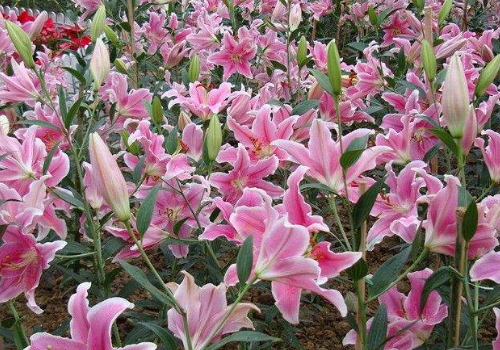
When should you plant Oriental lilies, and how many times do they bloom in a year?
Oriental lily is a plant that many people like and that is fairly common. When should you plant Oriental lilies? How many times do they bloom in a year? When to plant Oriental lilies: autumn, because Oriental lilies are suited to being planted at (15-23 degrees), so I think it should be autumn. Lilies are perennial bulbous plants.
-

High-Yield and High-Efficiency Cultivation Techniques for Export-Oriented White Sesame
China's annual sesame export volume has remained at around 90,000 tons, accounting for 15% of total global exports, giving sesame exports a strong advantage. Since last year, due to strong consumer demand from Japan, South Korea, Europe and the United States, the price of pure white sesame on the international market has gradually risen, with high-quality sesame exceeding 1,000 USD/ton. According to relevant data analysis, the sesame market is stabilizing, and developing export-oriented white sesame production offers considerable benefits. The key high-yield and high-efficiency cultivation techniques are as follows. 1 Site selection: select sites far from industrial and mining enterprises (more than 5 km away)
-
How to efficiently utilize the second crop of Oriental lily flowers
Oriental lily bulbs are generally grown for only one crop abroad, then dug up and discarded. Based on China's national conditions, Chinese lily growers have developed a reuse technique for Oriental lily bulbs, which is now applied in many places. However, because the second-crop flowers produced by reusing Oriental lily bulbs are mostly harvested and marketed from June to August, when the selling price of lily cut flowers is relatively low, the economic benefit is limited. In the past two years, the Gansu Provincial Flower Engineering Technology Research Center, in cooperation with Gansu Lintao County Meilan Flower Company and the Lintao County Seed Farm, has explored a
-
Mountainous Bulb Propagation and Cultivation Techniques for Oriental Lilies
In recent years, both the cut flower production and consumption of lilies in China have grown rapidly, yet the bulbs still depend almost entirely on imports, and bulb self-sufficiency has become a "bottleneck" restricting China's lily cut flower production. Achieving domestic production of high-quality commercial lily bulbs is imperative. Zhejiang Province has diverse landform types, and the temperature differences at different altitudes are highly beneficial for bulb swelling and development and flower bud differentiation in bulbous flowers. Selecting cool mountainous areas in Zhejiang Province for cultivation, carrying out purification and rejuvenation and bulblet propagation of lilies, and solving the long-standing problem of China's inability to achieve self-sufficiency in lily bulbs,
-
Identification and Control of the Oriental Mole Cricket, a Pest of Reishi Mushrooms
The oriental mole cricket (Gryllotalpa orientalis Burmeister) is commonly known as tugou or digou. It belongs to the order Orthoptera, family Gryllotalpidae. 1. Morphology and habits: The adult is 29-31 mm long. The head is conical and dark blackish brown. The pronotum is oval. The forewings are yellowish brown and can extend to the middle of the abdomen; the abdomen is spindle-shaped, blackish brown on the dorsal side and dull yellow on the ventral side, with a pair of relatively long cerci at the tip. The forelegs are specialized as digging legs, and the inner margin of the dorsal side of the hind tibia has 3-4 spines. The nymph resembles the adult in body shape and is gray
-
Production and Cultivation Techniques for Oriental Lily Cut Flowers in East China
Cut flower lilies are a premium type of fresh flower and are currently among the most popular and best-selling cut flowers in the world. The following introduces the production and cultivation techniques for Oriental lily cut flowers in East China. Oriental lilies belong to the subclass Monocotyledoneae, family Liliaceae, genus Lilium, and are perennial herbaceous plants. They prefer a cool, humid climate with ample light, and grow with appropriate shading and ventilation. The optimum growing temperature is 8°C to 25°C. They require loose soil, low salinity, and good water retention and drainage. In East China, such as in Shanghai and other places, summers are hot with strong light, while winters are dry and cold
-
Detailed Explanation of Cultivation Techniques for Oriental Lily Cut Flowers
When it comes to the production of Oriental lily cut flowers, for growers it is both easy and difficult. The easy part is that no matter who it is, anyone growing Oriental lily cut flowers for the first time will get some harvest and will be able to cut flowers; the difficult part is that producing high-quality Oriental lily cut flowers is truly hard. Many growers who are just starting lily cut flower production feel this most keenly. In fact, as long as growers master a few key cultivation techniques, lily cut flower production is not that difficult. Below are several key points for everyone's reference.
-
Characteristics of the new Oriental lily cultivar Yahe
The Oriental lily 'Yahe' (see color photo on the inside back cover) was bred using Oriental lily 'CoAmore' as the female parent and 'Acapulco' as the male parent, through the independently developed patented technology (ZL03153342.6) "Lily Triploid Breeding Method". In 2006, it passed the new variety protection examination and was announced by the Ministry of Agriculture of the People's Republic of China. Variety characteristics: When the bulb of 'Yahe' is 12-14 cm, the plant height is 80-95 cm, the leaves are lanceolate, the number of leaves is 53-61, and the leaf
-
Oriental Seed Industry's Rice Breaks World Records Three Times
Just as we were worrying about national food security, news came from Fujian Oriental Seed Industry Co., Ltd.: using the brand-new specific germplasm resources Donghui 6, Donghui 1728, and Donghui 4886 strong dominant restorer lines, they bred the new super rice varieties II You 6, II You 28, and II You 4886 through combination, achieving a historic breakthrough in which rice yield per mu surpassed the 1,200 kg mark, and in 2004, 2005, and 2006, for three consecutive years, with yields of 1,219.9 kg, 1,229
-
Identification and Control Methods of the Oriental Beetle
The Oriental beetle, also known as the black velvet chafer and the velvet chafer, belongs to the order Coleoptera, family Scarabaeidae. It is widely distributed with a diverse diet, and both adults and larvae can cause damage, harming more than 100 species of plants. Adults feed voraciously on several dozen species of garden plants, including poplar, willow, cherry blossom, white magnolia (Magnolia denudata), purple magnolia (Magnolia liliiflora), goldenrain tree, Chinese parasol tree, ornamental peach, crape myrtle, and photinia. Morphological characteristics: adults are 7 to 9 mm long and 4.5 to 6 mm wide, oval-shaped, narrow at the front and broad at the rear; newly emerged adults are brown, gradually turning dark brown or black, with the body surface
条件筛选