-

Key Technical Points for Intensive Management of Oriental River Prawn in Autumn and Winter
Currently, it is the key season for stocking oriental river prawn in autumn and winter. Doing a good job in substrate, seed stock, bait, and water quality control, and effectively preventing disease and surfacing, are the top priorities for increasing production and income of oriental river prawn by the end of the year. Below, the relevant techniques for intensive culture of oriental river prawn are discussed from five aspects, for the reference of
-
How to Increase Oriental River Prawn Yields in Mixed Shrimp-Crab Ponds
Mixed shrimp-crab culture is the main aquaculture model promoted under the fishery science and technology outreach program in Xiangcheng District. In recent years, while river crab prices have repeatedly been hit by the market, oriental river prawn prices have remained relatively firm. Therefore, while ensuring river crab growth, tapping the production potential of oriental river prawn has become a way to achieve
-
A Detailed Guide to Freshwater Oriental River Prawn Farming Techniques and Postlarval Breeding Techniques
The oriental river prawn is a type of freshwater prawn, and its nutritional value is very high. The freshwater oriental river prawn grows very quickly, and individuals are larger than ordinary prawns. The freshwater oriental river prawn reproduces quickly and has strong vitality. The freshwater oriental river prawn mainly lives in the freshwater lakes of China.
-
What to Do About Herbicide Damage in Oriental Melon? Remedial and Preventive Methods
The oriental melon is a common fruit, currently widely cultivated throughout the country, and during the growing period of oriental melons, pests and diseases may occur, requiring the use of pesticides. If pesticides are used improperly, herbicide damage may occur. So, what to do about herbicide damage in oriental melon? 1. What to do about herbicide damage in oriental melon
-
Mango Pests and Diseases: Control Methods for the Oriental Fruit Fly
(1) Damage Also known as the oriental fruit fly, mango fruit fly, fruit maggot, yellow fly, etc. Adults lay eggs inside the skin of nearly ripe fruit; after hatching, the larvae feed on the flesh, causing fruit splitting, rotting and dropping. The surface of infested fruit remains intact, but on close inspection there are pin holes; when pressed by hand, juice oozes out, and when cut open
-
What are the control methods for the Oriental fruit fly (Bactrocera dorsalis)?
[Morphological characteristics] The adult is 6-8 mm long with a wingspan of 16 mm, and the whole body is alternately dark black and yellow. The thorax has a total of 11 pairs of bristles, mostly yellowish-brown, including 2 pairs of scapular bristles, 2 pairs of dorsocentral bristles, 1 pair of presutural bristles, 2 pairs of postsutural bristles, 1 pair of mesopleural bristles, 1 pair of pteropleural bristles, 1 pair of prescutellar bristles, and 1 pair of scutellar bristles. The abdomen is oval, with 4 segments in males and 5 segments in females. The ovipositor is well developed, but its length is less than half of the abdomen, and the narrow posterior portion is shorter than the fifth abdominal segment. The egg is spindle-shaped, slightly pointed at one end, slightly curved, about 1 mm long and about 0.1 mm wide, milky white. Larva: the first-instar larva is 1.2-1.3 mm long, the second instar is 2.5-5.8 mm, and the third instar is 7.0-11 mm. The first-instar larva is semi-transparent, the second and third instars are milky white, and the mature larva after the third instar is orange-yellow. The body is conical, small and pointed at the front end, the mouth hooks are black, and the button-shaped structure on the inner side of the spiracular plate is relatively large and obvious. The pupa is oval, about 5 mm long and about 2.5 mm wide, light yellow.
-
Introduction to the Cultivation Techniques and Production Areas of the Horned Melon (Oriental Melon)
Summary Cultivation methods: can be cultivated in early spring in large or medium plastic tunnels or with plastic mulch. Fertilization: apply no less than 3000 kg of organic fertilizer per mu, with emphasis on nitrogen, phosphorus, potassium and medium and trace elements. Greenhouse cultivation: maintain about 2000 plants per mu, set fruit above the 4-5 leaf stage, and increase the day-night temperature difference during the fruit-setting period.
-
A Detailed Guide to Growing and Eating Horned Melon (Oriental Melon) Seeds
Horned melon, many people may not know what this is when they do not see the word "melon". In fact, it is also a type of melon, with pale green skin and bright yellow flesh, and like watermelon it is a great way to cool down in summer. This fruit
-
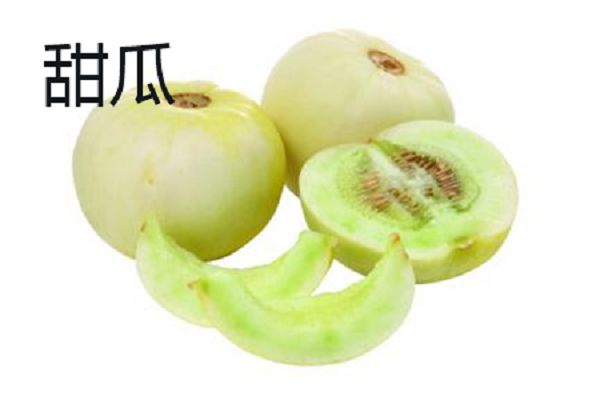
What is the difference between oriental melon and muskmelon? A quick guide to telling them apart
The difference between oriental melon and muskmelon
-
Craft Honey Helps the Oriental Honey Buzzard Spend the Winter with Ease
Craft Honey That Lets the Oriental Honey Buzzard Spend the Winter with Ease
条件筛选