-
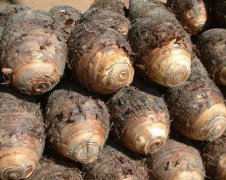
Organic rice costs too much, so is organic taro cultivation technology and yield better?
Do you know whether it is better to grow organic rice or organic taro? In fact, the organic rice market is now saturated. If you grow organic rice, you will not make much money. It would be better to try growing organic taro, which can bring high returns and is easier than growing
-

Detailed Explanation of Key Techniques for Growing Organic Vegetables
Organic Vegetable Growing Techniques
-

Detailed Explanation of Organic Rice Cultivation Methods and Key Technical Points
Organic Rice Cultivation Methods
-
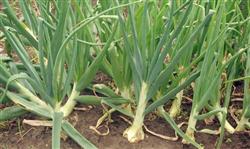
How should fertilizer be applied when growing organic onions?
How should fertilizer be applied when growing organic onions? Please give guidance. For organic onions, you can refer to the following fertilization methods: Base fertilizer: organic base fertilizer combined with 15 kg of urea, 10 kg of diammonium, and 7 kg of potassium fertilizer, applied all at once. Top dressing: apply in three rounds. First round: two weeks after transplanting, apply 6 kg of nitrogen fertilizer as top dressing, ...
-
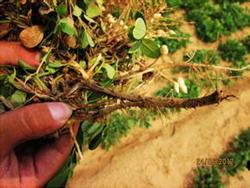
What are the benefits of applying organic fertilizer to peanuts for their growth and development?
What is peanut stem rot? Peanut stem rot is also called peanut stem rot disease or foot rot. Before the seedlings emerge, the affected cotyledons turn dark brown. The pathogen invades the base of the plant stem along the cotyledon stalk, first producing lesions that ooze yellow fluid, which later turn brown. As the lesions develop, they cause the tissue at the stem base to rot. When the lesions expand and encircle the stem base, the aboveground part wilts...
-
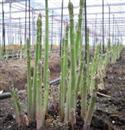
How should pesticides be used for pest and disease control in organic asparagus?
(1) Pests and diseases Common asparagus diseases include damping-off, stem blight and anthracnose; the main insect pests are beet armyworm, cabbage moth, cotton bollworm, corn borer, aphids, planthoppers, and soil-dwelling pests such as cutworms and white grubs. (2) Control methods In the production process, starting from the entire ecosystem of crops, pests, diseases and weeds...
-
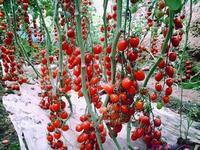
Key Points of Organic Ecological Soilless Cultivation Techniques for Tomatoes
High-yield Cultivation of Small Tomatoes - I. Requirements for Environmental Conditions - Small tomatoes have characteristics such as being warmth-loving, light-loving, fertilizer-tolerant, and semi-drought-tolerant. In spring and autumn, when the climate is warm, the light is relatively strong, and there is little rain, they are easy to cultivate and also produce high yields. - 1. Temperature requirements: The seed germination temperature is 28-30°C, the minimum germination temperature is 12°C, and the suitable daytime temperature for seedlings...
-

Detailed Explanation of the Key Technical Points for Growing Organic Chinese Cabbage
Organic Chinese Cabbage Growing Techniques
-

Organic active high-selenium garlic successfully cultivated in Linyi, Shandong
Selenium content is 6673 times that of ordinary garlic. Linyi City has cultivated organic active high-selenium garlic with an extremely high selenium content. On July 17, the Provincial Department of Science and Technology organized experts to appraise the research and development results of Linyi high-selenium garlic cultivation and biological products, and determined that the technology is the first of its kind in China. According to experts, the selenium content of high-selenium garlic reaches 66.73mg/kg, which is 6673 times that of ordinary garlic. According to the person in charge of Shandong Xingfa Agricultural Technology Co., Ltd., the developer of this technology, organic active high-selenium garlic is produced using special selenium fertilizer,
-
Are Organic Vegetables Really Safe? A Proper Understanding of Organic Vegetables
I believe everyone, every time they go to the vegetable market to buy vegetables, asks those vegetable vendors whether the vegetables they sell are organic vegetables? In fact, most of them do not know what...
条件筛选