-
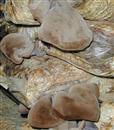
Detailed Explanation of Wood Ear Mushroom Inoculation Techniques: Master the Key Operational Steps
There are many raw materials suitable for bag cultivation of Auricularia polytricha (hairy wood ear), such as mixed wood sawdust, cottonseed hulls, broken cottonseed, bagasse, mulberry branches, cassava stalks, rice straw, soybean stalks, peanut vines, and so on. Except for mixed wood sawdust, cottonseed hulls, broken cottonseed, and bagasse, the remaining raw materials must be crushed into powder before they can be used for production. The bag cultivation process for Auricularia polytricha is similar to that for golden needle mushroom (Flammulina velutipes) bags...
-
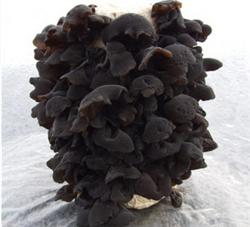
Detailed Explanation of Black Fungus (Wood Ear Mushroom) Spawn Production Techniques and Key Operation Points
After 2-3 flushes of fruiting bodies are harvested in hanging-bag cultivation of black fungus, the bags no longer produce mushrooms due to nutrient depletion and lack of moisture inside the bags, and are generally discarded as waste. In practice, we adopt a sand-covering treatment, and through multiple trials it has been shown that 3-4 more flushes can still be harvested. The specific method is as follows: remove the spawn bags, soak the spawn substrate in nutrient solution for one day to allow it to absorb sufficient water (nutrient...
-
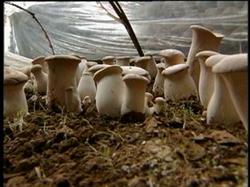
Key Operation Points Before Fruiting in King Oyster Mushroom Cultivation with Biogas Residue
Using biogas residue to cultivate king oyster mushroom (Pleurotus eryngii) offers advantages such as developing new resources and saving costs, generally reducing production costs by about 30%. The pre-fruiting operation techniques for cultivating king oyster mushroom with biogas residue are introduced as follows: 1. Biogas residue treatment: Spread the biogas residue drawn from farm household biogas digesters on flat ground, let it aerate, and sun-dry it until the moisture content...
-
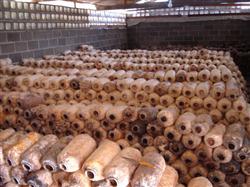
Detailed Explanation of the Technical Operating Procedures for King Oyster Mushroom Cultivation
The king oyster mushroom (Pleurotus eryngii) is a large fleshy agaric that grows in subtropical regions. Its mushroom flesh is thick, and its stipe tissue is fine, firm, snowy white and thick, with an excellent taste. It is a type of edible mushroom that sells well in domestic and international markets. Its cultivation techniques are briefly introduced as follows: 1. Culture material formulas 1. Cottonseed hulls 80%, bran 18%, gypsum 2%, an appropriate amount of lime; ...
-

Detailed explanation of the production process and technical operations at each stage for the nameko mushroom
Production process: ingredient mixing - sterilization - tray filling - cooling and inoculation - mycelial growth - summering - mushroom management - harvesting and processing - flush transition - insulation for fruiting. 1. Ingredient mixing: the most critical requirement for ingredient mixing is to mix raw materials of different compositions evenly, mix dry and wet materials evenly, so that the nutritional ratio of each tray of substrate is uniform, with a water content of 60%. 2. Sterilization: there are mainly two sterilization methods for nameko mushroom substrate: bag steaming and loose material steaming. The vast majority of growers in all areas of the county still follow these two methods, but each has its advantages and disadvantages, and attention should be paid when choosing.
-
Ideas and Countermeasures for Promoting the Industrialized Operation of Edible Fungi
Fan Shenhua, Director of the Agriculture Bureau of Bazhong City, Sichuan Province, led a municipal bureau research team on a special investigation of edible fungi in Tongjiang County. Over two days, the research team successively visited 5 villages and 12 she in Tiechang Township, Nuosuihe Town, and Nuojiang Town of Tongjiang County, visited 27 large planting households, 2 professional cooperatives, the processing workshops of leading enterprises, and the operating market, and held discussions with large households, members of professional cooperatives, grassroots cadres, and leading enterprises to jointly explore the industrialized operation of edible fungi. I. Development Status The edible fungi products of Tongjiang mainly consist of silver ear fungus (white fungus), wood ear fungus, and shiitake mushrooms, which are produced and cultivated in large quantities, along with small quantities of oyster mushrooms, button mushrooms, enoki mushrooms, shimeji mushrooms, straw mushrooms, Gastrodia elata, reishi mushrooms, and more than 10 types of wild fungi.
-
Key Technical Points for the Early-Stage Operation of Edible Mushroom Growing Substrate
Preparing a good edible mushroom growing substrate is very important, as it directly affects the growth of the edible mushrooms and the grower's returns. Here I will use the preparation of growing substrate with Jinbaobei fermentation agent as an example to introduce the key operating points. 1. Material preparation: Prepare Jinbaobei edible mushroom substrate fermentation aid at 0.1% of the substrate weight (that is, one part per thousand; if discarded substrate is being reused, it may be added at 0.2%); pre-soak or rinse the crushed or cut main material in advance to pre-wet it, and adjust the moisture to 60-70% and the pH to about 8. If the moisture is too low, it is not conducive to the rapid reproduction of functional microorganisms,
-
Detailed Explanation of New Processing Technology for Shiitake Mushroom Floss and Key Operating Points
1. Raw materials. 100 kg shiitake mushroom stems, 5 kg high-quality soy sauce, 4 kg white sugar, 3 kg peanut oil, 5 kg scallions, 0.2 kg monosodium glutamate (MSG), 4 kg yellow rice wine, 0.6 kg refined salt, appropriate amounts of ginger, fennel, food coloring, and five-spice powder. 2. Raw material processing. Select shiitake mushroom stems free of sawdust, insect damage, and mold. Cut them into pieces about 1 cm long with a chopping machine, wash them clean with water, and soak for 1-2 days to allow them to fully absorb water and soften. 3. Pre-boiling. Place the soaked mushroom stems in a pot, heat to boiling, then simmer over low heat for 3 hours. Then use a wooden
条件筛选