-

Detailed Explanation of the Operating Procedures for Transporting Tree-Stump Bonsai
Bonsai are different from ordinary seedlings. Their formation often involves years of careful cultivation and continuous shaping and styling. They possess high artistic value and usually command a steep price. This is especially true of large tree-stump bonsai, which are bulky and heavy. To ensure quality upon arrival, the demands placed on loading and shipping work are naturally even higher.
-

Agricultural insurance is available for watermelon and flower cultivation as well as for livestock and aquaculture operations
Jinghua Times report (reporter Niu Yinghui) Insurance can provide protection not only for people and property, but also for our basic needs of food, clothing, housing and transportation. As July begins, Beijing is about to enter its flood season, and attacks of heavy rain and hail will severely affect the growth of crops, while agricultural insurance can put a protective coat on watermelons and other crops
-
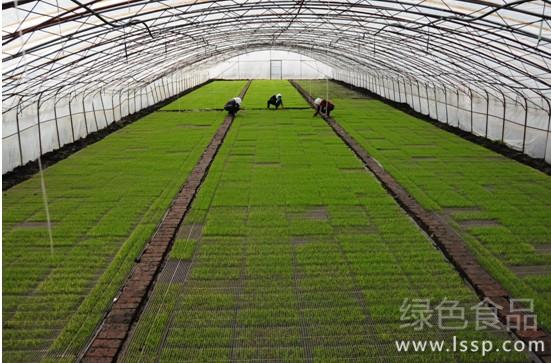
Wet Seedbed Technology for Early Rice: Easy to Operate and Highly Adaptable
Wet Seedbed Technology for Early Rice: Easy to Operate and Highly Adaptable
-
Detailed Explanation of Tea Machine Usage and Key Operating Points
In the mechanized processing of famous and high-quality tea, from the fixation of fresh leaves to the finished product, two relationships must be handled well: first, the relationship between heat and water vapor; second, the relationship between mechanical force and appearance. Heat causes biochemical changes in the tea leaves, while force applies external force to the tea leaves to cause changes in appearance. In specific use, attention should be paid to: 1. Before operation, each machine should be trial-run, and it should be observed whether the temperature and other technical parameters can meet the process requirements for famous and high-quality tea, such as the fixation time of fresh leaves, which is generally 1' to 1'10" for spring tea, 50" to 1' for summer tea, and for Maofeng tea, the drying
-
What are the operating steps for producing herbal tea?
1. Medicinal material pretreatment: Remove impurities (small stones, grass, clumps of dirt, etc.) from each Chinese medicinal material raw material as well as deteriorated and non-compliant raw materials (insect-damaged, moldy, etc.). Among these, Mesona chinensis (Chinese mesona) needs to be cut into small sections, and monk fruit needs to be crushed for later use. 2. Weighing: Accurately weigh each raw material (when weighing, select different measuring instruments according to the different amounts of each raw material, and they should be consistent with the measuring instruments selected for re-weighing), and store them separately in different containers for later use. Carefully keep weighing and rechecking records. 3. Rinsing: Place each medicinal material separately
-
Key Points and Detailed Operation Methods of Tea Plantation Harvesting Techniques
(2) Tea harvesting: The object of tea plantation harvesting is the new shoot, which is the main nutritional organ of the tea plant and the "factory" where the tea plant manufactures nutrients. To resolve this contradiction well, the key is to implement rational harvesting. Rational harvesting means, according to the growth characteristics of the tea plant, correctly resolving the relationship between harvesting leaves and retaining leaves on the tea plant. Through harvesting, achieve the combination of increasing yield and improving quality; the combination of increasing production in the current year and current season with extending the economic age of the tea plant. Tea harvesting requires mastering the following links. 1. According to standards and
-
New soybean topping technique for higher yields: operate this way to get a bigger harvest
Soybean terminal buds have strong growth vigor and consume a lot of nutrients. Removing the terminal buds of soybean transfers nutrients to the pods, which helps increase yield. This is especially true for soybean with higher soil fertility and vigorous growth; timely removal of the terminal buds makes the yield-increasing effect even more pronounced. The method for removing soybean terminal buds is: at the early flowering stage, the peak of soybean growth, pinch off the 2-3 cm tender tip at the top of the main stem, so that apical growth is inhibited and nutrients are concentrated for reproductive growth, promoting more flowering and more pod setting, and helping to make the plants shorter and sturdier and enhance stress resistance. Soybean topping should follow the “three
-
"Hair Encyclopedia" Scar Hair Transplant Pre-operative and Post-operative Precautions
Scar hair transplant can effectively improve the damage caused by scar-related hair loss and help patients with scar-related hair loss regain their confidence. Good post-operative care is also a guarantee of the results of scar hair transplant...
-
Technological innovation and cooperative support sweeten growers' hearts
Introduction: Chinese agriculture is booming, and more and more new farmers are getting involved. The corresponding planting techniques are constantly being improved. The editor has collected 3 new techniques and promotional...
-
Preoperative Basics You Need to Know About Installment Payments for Dental Implants
Recently, a hot article circulating online is about how dental implant prices are too high, and most patients cannot afford the expensive price, so clinics, in response to these reasons, have introduced...
条件筛选