-

Key Technical Points and Detailed Operation Methods for Apricot Tree Propagation
In recent years, as the market for major fruits such as apples and pears has gradually become saturated, the market potential for minor fruits is relatively large, especially with promising prospects for fresh-eating apricots and kernel apricots. Apricot trees are deeply favored by fruit growers for their strong adaptability, ease of cultivation, low investment and quick returns. Most rural areas use seedling propagation, whose offspring vary greatly and do not easily...
-

Key Points and Operation Methods of Pomegranate Bagging Technology Explained
Pomegranate Bagging Technology
-
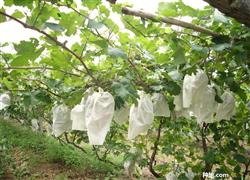
What are the methods for bagging grapes? A detailed explanation of the key operational points
What methods are there for bagging grapes, and what are the benefits of bagging? To enhance the market competitiveness of grapes, promoting and applying bagging technology on grapes has become a consensus among growers, but how can the benefits of bagging be maximized? Preparation before bagging: 1 week before flowering, trim the flower clusters; for large clusters, remove the secondary clusters and 1 to 8 branch axes at the base of the main axis; for small clusters, remove few or none; pinch off about 1/4 of the cluster tip before flowering; thin the berries 2 weeks after fruit set, starting immediately once the fruit has set steadily, and finish before the rainy season arrives.
-
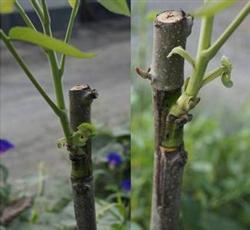
Detailed Explanation of Key Techniques and Operating Steps for Walnut Square Bud Grafting
Walnut square bud grafting gives a high survival rate, is labor-saving and convenient to perform, and the technique is easy to master and promote; it is suitable both for planted young trees and for nursery seedling production. The square bud grafting technique is described below: 1. Grafting time. It can be carried out from late May to mid-July, but the best time is in June, during which...
-

-

-

-
Detailed Explanation of the Correct Method and Operating Steps for Bagging Pears
1. Bagging time. Generally, bagging begins 25-30 days after petal fall. 2. Preparation before bagging. Bagging can be done after strict flower and fruit thinning and spraying. When bagging, further select the fruit, choosing drooping side fruit with a long fruit shape and tightly closed calyx end; such fruit tends to grow into large fruit, and because leaves block the sunlight, sunburn can be avoided. After selecting the fruit, carefully remove the petals, sepals and other attachments adhering to the stalk end, because long-term attachment of these substances will cause excessive humidity at the part where the fruit is attached and form water rust. 3-5 days before bagging
-
Detailed explanation of the specific operation techniques for flower and fruit thinning in pear trees
1. Master the timing of flower and fruit thinning. Flowering, fruit set, and the number of cells in young fruit are mostly determined by stored nutrients. Remove as many excess flowers and fruits as possible to reduce wasteful consumption and concentrate all nutrients on the flowers and fruits that should be retained, so they can grow into large fruits. Therefore, from this reasoning, earlier thinning is better: thinning flower buds is better than thinning flowers, and thinning flowers is better than thinning fruits. However, decide whether to thin buds, thin flowers, thin fruits, or combine all three according to the year's flower quantity, weather during the flowering period, tree vigor, fruit-setting ability, and other conditions. For pear orchards with a large flower quantity (an "on" year), good weather, and a heavy workload, you can
-
Quick-freezing method for peaches and detailed operating steps
Fruit selection: Peaches intended for quick-freezing processing should have fine flesh, few coarse fibers, good flavor, uniform size, neat fruit shape, no pests or diseases, no mechanical injury, easy pit removal (preferably freestone varieties), and resistance to browning. Harvest at slightly lower maturity; after arriving at the plant, a processing volume for 4 to 8 days can be stored. If stored in a cold storage, the processing period can be longer, but chilling injury to the peaches must be prevented. Generally, for white-fleshed peaches, Okubo is preferred, and for yellow-fleshed peaches, Albat is preferred. Cut in half and remove pit: Cut along the suture line into two halves and remove the pit, place the fruit cups
条件筛选