-
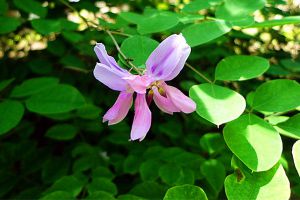
What are the effects and functions of Indigofera amblyantha? Read this one article to understand
This plant is not very demanding about soil, is relatively able to adapt to growing in poor and barren places, and can tolerate a growing environment without moisture, so the chance of it getting sick is extremely small. Its flowers are light purple in color, and its leaves are dark green. So, do you know what functions it has?
-
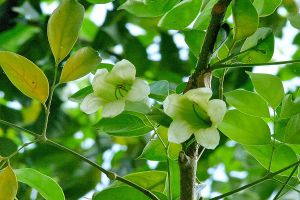
What are the feng shui benefits of the Radermachera sinica? Learn it all in one article
Hearing its name, does it make you think of green and glistening golden ingots? In fact, its name comes from its appearance and form. This plant has an upright tree shape with abundant branches, and when it blooms its fragrance spreads in all directions. Moreover, the flowers on a single inflorescence axis bloom almost simultaneously, forming strings of flower bands that shine with golden light, extremely charming, with very high ornamental value and garden application prospects. Although it grows in the regions of Guangdong and Hainan, because it is very strong in feng shui, it is distributed throughout China in addition to its place of origin, and is very well liked. So what is its feng shui meaning?
-
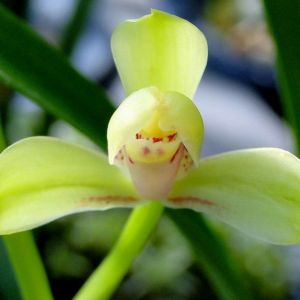
What Is Silkworm Congmei Jianlan? Learn All About It in One Article
A new-and-old variety from Sichuan, this flower is also known as "Invincible Center Petal"; the center petal is beautiful, but unfortunately the outer petals are rather poor!
-
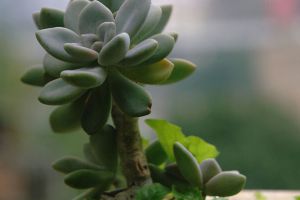
Is the "thick-skinned plant" the same as a succulent? One article makes the relationship between the two clear
When you see this name, do you find it very interesting? It refers to plants in the Crassulaceae family, Kalanchoe genus. It also has many other names, such as "leaf rooting," "wound medicine," "leaf budding," "shameless," and so on, all very fun. It is mainly distributed in the southern provinces of China. Some people think it is a succulent. However, this is not quite strict. So, what is the relationship between them?
-
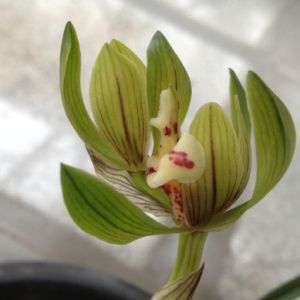
What "flower on flower" means, explained clearly in one article
Simply put, it means a flower blooming on a flower.
-

What does "hormone orchid seedling" mean? A detailed guide in one article
First, avoid buying hormone-treated orchids. Generally, orchid seedlings grown in greenhouses are treated with hormones, while naturally cultivated orchid nurseries use them relatively less. Simply put, plant growth regulators, that is, hormones. The issue of hormones is a sensitive topic, and most orchid enthusiasts turn pale at the mere mention of it. A hormone seedling is figuratively like a person who has been given stimulants...
-
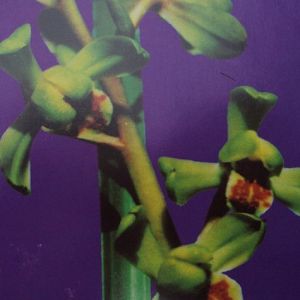
What is the capacity of Mei Huilan? Explained clearly in one article
Purchased in mid-April 2000 from a Wang surnamed orchid merchant in Tongbai County, Henan, it is a red-to-green plum-petal variety. When it was collected from the wild that year, it consisted of two straight old growths with no new shoots. The leaves stand upright one by one, medium width about 1CM, length more than 40CM. By that autumn it had grown one new shoot, with leaves slanting and half-drooping, leaf color slightly yellow. The three outer petals have round tips and finely tapered bases, tightly edged, with a level shoulder. ...
-
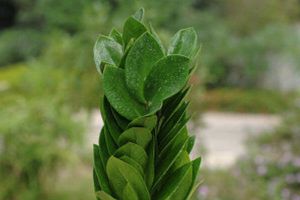
Can the Money Tree Bloom? One Article Explains It All
This is an evergreen plant, and it is also a plant valued mainly for its foliage. Placing it indoors can also have a certain purifying effect. Although this is a foliage plant, can it also bloom? Many people think this plant cannot bloom or does not have flowers. Is this claim true?
-
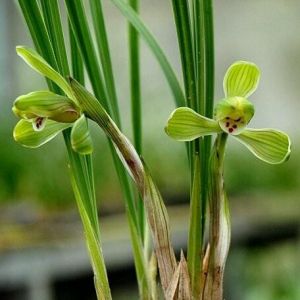
How is Jiangshan Mei Chunlan? A detailed guide in one article
Jiangshan Mei was discovered in the wild in 1999 in Xiaojiang Town, Xinchang, Zhejiang. Its leaves are upright with coarse serrations along the edges, the flower stalk is tall, the shoulders are flat, the structure is excellent, the petals are long-footed with rounded tips, and it has a large Liuhai tongue. When it blooms well, it can rival the old cultivar Heshen. It has won awards many times at orchid shows in various counties and cities.
-
What are the eight new varieties of Cymbidium faberi? Learn about them in one article
The eight new varieties of Cymbidium faberi: Loumei, Cuie, Lao Jipin, Qinghua Mei, Jiangnan Xin Jipin, Duanmei, Rongmei, Cuimei. Lao Jipin, green-shell type green Cymbidium faberi plum petal (1901), the Xinchou year of the Guangxu reign of the Qing dynasty, discovered by Feng Changjin of Gongcheng Garden in Hangzhou. Although it is a relatively modern introduction, it is a very elegant and precious variety with green stems and green flowers, because among the red Cymbidium faberi another...
条件筛选