-

How to prevent and control mushroom pests and diseases? These methods you need to master
1. Mushroom brown rot: also known as mushroom Mycogone perniciosa disease, bubble disease, white rot, etc. It is currently the most harmful disease in mushroom cultivation. In addition to harming mushrooms, it can also harm oyster mushrooms, straw mushrooms, silver ear fungus, reishi mushrooms, etc. The disease shows different symptoms at different developmental stages of mushrooms. When mushrooms begin to form small pinhead primordia (before fruiting body differentiation), they are susceptible to infection, forming hard, puffball-like irregular tissue masses. These are covered with a layer of white fluffy mycelium, which later darkens and finally turns dark brown, with dark brown droplets exuding from the diseased tissue. Small mushroom primordia beneath the casing soil can also
-
How to prevent fish from oxygen deprivation in winter? These practical methods you need to master
In winter, although the feeding activity of fish in ponds decreases, they still need a certain amount of dissolved oxygen to maintain slow breathing. The dissolved oxygen in a pond mainly comes from the photosynthesis of phytoplankton and the direct dissolution of oxygen from the air into the water. However, in the cold winter, once the pond surface freezes over, oxygen from the air cannot dissolve into the fish pond. When heavy snow covers the ice surface, sunlight cannot shine directly into the pond water, and the green plants in the water cannot carry out photosynthesis to produce oxygen. Moreover, in winter most fish gather at the bottom of the water. If the water quality is poor, the fish are weak, and management is poor, it can easily cause fish to suffocate and die from lack of oxygen.
-
How to observe and diagnose sheep diseases? These six methods you need to know
Inspection is the direct observation of the sheep's mental state and the various abnormal changes it presents. Healthy sheep generally compete for feed, move at the same speed, and react quickly; sick sheep often lag behind the flock, stop eating, stand still, or lie down. Posture: healthy sheep have bright, spirited eyes and move lively and steadily; when sheep are sick they often show unsteady movement or are unwilling to walk, and some infectious diseases also present special postures, such as tetanus manifesting as stiff limbs, and sheep with coenurosis (brain tapeworm cysts) or sheep nasal bot fly turning in circles, and lameness. Body condition: generally, in cases of acute anthrax, sheep bradsot (fast disease), sheep black disease, sheep (sheep sudden death), sheep enterotoxemia, etc., the sick sheep's body may still appear fat and strong; on the contrary, when generally suffering from chronic infectious diseases and parasitic diseases, sick sheep are mostly thin and weak.
-
How to prevent and treat runt pigs? Pig farmers need to master these methods
Runt pigs, commonly known as "cushion-nest pigs", "little old man pigs", "iron pigs". During the growth and development stage, pigs suffer from the influence of certain adverse factors, their development is stunted and growth stops. Although such pigs are old in age, they are very small in size, with rough and messy bristles and extreme emaciation, forming a body shape that is pointed at both ends and large in the middle; they eat feed but do not gain meat, causing pig farmers to suffer great losses. 1 Manifestation characteristics Runt pigs mainly show a small, thin and weak body, stunted growth and development, abnormally excited spirit, restlessness, rough back hair, dull skin without luster, and decreased elasticity.
-
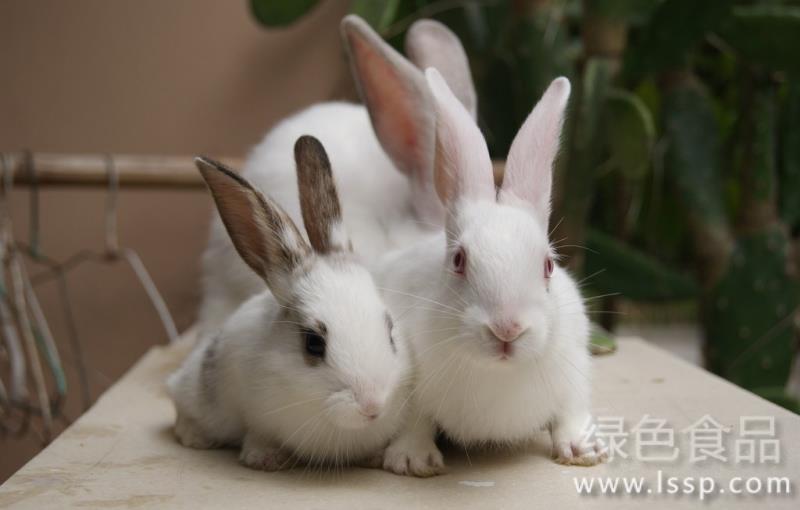
To improve the survival rate of baby rabbits, you need to grasp the "five key stages"
To improve the survival rate of baby rabbits, you need to grasp the "five key stages"
-
What preparatory work is needed for shaping lingzhi bonsai
1. Choose good shaping varieties. In addition to collecting wild lingzhi with odd shapes from nature, a large amount of raw material comes from cultivation. At present, the main varieties available for selection include red lingzhi, purple lingzhi, black lingzhi, pine-fir lingzhi, pine-fir tree lingzhi, tropical lingzhi, Neo-Japanese lingzhi, and more than ten other kinds that can be selected for matching. 2. Make shaping primordia. Bonsai lingzhi can be cultivated in bottles or bags (if conditions do not permit, production can be entrusted to a nearby cultivation site). Generally, bag cultivation has sufficient substrate and produces large fruiting bodies; bottle cultivation has limited substrate and tends to produce a single lingzhi.
-
After the Beginning of Autumn, cotton needs even more attention to foliar topdressing
Cotton foliar topdressing, commonly known as leaf spraying fertilizer, means spraying a fertilizer solution onto the stems and leaves of the cotton plant so that the stems and leaves absorb nutrients, thereby nourishing the whole plant (including the root system). It has the advantages of saving fertilizer, taking effect quickly, and not being limited by soil conditions. It is an important yield-increasing measure for quickly supplementing nutrients to the cotton plant in the late growth period, especially after the "Beginning of Autumn." Why is this said? Many studies have proven that nutrients absorbed by the leaves, like nutrients absorbed by the roots, can be transported
-
Do cotton plants still need topdressing after the flowers have opened all the way to the top?
In early August, we went to some concentrated cotton-producing areas to investigate and found that some cotton plants had already bloomed all the way to the top of the plant, and the color of the cotton main stem had also turned red up to the top. Farmers asked: Can cotton like this still be topdressed? Faced with such a question, the specific situation must be analyzed specifically. Generally speaking, if cotton has bloomed to the top in early August and the cotton stalks have also turned red to the top, it indicates that the cotton plant itself is suffering from malnutrition. Either the cotton field's fertilizer supply is insufficient, causing the cotton to suffer from fertilizer deficiency, and vegetative growth and reproductive growth have been inhibited; or fertilizer has already been applied but the cotton plant has not yet absorbed it; or early vegetative growth was
-
What preparation work needs to be done for artificially rearing queen bees?
Before artificial queen rearing, the following preparation work needs to be done: (1) Selecting parent colonies. Select healthy, disease-free colonies whose honey or royal jelly yield exceeds the average yield of the whole apiary, with weak swarming tendency and rapid colony development, as parent colonies. The drone colony is the colony that provides drones, and the queen mother colony is the colony that provides queens. Whether drone colony or queen mother colony, both are used to rear bee larvae. The same drone colony can also rear thousands of drones. If only one or two breeding colonies are used every year to rear virgin queens and drones, the whole apiary's colonies will undergo inbreeding, causing productivity and
-
How to store garlic scientifically? These methods you need to master
I. Simple storage methods. These mainly include hanging storage, rack storage, cool shed storage, cellar storage, etc. To store garlic by these methods, it must first be pre-stored. After harvesting, arrange the garlic on dry ground and sun-dry it for 2-4 days, so that the leaf sheaths, scales and bulbs are fully dried and dehydrated, reaching about 70% dryness, and when the pseudostem becomes soft, it can be braided, or the root whiskers and pseudostem can be cut off and the heads packed loose. 1. Rack storage. Choose an indoor space with higher ground and good ventilation, place wooden ladders or racks, and hang the braided garlic strings or loose garlic heads in layers on the ladders or racks, taking care to ventilate.
条件筛选