-
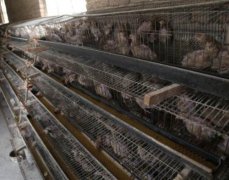
How to Raise Quail Without Them Dying? Breeding Methods and Techniques
How exactly do you raise quail? Do you know? What should you pay attention to when raising quail? Would you like to find out? Then let us take a look together. Raising young quail: Before 40 days of age they are young quail. After the small quail hatches and its down dries, it can be placed in a
-

How to grow lingzhi? These cultivation methods you need to master
Q: As a new variety of ornamental flower - lingzhi (Ganoderma), it is increasingly sold in flower markets, but because people do not know how to cultivate it, they love it in their hearts but dare not buy it. How should lingzhi be cultivated? A: Lingzhi has been known in China since ancient times as a "miracle cure" and "auspicious herb," with high medicinal value. As an ornamental, it has only attracted people's attention in recent years. Actually, it is merely a large wood-decaying fungus, belonging in fungal taxonomy to the family Polyporaceae, genus Ganoderma. China has about 40 species,
-
What conditions are needed for the growth and development of straw mushrooms?
1. Nutrition Straw mushroom is a saprophytic fungus that does not contain chlorophyll and cannot carry out photosynthesis to synthesize the nutrients it needs, so these must be supplied from outside. The nutrients required by straw mushroom are mainly carbohydrates and nitrogen-containing compounds. Carbohydrates mainly include sugars such as glucose, sucrose, maltose, starch, hemicellulose and cellulose. Organic nitrogen compounds mainly include peptone, amino acids and urea; inorganic nitrogen compounds include ammonium sulfate and ammonium nitrate. It is generally considered that the carbon-to-nitrogen ratio during the vegetative growth stage
-
How are tulips cultivated and managed? These technical points need to be mastered
1. Preparation before planting First check whether the tulip bulbs have pests or diseases. If they are already infected or beginning to rot, they must be removed and burned. After removing diseased bulbs, soak the bulbs in a fungicidal solution for disinfection, for example, soak in a 600-fold chlorothalonil solution for 20-30 minutes. Around mid-August, cut open 3-4 tulip bulbs and observe the development of the internal nose (that is, the already differentiated flower stem). Those with a nose 3-4 mm long, ivory-colored and firm are good; whitish ones are not considered good, and flat ones are also not ideal. Choose a humus-rich
-
What nutrients does the pig's body need (Part 1)
Mastering the nutrients needed by the pig's body and the content and functions of various nutritional components can promote the pig's growth and development, enhance its disease resistance, regulate the pig's normal physiological functions, improve the level of pig production and reduce production costs. The nutrients that sustain the life of the pig's body are substances such as protein, fat, carbohydrates, minerals and vitamins. Various nutrients have different functions, which are briefly described as follows. (1) Protein Protein is the main component that makes up the various tissues and organs of the pig's body, such as skin, muscle, blood, internal organs, bristles and hooves
-
How to prevent and control soybean root rot? These methods you need to master
1. Choose disease-resistant varieties. 2. Rotate with non-host crops such as corn, foxtail millet, and sweet potato. 3. Apply farmyard manure, potassium fertilizer, phosphate fertilizer, etc. when sowing. 4. Apply metalaxyl granules when sowing so that soybean roots can absorb them to prevent root infection. 5. Before sowing, dress seeds with 35% metalaxyl powder at 0.3% of seed weight. 6. Strengthen field management, carry out timely deep plowing and intertillage hilling and weeding, and drain standing water promptly after rain to prevent excessive humidity. 7. When diseased plants are found, pull them out promptly, thoroughly remove the diseased plant residues, and apply quicklime to the planting holes and
-
Rot of Pinellia ternata tubers in the late growth stage: growers need to pay attention to prevention and control
Causes of the disease: When Pinellia ternata grows to August-October, that is, when the rainy season arrives, the second-, third- and fourth-generation bulbils formed by Pinellia ternata planted in early spring and the first- and second-generation bulbils formed by Pinellia ternata cultivated in summer rapidly expand and form tubers, and the small mother corms used as seed during cultivation are also expanding themselves. This period is the stage of fastest tuber growth in Pinellia ternata, and also the period when the tubers have the weakest ability to resist external infection. The larger the tuber, the weaker its resistance; the smaller the tuber and the bulbils, the stronger their defensive ability. Underground Pinellia ternata of various specifications
-
How can you tell good straw mushroom spawn from bad? You need to know these few methods
Before cultivating straw mushrooms, the quality of the spawn must be assessed, and high-quality spawn should be selected whenever possible. The appearance of high-quality spawn is: thick and sturdy hyphae, uniform development of the upper and lower hyphae, and aerial hyphae that are white or semi-transparent. The specific identification methods are: 1. For spawn used for cultivation, the spawn age is around 30 days, the hyphae are thick, sturdy and dense white, there are light brown chlamydospores on the hyphae, and after removing the cotton plug, the aroma of straw mushrooms can be smelled. This kind of spawn is high-quality spawn; after sowing, it colonises the substrate quickly and grows vigorously. If there are very few chlamydospores, it means the hyphae are still young and tender, and it can be left to continue growing
-
What environmental conditions does straw mushroom (Volvariella volvacea) need to grow?
1. Temperature: Straw mushroom is a high-temperature type agaric mushroom. The temperature required for spore germination is 25-45°C, with 40°C being optimal; above 45°C or below 25°C, germination cannot occur. The temperature range that straw mushroom mycelium can adapt to for growth is 20-40°C, and the most suitable temperature for growth is 35-36°C; at this temperature, the mycelium grows fastest. Below 15°C or above 42°C, the mycelium grows slowly, stops growing at 10°C, and dies quickly below 5°C. The suitable temperature for fruiting body development is 28-32°C
-
Fish feeding is affected by 6 situations, and farmers need to pay attention
In the process of intensive aquaculture production, the management of feed feeding is one of the main links in the entire production management, and during the feed feeding process, the phenomenon of reduced feed intake by fish often occurs. Based on different situations in production, the author analyzes the reasons for reduced feed intake by farmed fish as follows: The first situation: fish are suffering from disease, causing reduced feed intake by fish. For example, when crucian carp inner spore disease, grass carp three diseases, channel catfish hemorrhage disease, enteritis and other diseases occur, the feed intake of fish is significantly reduced. When grass carp fingerlings and crucian carp have large numbers of wheel
条件筛选