-
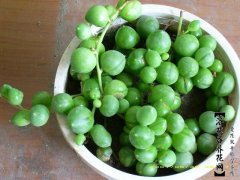
Cultivation and Care Methods for String of Pearls (Senecio rowleyanus)
String of Pearls is a perennial trailing flowering plant. It is also commonly called watermelon rind, watermelon string of pearls, and so on. String of Pearls has oval spherical succulent leaves, pale green, alternately arranged; the flowers are pale yellow-white or pale purple, small and lovely. It is generally grown in pots to admire the hanging bead-like stems, which after three to four years can reach more than one meter in length, remaining lushly green all year round, and is deeply loved by home gardeners...
-
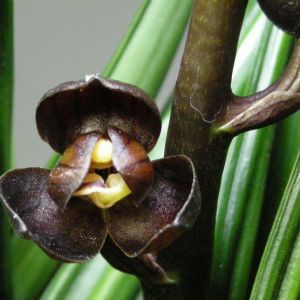
Detailed Explanation of Hybridization Techniques and Methods for Yipin He
A hybrid variety, Yipin He is a dwarf type with lotus-petal flowers, and the flowers are very round.
-
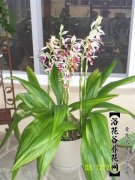
How to Grow Phaius Orchids? A Detailed Guide to the Correct Cultivation Methods
Phaius, also known as the nun's orchid, monkey orchid, or crane orchid, is a perennial herbaceous plant in the orchid family (Orchidaceae). It has large pseudobulbs, large leaves, and large flowers in a wide range of colors. Phaius is fairly widely distributed and its care is relatively undemanding; it can be grown outdoors and grows vigorously. For container growing, you can use a mix of leaf mold or mountain soil with a small amount of river sand and fertilizer...
-
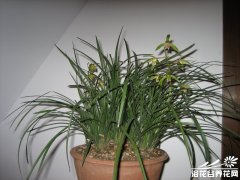
Cultivation methods for the nine-segment orchid (also known as nine-head orchid, nine-flower orchid)
The scientific name of the nine-segment orchid is Cymbidium faberi (C. Faberi Rolfe), commonly known as nine-segment orchid, nine-head orchid, nine-flower orchid. Roots are thick and long, pseudobulbs are inconspicuous, leaves number 5-7, 25-80 cm long, 1.0 cm wide, strongly upright, with coarse serrations along the edges, flowers solitary, midrib prominent, with a translucent quality, flower scape upright, 30-80 cm tall, bearing 5-12 flowers, bracts small,...
-
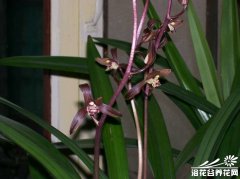
A detailed guide to the cultivation methods of Cymbidium sinense, teaching you to grow Cymbidium sinense with ease
Cymbidium sinense is also known as Baosui Orchid, Baisui Orchid, and Fengsui Orchid. The leaves of Cymbidium sinense are broad, generally up to 24.2 cm wide and about 2580 cm long. 25 leaves grow on the pseudobulb. The pseudobulb is relatively large, with a diameter of 1.5-2.5 cm. The leaves are glossy, with a cross-section in a shallow y shape or a flat leaf surface, and the leaf margins usually have no serrations. The flower stalk is upright, generally all taller...
-
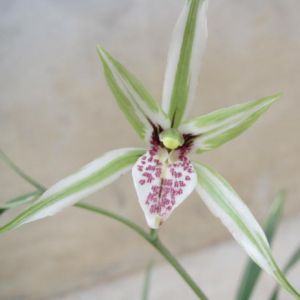
Cultivation Methods and Precautions for Tianshan Cold Orchid
Gaocao Gaohua, a traditional variety with both attractive flowers and foliage; although the bloom form is not very well shaped, it is still worth admiring, and more importantly, its fragrance, hard to say whether it is a cool fragrance or a delicate fragrance, in any case it smells very fresh, yet faint and elusive, leaving no trace to follow.
-
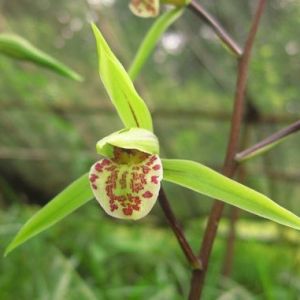
Characteristics and Care Methods of Babysbreath Cymbidium kanran
A classic large-leaf Cymbidium kanran with green floral markings and a large round lip; the blooms are spirited, the inflorescence is airy and well-spaced, it reblooms reliably, the leaves are arching and pendulous, and the flower scapes rise elegantly above the foliage.
-
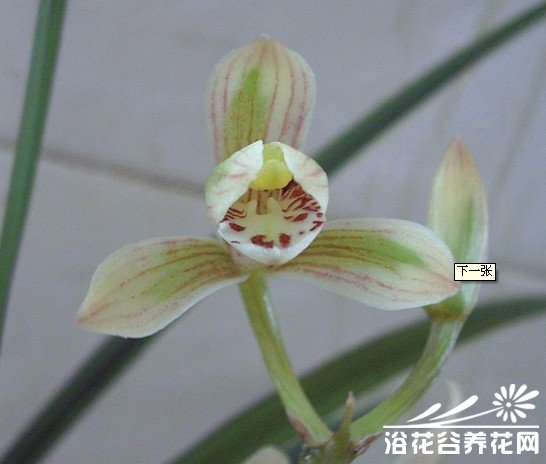
Illustrated guide to the common care methods for Four Seasons Orchid, Jianlan (Cymbidium ensifolium), and Shilan
1. Light control and cooling: Jianlan grows best at an annual average temperature between 15-23°C. Summer temperatures are hot, so use a 70-80% plastic shade net to cool things down. 2. Promoting cooling under high temperatures: for the high temperatures caused by overly strong light, add more layers and density of shading to encourage cooling; in summer and autumn, when light is strong, the air is stuffy and hot, and temperatures are high...
-
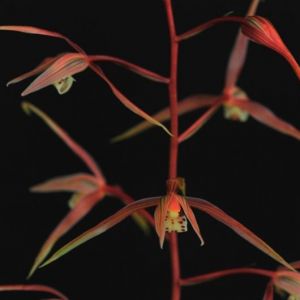
Introduction to the Characteristics and Cultivation Methods of the Nikko Cold Orchid Variety
Nikko is a representative variety of cold orchid (Cymbidium kanran) whose sepals and petals open in the folded-crane form, with peach-colored flowers.
-

What to Do When Your Orchid Won't Bloom? Master These Flower-Promoting Methods
To encourage orchids to bloom, you need to create a day-night temperature difference of about ten degrees Celsius, that is, daytime temperatures of 18 to 21 degrees Celsius and nighttime temperatures of 7 to 10 degrees Celsius, conditions under which they grow best and produce more flowers....
条件筛选