-
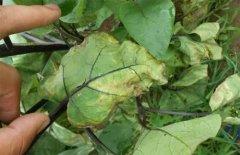
Eggplant Verticillium Wilt: Symptom Identification and Control Methods
Verticillium wilt is one of the major diseases in the growth of eggplant, and this disease is becoming more and more serious, and the worsening of this disease has also seriously affected the yield and quality of eggplant. Therefore, chemical control should be carried out according to the characteristics of the occurrence of this disease. How exactly should it be done
-
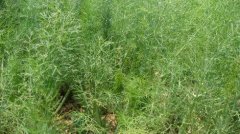
How to grow fennel? Fennel cultivation methods and suitable temperatures
Fennel is a major development-oriented cash crop in our prefecture, and many people grow fennel. So how do you grow fennel? Do you know? Below we introduce it from three aspects: the environmental requirements for fennel cultivation, the morphological characteristics of fennel, and the key points of fennel cultivation requirements
-
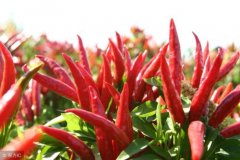
How to Grow Chili Pepper Seeds? A Detailed Guide to Growing Techniques and Methods
We all know chili peppers; this kind of pepper is very popular in Sichuan, Chengdu, and Guizhou, which is also the market value of growing it. So how do you grow chili peppers, and how can you grow them for high yield? As a superior cash crop, chili peppers
-

Symptom Identification and Control Methods of Rice Dwarf Disease
The symptoms are mainly distributed in the southern rice-growing areas. Also known as rice common dwarf disease, common dwarf, green dwarf, etc. After rice is infected from the seedling stage to the tillering stage, the plant becomes dwarfed, tillering increases, leaves are dark green and stiff, and in the later growth stage the diseased rice cannot head or set grain. Diseased leaf symptoms manifest as two types. In the white-spot type, dashed-line-like yellowish-white dotted streak spots parallel to the leaf veins appear on the leaves or leaf sheaths, most obvious at the base. The new leaves above the first diseased leaf all show dotted streaks, while the older leaves below generally do not. In the twisted type, under insufficient light conditions, the heart leaf emerges twisted
-
Detailed Explanation of Autumn Potato Sowing Methods and Technical Key Points
1. Whole-tuber sowing: The sowing period for autumn potato cultivation falls in the high-temperature, rainy season of August. Cutting seed potatoes into pieces for sowing easily leads to tuber rot and dead seedlings. Using whole-tuber sowing can reduce tuber rot and dead seedlings in autumn, prevent degeneration, and increase yield. Seed potatoes for autumn sowing should be small tubers of about 50 g that were harvested early from spring seed potatoes and carefully selected. These tubers should be undamaged, disease-free, with bright skin color and moderate size. About 200 kg of seed potatoes are needed per mu. During autumn sowing, the seed potatoes are in a dormant state. Before sowing, they should be sprouted or soaked in a chemical solution to promote sprouting. Generally, 5 days before sowing, soak them in a 15-20 mg/L gibberellin solution for 20-30 minutes, remove them, and bury them in wet sand to promote sprouting. Sow when the sprouts reach 1-2 cm in length.
-
Detailed Methods for Autumn Potato Harvesting and Storage
The autumn potato harvest period is determined by how early or late the first frost arrives. When the temperature drops to 2°C, the stems and leaves begin to wither and die, marking the start of the autumn potato harvest period. During harvesting, try not to damage the potatoes, so as not to affect storage. After harvesting, the potatoes should first be pre-stored (about 2-3 days) in a dry, ventilated, dark place, so that their temperature slowly drops, moisture gradually dissipates, and after the skin ages, respiration weakens, and they enter a dormant state, they can be stored for winter. Storage can be done in an outdoor dug cellar, or indoors by covering with sand and soil. The optimal temperature is 2
-
Two methods of autumn potato planting
Whole-tuber planting Using whole tubers for planting is currently the most effective method for controlling tuber rot and seedling death. In Shandong, Henan and other places, planting is generally done in mid-August. The standard for whole tubers: whole tubers used for autumn planting are mostly small tubers of about 50 grams that were harvested early from spring planting and carefully selected. Whole-tuber planting generally requires more than double the seed quantity of cut-tuber planting, with about 300 kg of small tubers of about 50 grams needed per 667 sq m. These small tubers should all be unbruised, disease-free, crack-free, with bright skin color and moderate size. Treatment of whole tubers Whole tubers are planted in autumn
-
Potato Disease Prevention and Control Methods and Cultivation Techniques
I. Late Blight (1) Conditions for Onset. Potato late blight, also known as blight or potato plague, is a devastating disease of potatoes. In plots that are low-lying, poorly drained, and have high field humidity, or in plots with excessive nitrogen fertilizer application, the disease tends to be severe. When temperature and humidity are suitable, late blight spreads rapidly, and diseased plants wither and die in patches. (2) Symptoms. On affected leaves, round or irregular dark green water-soaked spots first appear at the leaf tips and margins. After expanding, they become large brown lesions. When humidity is high, a ring of
-
How Is Rice Bred? A Detailed Explanation of Methods and Technical Key Points
In the process of hybrid rice breeding, the sterility of the rice male sterile line is affected by photoperiod-sensitive factors. The male sterile line generally shows sterility under the long daylight of April to September, while it shows fertility under the short daylight of September to April of the following year. Therefore, "two-line hybrid rice breeding" can increase yield by more than 20% compared with "three-line hybrid rice breeding", and it also overcomes the problems of a single source of male sterile cytoplasm and the relatively large limitation in the use of heterosis. The gene compatibility between indica and japonica subspecies is determined by their compatibility substances.
-
Detailed Methods for Controlling the Chinese Rice Grasshopper in Rice
Scientific name Oxya chinensis (Thunberg), belonging to the order Orthoptera, family Acrididae. It is distributed across the rice-growing regions of both northern and southern China. Its host plants include rice, wild rice stem (Zizania latifolia), and other grasses, as well as various plants in the Fabaceae, Convolvulaceae, Malvaceae, and Solanaceae families. Damage characteristics: adults and nymphs feed on leaves, causing notches; in severe cases the entire leaf is eaten away, leaving only the veins. Morphological features: adult male body length 15-33 mm, female 19-40 mm, yellow-green, brown-green, or green; the front margin of the forewing is green, the rest light brown; head is broad and large, oval; the vertex
条件筛选