-
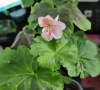
Propagate These 4 Common Flowers from Cuttings in Autumn: Snip a Stem and Leaf, Stick It in Soil, and Easily Turn One Pot into Many
Autumn has suitable temperatures and just the right humidity, without the scorching sun of summer or the bitter cold of winter, making it practically the "golden season" for flower cuttings. For many easy-to-grow, hardy plants, no complicated steps are needed - just cut off a stem and leaf, stick it into the soil, and it will take root and grow into new life. The several common plants below are perfect for
-

Toss Muskmelon Seeds into a Flower Pot, and a Few Months Later There Are So Many Fruits You Can't Eat Them All
A netizen was eating muskmelon in summer and casually tossed the seeds she spat out into an old flower pot on the balcony, paying them no further attention. A few months later, that flower pot was actually covered in vines and hung with cluster after cluster of muskmelons. The netizen exclaimed, "If I'd known, I would have planted more back then. Now I can't even finish them all and have to give them away to the neighbors!" At first, the netizen didn't take it seriously at all.
-

Phalaenopsis Group Planting Guide: How Many Plants Per Pot Is Right?
Phalaenopsis is a "lazy-friendly" flower: not only is it beautiful, it is also relatively easy to care for. But many flower lovers, after bringing one home, struggle with one question: "A single plant looks a bit sparse - if I plant several together in one pot, won't it look livelier and prettier?" How many Phalaenopsis plants per pot is actually best? Is "living alone" better, or
-

Is the lily a bulb plant? Understanding the basic characteristics of lilies
The lily originates from China and is widely distributed across the temperate regions of the Northern Hemisphere, including eastern Asia, North America and Europe. There are many varieties of lilies, with at least 120 species discovered so far, and 55 of them are native to China alone. There are also numerous recently developed hybrid varieties, such as the oriental lily, the fire lily and the Asiatic lily
-
What is the Hibiscus mutabilis flower? Get to know this woody plant
Hibiscus mutabilis blooms in late autumn, has a long flowering period and vigorous bloom, and comes in many varieties; its flower color and flower shape vary richly with the variety, making it a very good ornamental flowering tree species. Now let's learn about the Hibiscus mutabilis flower together with the editor!
-
What Plant Is the Ming Aralia? Get to Know This Woody Plant
The Ming Aralia is a new cultivar for household cultivation in recent years, very suitable for planting in courtyards or as a hedge, with lush branches and leaves and a great many varieties. Today, the editor will introduce this plant, the Ming Aralia.
-
Peppermint is a perennial plant that can grow continuously for many years
Peppermint is a widely cultivated hybrid mint that can be used as a food seasoning. Peppermint is a hybrid variety of water mint and spearmint. Let's get to know peppermint together!
-
What kind of plant is a cactus? An introduction to plants in the cactus family
Cacti are distributed worldwide in many species, with roughly more than two thousand species in the world. They most often grow in deserts and other dry environments, and are called the "hero flower of the desert"; they are a common type of succulent plant.
-
What plant is small-leaf red sandalwood? Introducing the woody plant small-leaf red sandalwood
There are many types of wood belonging to the genus Pterocarpus, but in the botanical academic circles only one is recognized as true red sandalwood, "sandalwood red sandalwood," commonly known as "small-leaf red sandalwood," with the Latin scientific name P. santalinus. Sandalwood red sandalwood is the finest among red sandalwoods; its notable characteristics are high density and small pores, and its wood properties are very stable, not
-
What kind of plant is the hyacinth? Get to know this bulb plant
The hyacinth is native to the Mediterranean coast, the Asia Minor region and the Netherlands, and is now widely cultivated all over the world. There is a great wealth of hyacinth varieties, with as many as two thousand or more recorded, and the main authentic varieties fall into two groups: the "Dutch type" and the "Roman type".
条件筛选