-

Feeding and management methods for autumn lambs to safely overwinter
Sheep estrus and mating occur mainly in spring and autumn, and the gestation period averages around 150 days, so spring and autumn are also the seasons when lambing is more concentrated. According to surveys, the overwintering survival rate of autumn lambs born in various places is significantly lower than that of spring lambs. The main reasons: 1. Environment. When autumn lambs overwinter, they are in the suckling period or weaning period. In winter, green fodder is scarce, forage quality is poor, ewes' milk is insufficient, and lambs are malnourished, weak in constitution, and poor in disease resistance. Moreover, the long dry and cold winter climate very easily causes respiratory infections in lambs, and many lambs die from pneumonia infection. Due to the cold climate
-
Growth Habits and Cultivation Management Key Points of the Chinese Tulip Tree (Chinese Tuliptree)
The Chinese tulip tree, also known as the Chinese tuliptree, is a deciduous tree in the genus Liriodendron of the family Magnoliaceae. It is found in Zhejiang, Anhui, Jiangxi, Hunan, Hubei, Sichuan, Chongqing, Guizhou, Guangxi, Yunnan and southern Shaanxi, and is also distributed in northern Vietnam. It is widely cultivated south of the Yellow River and is a world-famous ornamental tree species, as well as a national second-class key protected plant. Tree species characteristics: The Chinese tulip tree can reach a height of up to 40 m and a diameter at breast height of up to 1.7 m. The tree is tall and the leaf shape is unusual. The flowers are green with yellow longitudinal stripes, with 9 petals arranged in 3 whorls. The aggregate fruit is 7 to 9 cm long, and the winged nutlets are about
-
Key Points of Fine Feeding and Management Techniques for Laying Hens in Autumn
Autumn is exactly the initial laying stage of chickens raised in spring, and the management of the flock during this period is related to the economic benefits of the chicken farm (household). Therefore, the following management measures should be taken for hens that have started laying: Timely switch to transitional feed. Generally, chickens at 20 weeks of age are switched to pre-laying feed, also called transitional feed, in which calcium is 1% and crude protein is 16.5%. When changing feed, the feed transition process should be gradually completed over half a month. Do not rush it, to prevent diarrhea. When the laying rate reaches 2%-5%, the feed should contain 3.4%-3.5% calcium and crude protein
-
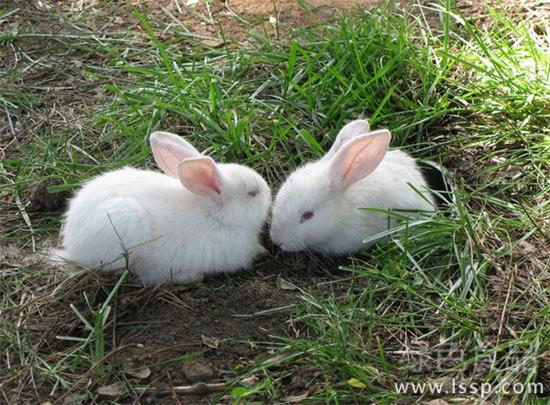
Young rabbits have weak constitutions and poor disease resistance, and are prone to death: an analysis of key points in feeding and management
Young rabbits have weak constitutions and poor disease resistance and are prone to death: key points in the feeding and management of young rabbits
-
What are the key technical points for cotton boll stage management?
The period from flowering to boll maturity and boll opening in cotton is called the flowering and boll stage. In general cotton fields, from early July to early September, cotton growth during the flowering and boll stage still involves both vegetative growth and reproductive growth proceeding simultaneously, but gradually shifts from vegetative growth dominance to reproductive growth as the main focus. The main direction of management in this period is to increase the setting of three bolls. Its management techniques mainly include five aspects. 1. Heavily apply flowering and boll fertilizer, and supplement with top-covering fertilizer. The fertilization time is at full flowering when 2 mature bolls have set on the lower part of the cotton plant. Generally, apply 10-15 kg of standard nitrogen per mu. If soil fertility is poor, cotton plant growth is weak, and soil
-
What are the key points of cotton seedbed management? Do these well and the seedlings will be stronger
This year the weather during cotton sowing was good, with plenty of sunlight. At present, the large-area cotton has full stands and has entered the seedbed management stage. The following points should be grasped in detail: 1. After full emergence, spray each 10 sq m of seedbed with 3 ml of "Zaofa No. 1" plus 0.6 kg of water; spray once more after 8-10 days to prevent leggy seedlings and cultivate large, strong seedlings. 2. After full emergence, choose sunny weather to sun the bed and disperse moisture, and at the same time spray chemicals to prevent disease. 3. For the few dry, stiff cotton seedlings lacking water and fertilizer, promptly supplement fertilizer and water. Before 9 a.m., ventilate first and then remove the film to supplement water, and water with urea plus diluted manure water. After drying, scatter dry fine soil, then cover with film to keep warm.
-
Key Field Management Techniques for Cotton After Topping in July
After cotton topping, generally 1 to 2 chemical control applications are made. The first is 3 to 5 days after topping; for fields with about 12,000 plants per 667 sq m, apply 4 to 5 grams of mepiquat chloride in 30 kg of water; after cotton topping in July, the following technical measures should be taken. 1. Scientific chemical control 1. Regulate according to growth vigor After cotton topping, generally 1 to 2 chemical control applications are made. The first is 3 to 5 days after topping; for fields with about 12,000 plants per 667 sq m, apply 4 to 5 grams of mepiquat chloride in 30 kg of water;
-
Detailed Explanation of Key Cotton Field Management Points in July
July is the month when cotton grows fastest and has the greatest growth volume; it is also a month of drastic weather changes, frequent disasters, and severe outbreaks of pests and diseases. Most cotton fields enter the flowering stage in early July, and by the end of July, 90% of the cotton plant's vegetative organs and reproductive organs have already grown out; the cotton root network is also established in July, forming the peak of absorption of mineral nutrients and water. Mid-July enters the dog days, which is the month when cotton transforms fastest and to the greatest extent. From the above aspects, cotton management in July has the nature of a decisive battle. (1) Digging furrows and earthing up. It is conducive to watering and
-
Key Technical Points for Cultivation and Management of Cotton under Hose Drip Irrigation
As the crop area in Jimsar County has increased year by year, water resources have become scarce, and the cost of cotton has risen, the comparative benefit of cotton has declined year by year. For this reason, we introduced and promoted the technique of cotton drip irrigation under film at normal pressure (hose). I. Main indicators 1. Yield: 100-130 kg of lint cotton per 667 sq m. Yield composition: 13,000-15,000 harvested plants per 667 sq m, 5-6 bolls per plant, 5 g per boll, lint percentage 33%-35%. 2. Fertilizer and water
-
Key Management Points and Precautions for Cotton During the Full Square Stage
At present, most cotton in our province has entered the full square stage. In view of the current high temperatures, scorching heat, drought and little rain in most areas, the following management technical recommendations are specially put forward for the reference of the broad masses of cotton farmers. 1. Watering and topdressing. Water appropriately and apply a small amount of nitrogen fertilizer to promote seedling growth. For cotton fields with poor soil fertility, insufficient or somewhat low base fertilizer, and weak cotton growth, 5 kg of urea per mu can be topdressed along with watering. Phosphate fertilizer and potassium fertilizer can also be added at the same time; generally, 5 kg each of diammonium phosphate, potassium sulfate or potassium chloride per mu. 2. Proactive chemical regulation. Spray mepiquat chloride before watering for proactive chemical regulation
条件筛选