-

Key Management Techniques for Jujube Orchards in Late Autumn and Early Winter (Part 3)
The third step is to apply a heavy base fertilizer. The most suitable time to apply base fertilizer is from after the jujube fruit harvest until before leaf fall, generally in early to mid-October. Generally, trees in the growth and fruiting stage are given 30-80 kg of organic fertilizer per tree, mixed with 0.2-0.4 kg of urea and 0.5-1.0 kg of superphosphate; large trees in full fruit stage are given 100-200 kg of organic fertilizer per tree, mixed with 0.4-0.8 kg of urea and 1.0-2.5 kg of superphosphate.
-
A Detailed Guide to the Morphological Characteristics and Management Methods of Coreopsis
Morphological characteristics: A perennial herbaceous plant with a perennial root system. The leaves are mostly opposite, rarely alternate, entire, shallowly lobed, or deeply cut. The flowers are solitary or in loose panicles; the involucre is in two rows, with 3 bracts per row, fused at the base. The ray florets are in 1 row, broadly ligulate, yellow, brown, or pink. The disc florets are yellow to brown. Main species: Coreopsis basalis, plant height 30~90cm, the whole plant sparsely covered with long hairs, leaves entire and shallowly lobed, stem leaves oblong-spatulate or lanceolate, stem leaves 3-5 lobed, capitulum diameter 6-7cm, with long peduncles, flowers
-
Technical Guidance for Rice Management in the Early and Middle Stages of This Year
I. Characteristics of Rice Production This Year 1. Large mechanical transplanting area and high transplanting quality. According to reports from all towns, the city's mechanical transplanting area is 173,500 mu, accounting for 81% of the rice area, with high transplanting density, few missing hills or gaps, and suitable basic seedlings. Seedling condition monitoring data: the city's average number of hills per mu is 17,300, an increase of 1,200 hills or 7.5% over last year's 16,100; the average number of basic seedlings is 70,700, an increase of 19,200 or 33.2% over last year's 57,700. 2. Suitable transplanting period and rapid seedling establishment and growth.
-
What are the key management points for the middle and late stages of shrimp farming?
In the middle and late stages of shrimp ponds after the body length reaches 7-8 cm, due to increased feed input, shrimp excrement gradually accumulates, and together with dead algae, residual feed, and the oxidative decomposition of organic matter at the pond bottom, the pond water quality, substrate, microorganisms, and so on have undergone great changes. The specific changes in the water environment and shrimp in the middle and late stages of shrimp farming are: pH gradually rises, the water color changes from clear green and yellow-green to brown and tea-green, transparency decreases, and turbidity increases; the pond bottom turns black and has a foul odor, and the number and types of harmful microorganisms increase.
-
A Detailed Explanation of Sheep Nutritional Requirements and Key Points of Scientific Feeding Management
1. Nutritional Requirements Goats, like other livestock, require various nutrients for their life activities, mainly including protein, carbohydrates, fats, vitamins, minerals and water. (1) Protein Protein is a nitrogen-containing compound, and its basic composition is amino acids. There are many types of amino acids, but only just over 20 kinds make up proteins. Protein is the main component of sheep body tissues and cells, and is a nutrient essential for maintaining normal life metabolism, growth, reproduction and the production of various products. By
-
What are the feeding and management techniques for pregnant ewes?
1. Supplement with concentrated feed. Add 200-300 grams of concentrated feed such as corn, sorghum, soybeans, and soybean cake every day; if conditions permit, start providing soybean milk water 15 days before the pregnant ewe gives birth. 2. Scientific exercise. In the late stage of pregnancy, the ewe should exercise 6-8 hours every day, walking steadily and driving her slowly, without startling her or walking on icy, slippery roads. When entering or leaving the pen gate, block the sheep to prevent crowding. 3. Ensure drinking water. Give the sheep water 2-3 times a day, the water quality must be clean, and warm water is better. Every 5-7 days, add a
-
Key Technical Points for Feeding and Management of Farrowing Sows
1. Pre-farrowing preparations The gestation period of sows is generally around 110-120 days. During this stage, observation of the sows should be strengthened, and the following preparations for farrowing assistance should be made. First, choose a suitable place for the sow to give birth, then one week before the sow enters the pen, carefully clean and disinfect the farrowing house, and spread soft bedding straw. When farrowing in winter and spring, check the warming facilities of the pig house; in summer and autumn, check the heat protection and ventilation conditions inside the house. A few days before farrowing, clean the sow's body and then disinfect it. Use 0.1
-
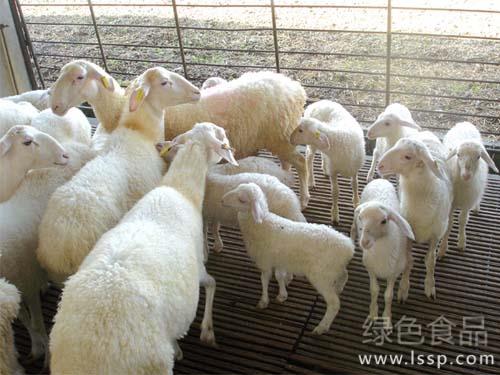
Techniques for Autumn Feeding and Management of Meat Sheep: Careful Management and Protection to Ensure Benefits
Careful Management and Protection to Ensure Benefits: Techniques for Autumn Feeding and Management of Meat Sheep
-
Detailed Explanation of Key Soybean Field Management Techniques
1. Thin seedlings early. As the farming proverb says: "Thin seedlings an inch early, and it is as good as a load of manure." Thinning is especially important for mechanically drilled soybeans or hand-sown beans planted with a large plow in furrows. After thinning, the seedlings are distributed evenly and reasonably, which promptly prevents seedlings from crowding one another, reduces consumption of soil nutrients and water, and allows the seedlings to develop evenly and vigorously, thereby increasing soybean yield. Thinning is generally carried out during the soybean seedling stage, when the two opposite single leaves are flat and spreading and compound leaves have appeared. During thinning, diseased seedlings, weak seedlings, and mixed seedlings must be pulled out. 2. Cultivation and weeding. Generally, three hoeings and three hillings are required. Specific timing:
-
Key Cultivation and Management Techniques for High-Yield Soybeans
Seed treatment. Generally, seed selection by hand is adopted, removing small, mixed, diseased, and insect-damaged seeds to achieve uniform hilum color. Before sowing, conduct 1-2 germination tests; a germination rate above 95% qualifies the seeds for planting. Before sowing, for each kilogram of seed, use 1-2 grams of ammonium molybdate dissolved in 30 grams of warm water and mix into the seed; after drying in the shade, mix in soybean rhizobium fertilizer at 5% of the seed weight; after drying in weak light, the seeds can be sown, mixing and using as you go. Field selection. Generally choose plots following corn, sorghum, millet, and similar crops, avoiding continuous cropping and adjacent cropping. Land preparation. Harrow the land in mid-March.
条件筛选