Techniques for Autumn Feeding and Management of Meat Sheep: Careful Management and Protection to Ensure Benefits
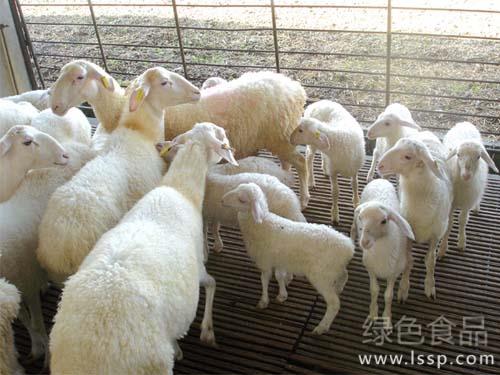
Meat Sheep Raising
As a grassroots agricultural technology extension instructor, the main promoted technology in our county this year is meat sheep breeding. Through practice, I deeply feel that farmers often encounter many problems in actual work, such as breeding technology and disease prevention and control, that urgently need to be solved. Below I will discuss several issues in autumn feeding and management of meat sheep, so as to further improve breeding benefits.
The main work in autumn goat feeding and management is to do a good job in fattening, breeding, and disease prevention and control. Doing these key tasks well plays a crucial role in goat production and improving economic benefits.
1. Autumn fattening
Autumn is the golden season for fattening goats. Doing a good job in autumn fattening is the key to increasing weight for sale in winter and improving economic benefits.
1.1 Appropriately extend grazing time
During this period, various plants mostly set seed and are rich in nutrients. This is an important period for putting on fat and gaining meat, and also the best period for grazing. Goats do not like pure thatch grassland, so you can choose areas with vines, shrubs, and thorny ridges that goats like, and where forage grass is lush, for grazing. In autumn, the sky is clear and the air is crisp, and the temperature is suitable, so you can leave early and return late, increasing the time for goats to eat as much as possible. It is even better if there is a low-lying sunny slope that is sheltered from the wind and has a good water source.
1.2 Nighttime supplementary feeding is the key to fattening
Because goats foraging cannot fully guarantee nutrition, concentrate feed should be added in time to promote fattening. It is best to carry out nighttime supplementary feeding. The supplementary feeding time should be around 9 p.m.; too late is not conducive to the goats' rest and digestion. When supplementary feeding, attention should be paid not only to the quantity of feed but also to the quality of the feed. Feed concentrate first, putting out wheat bran, soybeans, corn, and other concentrates, prepared at 0.2-0.3 kg per goat, then feed hay or roughage, or a combination of green and dry feed. Feed should be given in small amounts and added frequently, which maintains the goats' appetite and avoids waste. Finally, provide drinking water. In addition, mineral substances and vitamins and other nutrients needed should be supplemented in time. Salt supplementation, commonly called "lightening the sheep" among the people, can be done by placing salt bricks in the sheep shed or supplementing salt 2 to 3 times per week, 10 to 15 grams per goat each time, either mixed into feed or added to drinking water.
2. Autumn breeding of sheep
Sheep can come into estrus in all four seasons and can all be bred, but autumn is the peak estrus season for sheep. From mid-August to October each year, a large number of sheep come into estrus intensively, with obvious symptoms, better ovulation, and a high conception rate. Goats bred at this time give birth in winter, and the newborn lambs have the advantages of greater body weight, better constitution, lower disease incidence, and faster weight gain, so this is an excellent season for breeding.
2.1 Management of breeding ewes
2.1.1 Weaning lambs. Ewes during lactation do not come into estrus. Lambs can be weaned at 60 days, and weaned ewes can come into estrus after about 20 days. Weaning can be done by artificial separation or by decocting 150 g of roasted barley malt and administering it orally.
2.1.2 Control the body condition of ewes. Breeding ewes must not be too thin or too fat, as both affect estrus. In fact, after weaning, more ewes are thin. For those that are too thin, supplement 0.2 kg of concentrate per day; do not give too much, because feeding too much makes them fat.
2.1.3 Cull old ewes. Ewes should be culled at 8 years of age; old ewes do not come into estrus for a long time or have irregular estrus.
2.1.4 Use drugs to induce estrus and promote ovulation. Use... (write in what drug is best) However, some drugs can only induce estrus but not ovulation, and must be used in combination with other drugs.
2.2 Management of breeding rams during the breeding period
2.2.1 Reasonable supplementary feeding. In addition to feeding concentrates such as soybean cake and corn, also supplement in time feeds rich in vitamins such as carrots, forage grass, and vegetable leaves. At the same time, pay attention to feeding appropriate amounts of salt, bone meal, and other mineral-rich feed. When the breeding task is relatively heavy, 2 to 3 raw eggs can be added, which can improve semen quality. Ensure drinking water twice a day.
2.2.2 Strengthen the exercise of breeding rams. Daily exercise time should be 4-6 hours to ensure the constitution and libido of breeding rams.
2.2.3 Reasonably arrange mating time and frequency. The number of matings per day should be limited, preferably three times. Do not overbreed, so as to ensure the ram's physical strength and breeding ability.
3 Disease prevention and control
Autumn epidemic prevention work. According to local prevalence conditions and the immune characteristics of various vaccines, reasonably arrange immunization. In early September, goats can be vaccinated with the "sheep braxy, sheep sudden death, enterotoxemia, lamb dysentery" quadrivalent vaccine. In the latter half of the month, vaccines for sheep streptococcosis and sheep pox, etc., can be used preventively.
4. Prevent the occurrence of diseases
Common autumn diseases of goats include gastroenteritis, cold, and stomatitis. If prevention and timely treatment are not paid attention to, it is easy to cause outbreaks, slow growth, and other phenomena. Therefore, the flock should be observed at all times, and early detection and early treatment should be carried out.
4.1 Prevention and treatment of gastroenteritis. Isolate sick goats and place them in a warm, dry place. For those with persistent diarrhea, use antidiarrheal agents. Administer 2-5 grams of tannalbin orally twice a day to reduce inflammation and kill bacteria; take berberine hydrochloride tablets or sulfaguanidine tablets orally, or use 10 mL of 1% berberine sulfate injection, or 10 mL of sulfadiazine sodium injection, or norfloxacin by intramuscular injection for treatment. For traditional Chinese medicine, per 50 kg, use 30 g of codonopsis, 30 g of white atractylodes rhizome, 15 g of tangerine peel, 15 g of bitter orange, 15 g of atractylodes rhizome, 15 g of sanguisorba root, 15 g of schisandra fruit, 30 g of schizonepeta, 15 g of costus root, 30 g of perilla leaf, 5 g of dried ginger, 25 g of licorice, and 30 g each of the three charred medicines, decoct and administer via stomach tube.
4.2 Prevention and treatment of cold. When the temperature changes abruptly in late autumn or the goats are suddenly drenched by rain, they are prone to colds. Treatment mainly focuses on relieving fever, relieving pain, and dispelling wind-cold. Inject drugs such as bupleurum and antipyrine by intramuscular injection. To prevent secondary infection, antibiotics should also be used at the same time: 1.6 million units of penicillin and 500,000 units of streptomycin. For traditional Chinese medicine, per 50 kg, use 20 g of honeysuckle, 30 g of forsythia, 15 g of platycodon root, 15 g of burdock seed, 15 g of mint, 15 g of schizonepeta, 15 g of fermented soybean, 15 g of apricot kernel, 20 g of trichosanthes root, 15 g of gardenia, and 12 g of licorice, decoct and administer via stomach tube.
4.3 Prevention and treatment of stomatitis. When goats develop stomatitis, feed soft forage and use less coarse hard feed to avoid injuring the oral cavity again. Rinse the wound surface with 0.1% potassium permanganate solution or 20% saline, then apply iodine tincture, gentian violet, erythromycin ointment, etc. To prevent secondary infection, inject 800,000 units of penicillin and 1 million units of streptomycin. Isolate sick goats promptly. Disinfect pens and utensils with 10% lime milk or 20% plant ash water. For traditional Chinese medicine, use 15 g of indigo naturalis, 10 g of coptis, 10 g of phellodendron, 5 g of mint, 10 g of platycodon root, 10 g of catechu, and 10 g of borneol, grind together into powder, and apply to the oral lesions of sick goats.
5. Strengthen deworming and epidemic prevention
In the process of raising goats, common internal parasitic diseases harmful to goats include trematodes, nematodes, and tapeworms, and they often appear as mixed infections. If not prevented and treated, they will seriously affect the growth rate of goats and may even endanger life. Therefore, in autumn, goats should be thoroughly dewormed, and ivermectin can be used for deworming. Ivermectin is a broad-spectrum, highly effective, low-toxicity deworming drug that can treat and prevent many kinds of parasites. One week after deworming, it can be injected again for a better deworming effect. Common external parasites on goats include lice and mites, which can be treated by wiping with 1% trichlorfon solution or pine needle powder, or by treatment with deworming injection drugs or insect-clearing powder.
In short, farmers should carefully manage and protect goats during the breeding process, reduce the occurrence of diseases and accidents, improve the survival rate of the flock, and ensure breeding benefits.