-

-

Symptoms and Control Methods of Lotus Root Brown Blotch Disease
Symptoms and Control Methods of Lotus Root Brown Blotch Disease
-

When to Plant Lotus Root? A Detailed Guide to Planting Time and Methods
Lotus Root Planting Time and Methods
-

Points to Note When Harvesting Lotus Root: Keep These Key Points in Mind
Precautions When Harvesting Lotus Root
-

What are the environmental requirements for growing lotus root? Read this article to understand
Environmental requirements for growing lotus root
-

How to harvest lotus root properly? Master the correct harvesting method
How is lotus root best harvested? Please give guidance. Harvesting lotus root too early affects yield, while harvesting too late lowers quality. Therefore, the harvest time should be determined according to how early or late the plants develop and the intended use. ① Huaxiang lotus root. The newly formed lotus root is called huaxiang lotus root, also known as tender lotus root. This kind of lotus root has a very low starch content and features a fresh, tender, sweet and crisp flavor. When the lower-layer leaves of huaxiang lotus root are yellow-green, the middle-layer leaves are dark green, the upper leaves have all taken shape, and no new leaves appear in the whole plant, it can be harvested. Early September is the best time, but harvesting at this time affects yield, so only a small amount should be harvested. ② Mid-Autumn lotus root. Mid-Autumn lotus root can be harvested around the Mid-Autumn Festival, when the lower-layer leaves in the whole field have withered, the middle-layer leaves are yellow, and the upper-layer leaves are yellow-green. Harvesting Mid-Autumn lotus root is mainly to meet people's needs for the Mid-Autumn Festival and National Day. ③ Red-rust lotus root and white-rust lotus root. Red-rust lotus root is generally harvested in mid-October, named because the surface of the lotus root has a rust color at this time. At this stage the lotus root contains more starch and can be used for cooked food or processed into lotus root powder. By the end of October, the redness of the lotus root fades and turns white, and it is called white-rust lotus root. At this time the lotus root is rich in starch, suitable for processing and eating, and can also be stored until after the beginning of spring the following year.
-
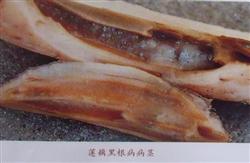
What diseases need to be prevented and controlled during lotus root cultivation?
What diseases need to be prevented and controlled when growing lotus root? Please give an introduction. Lotus root is a high-yield, high-efficiency aquatic cash crop and a vegetable variety commonly eaten by the general public. It is widely cultivated in various regions, and with the adjustment of industrial structures in various places, its cultivation area tends to keep expanding. In recent years, lotus root diseases have become increasingly serious...
-
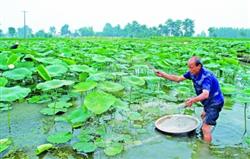
How should fertilizer be applied when growing lotus root?
How should fertilizer be applied when growing lotus root? Please provide guidance. When growing lotus root, you can refer to the following methods for fertilizing: The growth and development of lotus root is divided into 3 stages, namely the sprouting stage, the vigorous growth stage and the lotus root formation stage. The sprouting stage runs from plant sprouting to the appearance of standing leaves. After the standing leaves appear, the lotus root grows new roots and mainly relies on the nutrients stored in the lotus root; the vigorous growth stage runs from the plant...
-
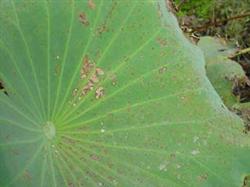
How to control brown spot disease in lotus root cultivation?
How to control brown spot disease when growing lotus root? Please give an introduction. For growing lotus root, the following methods can be used to control brown spot disease: 1. Symptoms. This disease mainly damages the leaves and leaf stalks of lotus root. In the early stage of leaf infection, small brownish-green spots appear, which later expand into reddish-brown to dark brown irregular to polygonal necrotic lesions...
-
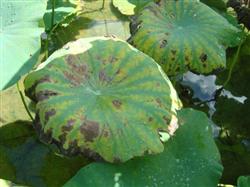
Symptom Identification and Control Methods of Lotus Root Black Spot Disease
What is lotus root black spot disease? How to control it? Please explain: in the early stage of lotus root black spot disease, needle-tip-sized yellowish-brown small spots appear; in the later stage, the entire leaf is covered with lesions that have concentric rings, causing half or the whole leaf to dry up. Control: increase the application of phosphorus and potassium fertilizers, and avoid over-applying nitrogen fertilizer. In winter, thoroughly remove diseased and residual leaves from the field and burn them in a centralized manner; in the early stage of the disease, remove...
条件筛选