-

What are the three main causes of cotton red leaf stem blight?
Cotton red leaf stem blight is a physiological disease caused by potassium deficiency. It occurs in the middle and late stages of cotton growth, and in dry years the occurrence and severity of damage are more serious. In the field, cotton generally begins to show symptoms at the bud stage, and the disease is most severe during the boll-setting and boll-opening stages. Symptoms mainly appear on the leaves. Diseased leaves develop from top to bottom and from the outside inward. Diseased leaves begin to lose green color from the edges, first turning yellow, then producing red spots, and finally the whole leaf turns red, the mesophyll thickens, wrinkles and becomes brittle, while the veins remain green. In severe cases, the leaves of the whole plant lose green color, then turn red and brown, the leaves scorch and fall off, leaving bare stems, and the plant
-
How to prevent cotton red leaf stem blight? These integrated measures must be mastered
Cotton red leaf stem blight is a physiological disease. In recent years, it has occurred in large amounts in the cotton region of the Yangtze River Basin in our area. It begins at the early flowering stage, and is more severe and widespread from the full flowering stage to the boll-setting stage. In our area specifically, it occurs sporadically in July and August. It reaches its peak from mid-to-late September to October. Lightly affected plants are yellow and thin, with few and small bolls, short fiber, and poor boll opening; severely affected plants die prematurely, and the bolls cannot mature, greatly affecting yield. 1. Disease symptoms. At the early stage of the disease, red and purple spots appear on the leaves, gradually spreading until the whole leaf turns red
-
How to prevent and control cotton red leaf stem blight? A full analysis of control measures
I. Symptom identification After the plant is affected, the leaves turn dark green and become thick and brittle, then small red dots are scattered on the leaves, and finally the whole leaf turns red while the veins remain green, which is red leaf stem blight. When the disease is severe, the base of the petiole becomes soft, loses water and shrinks, causing the leaves to wither and fall off, and the top of the stem becomes scorched and dry. At the same time, it easily triggers repeated infection by target spot and brown spot, causing the diseased plant to scorch and die. Some plants can still grow adventitious buds after the diseased leaves fall off. Plants with severe and early onset are short, with poor root development, and both the main root and lateral roots are
-
Symptoms and Control Methods of Leaf Blight in Hybrid Magnolia
The main symptoms occur on the leaves, and in severe cases can spread to the petioles and flower buds. The lesions mostly occur at the leaf margins. In the early stage, they are chlorotic yellow spots, water-soaked in appearance. Numerous lesions merge into patches, expanding outward in a fan shape, with dark brown edges and grayish-yellow centers, which can cause early defoliation. In humid environments, black-gray granular bodies appear on the fallen leaves. Causes of the disease: This disease is a fungal disease; the pathogen survives in leaf buds and on diseased plant residues, spreads via air currents, and can directly infect and damage through the stomata of leaves that are weak in growth or physiologically injured. Injured plants and environmental conditions with high wind speed
-
Can African violets tolerate strong direct sunlight?
The native environment of the African violet is beneath large trees on high mountains, where the climate is stable and shady, and sunlight only reaches the leaves after being filtered through the foliage. Therefore, when growing African violets, you must take their own characteristics into account and must not treat them like ordinary flowering plants. Most flowering plants need more than 4 hours of direct sunlight each day in order to bloom. But the African violet is a rare exception: if you place it in a window with direct sunlight, the result is either yellowed, withered leaves or a blooming season with no flowers. Because the Af
-
Symptom Identification and Control Methods of Garlic Leaf Blight
Leaf blight is a major disease of green garlic and, in severe cases, causes the entire leaf to die off, affecting yield. I. Symptom identification This disease mainly damages leaves and flower stalks. When leaves are infected, it usually starts from the leaf tip and gradually develops toward the leaf base, spreading from the bottom upward. At first, pale white small round spots appear, which later expand into oval or irregular grayish-white or grayish-brown lesions, and black mold-like growth develops on the diseased parts; in severe cases, the entire leaf dies off. When flower stalks are infected, they tend to break at the diseased part, and finally many small black grains are scattered on the lesions.
-
Detailed Explanation of Key Points for Lightweight Cultivation Technology of Substitute-material Shiitake Mushrooms
Since the 1990s, the substitute-material flower shiitake cultivation technology successfully researched by the Qingyuan County Edible Fungi Research Center has been rapidly promoted and applied nationwide, making major contributions to poverty alleviation and prosperity in rural areas and to the transformation of shiitake production from quantity-oriented to quality-oriented. However, in substitute-material shiitake production, processes such as substrate log sterilization, inoculation operations, and manual bag cutting require large labor inputs, and problems such as low substrate log success rates, uneven fruiting, and deformed fruiting bodies have long constrained the development of shiitake production, especially creating major obstacles for intensive production. For this reason, our
-
Red-headed Snake-necked Turtle Species Introduction and Care Highlights
Chinese name: Red-headed Snake-necked Turtle. Geographic distribution: Venezuela, Colombia, Ecuador, Peru, Bolivia, Guyana and Brazil. Reproduction: oviparous. Females can be distinguished by the tail (of course, a long and thick tail indicates a male). Mating can occur year-round, and a female can lay 4 to 6 eggs at a time, sometimes far from water. Habits: side-necked turtles are basically aquatic, but are often found walking on land after rain. The three I keep spend about as much time on land as in water
-
Grasp the prevention and control of scallion blight in summer
In the hot, humid and rainy seasons of spring and summer, epidemic scallion blight is prone to breaking out, causing scallion leaves to droop and wilt, or even rot, resulting in serious losses, so related prevention and control work must be done well. In the hot, humid and rainy seasons of summer, epidemic scallion blight is prone to breaking out, which can turn originally green scallions covered with yellow spots within a few days, then turning white, with leaves drooping and wilting, or even rotting, causing serious losses. Scallion blight mainly damages scallion leaves and flower stalks. In the early stage of infection, scallion leaves show indistinct pale greenish-white lesions, which after expansion become grayish-white spots, spreading along
-
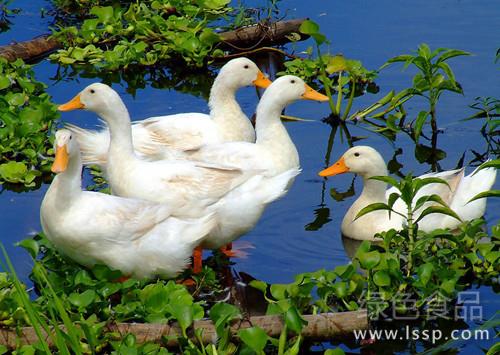
Key points for improving meat duck quality in cold winter: keep warm, prevent disease, increase light, prevent feather pecking
Keep warm, prevent disease, increase light, prevent feather pecking: key points for improving meat duck quality in cold winter
条件筛选