-

Prevention and Treatment Methods for Common Diseases in Large Yellow Croaker Aquaculture
Benedenia Disease [Cause] The disease is caused by parasitism of Benedenia.[Symptoms] Benedenia often parasitizes various parts of the body surface of marine fish such as large yellow croaker, yellowfin seabream, red seabream, black seabream, and grouper, especially the front half of the back. When Benedenia parasitizes the fish body, the fish are restless in the water, constantly swim frantically, rub against nets or pond walls; the large and small hooks of the worm's posterior attachment disc tear the epidermis, causing wounds and inflammation on the body surface, secreting large amounts of mucus; in severe cases, anemia, emaciation, localized or large-area ulcers on the body surface, or occurrence of
-
Detailed Explanation of Large Yellow Croaker Fingerling Cage Culture Techniques
I. Cage Setup 1. Selection of Sea Area The water flow velocity in the sea area is generally within 1 m/s, and the flow direction is straight and stable; avoid setting up in sea areas with eddy currents. At low tide, the bottom of the cage should be at least 1.5 m above the seabed. Throughout the year, the surface water temperature in the sea area ranges from 7-30°C, salinity from 12-32, and transparency from 0.2-3.0 m. 2. Selection of Cage Specifications Currently, the cages used for cultivating large yellow croaker fingerlings are all floating cages, that is, the cages are hung on a wooden frame with 10 frame positions of 5 m × 5 m.
-
Several Key Control Points for Large-Specification Hairy Crab Culture in the Yellow River Estuary
In order to build up the "Yellow River Estuary" aquatic product brand and enhance the market competitiveness of "Yellow River Estuary" hairy crab, in 2005 Kenli County, Shandong Province, carried out a large-specification "Yellow River Estuary" hairy crab culture trial in a ten-thousand-mu river crab demonstration park, achieving good economic and social benefits. We now discuss several key technical issues in the culture process with fellow practitioners. 1. Pond ecology. Influenced by traditional concepts, many units follow fish-culture methods when building ponds and rearing crabs, with poor results, low survival rates of "Yellow River Estuary" hairy crab,
-

Key Points and Methods of Large Yellow Croaker Aquaculture Technology Explained
Large Yellow Croaker Aquaculture Technology
-
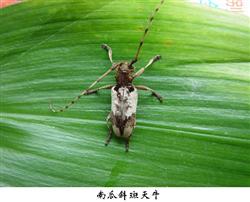
Reasons and Solutions for Large-Scale Yellowing of Pumpkin Leaves
Scientific name Apomecyna histrio (Fabricius), belonging to the order Coleoptera, family Cerambycidae. Synonym Apomecyna alboguttata Megerle. Also known as the four-spotted pumpkin longhorn beetle, squash vine longhorn beetle, stem borer. It is a major pest of cucurbit vines. Distributed in Guizhou, Yunnan, Sichuan, Guangxi, Guangdong, Hunan, Zhejiang, Fu...
-

Key technical points for the cultivation of summer fry and large-size fingerlings of the yellowtail fish
Cultivation of summer fry and large-size fingerlings of the yellowtail fish
-

Detailed Explanation of the Domestication Method for Large-Size Yellow Catfish Fry
Domestication Method for Large-Size Yellow Catfish Fry
-
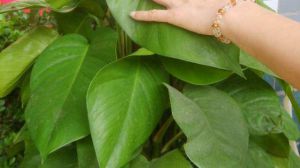
What to Do When the Leaves of a Large-Leaf Pothos Turn Yellow? Causes and Solutions
There are many reasons why the leaves of a large-leaf pothos turn yellow: if it is caused by too low a temperature, it needs to be kept in a warm place for care. If it is caused by improper watering, the amount of water needs to be controlled well, and there must be no standing water in the potting soil. If it is caused by insufficient light, it needs to be given more indirect light. If it is caused by too much fertilizer, the amount of watering needs to be increased and the potting soil replaced with new soil.
-
How to treat ulcer disease in large yellow croaker? Detailed treatment methods
Treatment methods for ulcer disease in large yellow croaker
-
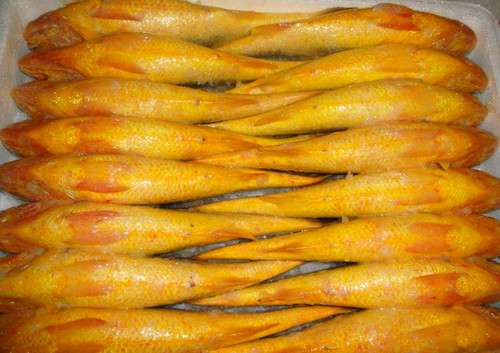
A Detailed Guide to the Methods and Key Technical Points of Artificial Large Yellow Croaker Farming
Artificial Farming of the Large Yellow Croaker
条件筛选