-

How many years after grafting does a Korean pine bear fruit?
The pine tree is a common sapling in daily life. After a few years of planting, it will grow fruits, which are very delicious and rather expensive, but very popular among people. So how many years after grafting does a Korean pine bear fruit? 1. How many years after grafting does a Korean pine bear fruit? A grafted Korean pine generally grows for 12 years and can then bear
-
How many years does it take before a Korean pine begins to bear fruit?
The Korean pine is an evergreen tree of the Pinaceae family, reaching up to 40 m tall, with bark on mature trees that is grayish-brown or gray with rectangular scaly plates, needle-like leaves, and egg-shaped conical cones. So, how many years does the Korean pine take to bear fruit? 1. How many years does the Korean pine take to bear fruit? The Korean pine bears fruit very late; under natural forest conditions
-
How much does a Korean pine sapling cost per tree? Introduction to grafting methods
There are more than eighty species of pine trees in the world, and they are widely distributed, and can be used for ornamental, medicinal or industrial manufacturing purposes. Today we will introduce the Korean pine, including how much its saplings cost per tree and what grafting methods there are. 1. Korean pine
-
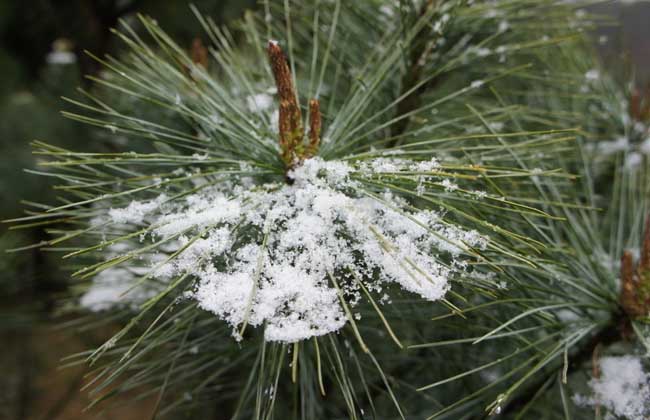
What is the difference between cedar and Korean pine? Learn to easily tell the two pines apart
Differences between cedar and Korean pine
-
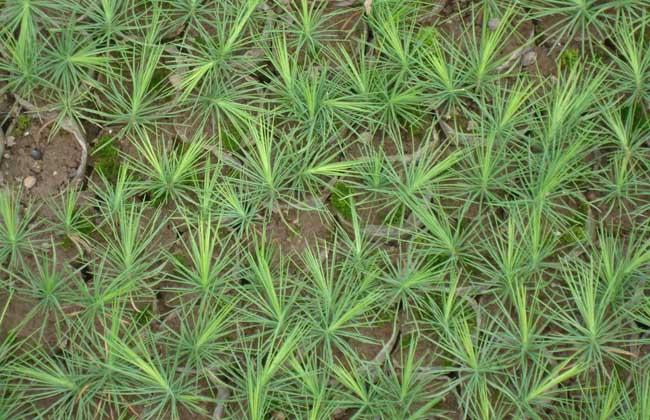
What are the key points of Korean pine seedling cultivation techniques?
Korean pine seedling cultivation techniques
-
Technical key points for converting young Scots pine (Pinus sylvestris var. mongolica) stands into Korean pine (Pinus koraiensis) nut orchards
In recent years, the establishment of Korean pine dual-purpose nut and timber forests and Korean pine nut orchards has developed rapidly in Heilongjiang and Jilin provinces of China. In some places, developing Korean pine nut orchards has become a path to prosperity, and relatively large-scale Korean pine nut orchards have been established one after another. However, due to deviations in people's understanding, the selection of superior scions for grafting to establish orchards has been neglected, and the scions selected are rarely improved varieties that have undergone identification. Establishing Korean pine nut orchards without such selection cannot guarantee the yield and quality of seeds and nuts, let alone early fruiting, high yield, and stable yield. Practice has proven that using young Scots pine
-
Grafting Propagation Technique for Pinus sylvestris var. mongolica Grafted with Korean Pine (Pinus koraiensis)
Pinus sylvestris var. mongolica has strong adaptability, is cold-resistant, drought-tolerant, and tolerant of poor soil. Using Pinus sylvestris var. mongolica as rootstock to graft Korean pine (Pinus koraiensis) brings earlier flowering and fruiting, rapid orchard establishment, and good results. 1 Preparation of scions 1.1 Selection of mother trees Select superior mother trees as scion sources. Within the chosen area, measure the tree height, diameter at breast height, crown width, fruiting layer thickness, number of young cones, number of cones, and male and female flower quantities of each clone individual. At the same time, conduct individual tree seed collection, and test cone number, cone weight, seed yield, seed extraction rate, kernel rate, empty shell rate, pest damage rate, 1000-seed weight, as well as cone length and width.
-
How is mixed-species afforestation of poplar and Korean pine carried out?
The mountainous area of eastern Northeast China is the native home of Korean pine. Under natural conditions, many Korean pines have certain types of broadleaf tree species associated with them throughout their entire growth and development process, forming coniferous-broadleaf mixed forests. With the development and utilization of forest resources in the forest region, Korean pine forests have decreased over large areas, and the consumption of timber resources is very large. To restore forest resources as quickly as possible, the introduced larch and poplar varieties, although fast-growing and quick to form forests, are not conducive to the full utilization of forest land productivity and the restoration of ecological communities, and will also cause deterioration of forest soil conditions and reduce forest land productivity.
-
Technical methods for artificially promoting seed production in Korean pine plantations
For Korean pine, a tree species with a long rotation period, tapping the economic potential of its seeds, shortening the capital payback period and securing near-term income are very important issues in addition to considering timber revenue. The Fengcheng area currently has 800 hectares of Korean pine plantations, of which 3600 hectares have entered the seed-bearing stage; in a good year, the average yield is 350 kg of seeds per hectare, with a total output value of up to 13 million yuan. Further increasing the seed production of these stands can effectively boost the development of the forestry economy in mountainous areas. In February 1998, before sap flow began, we treated the existing stands that had entered the
-
Detailed Explanation of Key Points of Korean Pine Seed Treatment Technology
Korean pine (Pinus koraiensis Sieb. et Zucc.), also known as fruit pine, belongs to the Pinaceae family, genus Pinus. It grows well in the Kuandian area of Liaoning, China. Its wood is soft and durable, the seeds are edible and can be pressed for oil, and it is a natural green food. In recent years, as the export volume of Korean pine kernel products has increased, the commercial value of Korean pine has become higher and higher, and the demand for Korean pine afforestation seedlings has also greatly increased, thereby mobilizing the enthusiasm of the vast number of seedling cultivation workers to grow Korean pine seedlings. In the process of Korean pine seedling cultivation, seed treatment is the key
条件筛选