What are the key points of Korean pine seedling cultivation techniques?
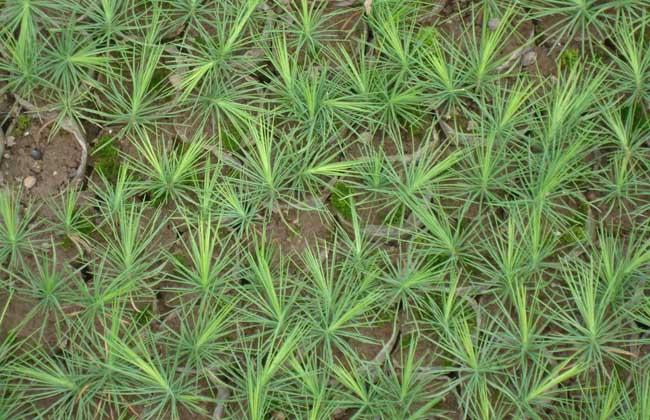
The Korean pine (Pinus bungeana) is a tree species unique to China, with a graceful form and unusual bark. It can be used for ornamental purposes, and its wood can be used for house construction, furniture, stationery and other timber uses. In cultivation it is generally propagated by sowing. The seedling bed should preferably be a sandy loam with good drainage, flat terrain and deep soil. Let us take a look at Korean pine seedling cultivation techniques below!
Selection of a nursery site for Korean pine
Korean pine seedlings are afraid of waterlogging, so the nursery site should be a flat plot with irrigation and drainage conditions. Heavy clay soil, saline-alkali soil and low-lying waterlogged land are not suitable as nursery sites. Fine land preparation: the nursery land should be deep-plowed, leveled and raked fine, with sufficient base fertilizer applied, such as decomposed pen manure or compost. Calcium superphosphate can also be mixed with cake fertilizer or farmyard manure for better results. Before land preparation, broadcast 10 kg of ferrous sulfate powder per mu and plow it into the soil for sterilization and disinfection. After the land is prepared, make seedbeds running north-south, with bed ridges 25 cm high and beds 1 m wide, ready for sowing.
Sowing Korean pine seeds
1. Seed germination: Treat Korean pine seeds by soaking in Bordeaux mixture for disinfection. Before sowing, soak the seeds in warm water (50°C to 60°C) to promote germination, or stratify them with sand to promote germination. When the number of cracked seeds reaches 50% of the total number of seeds, they can be sown. In this way the seedlings emerge strong and uniform, and generally they can emerge and germinate in 15 to 20 days.
2. Sowing seeds: Sowing is generally best done 10 to 15 days after the soil thaws (late March to early April). Before sowing, water the bed surface thoroughly. Sow 1 to 1.5 kg per 10 sq m, which can produce about 1500 seedlings, using wide-row drilling or broadcasting. After sowing, cover with fine sandy soil 1 to 1.5 cm deep. Per mu, use 125 g of prometryn plus 250 g of 25% wettable nitrofen, mix with 25 kg of water, and spray it on the seedbed with a sprayer for weed control. Finally, build a small arched shed over the bed surface to increase temperature and retain moisture and raise the emergence rate. No watering is needed before emergence.
3. Post-sowing management: Because mice like to eat pine nuts, before building the arched shed and covering it with film, scatter some rat poison on the bed surface. For seedling-stage management, after the seedlings emerge completely, gradually increase the ventilation time of the seedbed, and strengthen their resistance through hardening. Korean pine likes light, but the seedlings are relatively shade-tolerant. After removing the film, immediately cover with a shade net to prevent damage from high-temperature sunscald and damping-off disease.
Korean pine seedling management
1. Watering and weeding: During long droughts without rain or high summer temperatures, water promptly. For weeding, follow the principle of weeding early, weeding small and weeding thoroughly. Weed between plants by hand pulling to avoid damaging the seedlings. After weeding broadcast-sown seedlings, cover with soil appropriately to prevent cracks. For drilled seedlings, combine weeding with loosening the soil, and carry out thinning and replanting at the same time. Also drain promptly.
2. Reasonable fertilization: For Korean pine seedlings, base fertilizer should be the main approach and topdressing supplementary. From mid-May to the end of July, during the peak growth period, apply topdressing 2 to 3 times, mainly nitrogen fertilizer. Apply decomposed human excrement or pig manure at 3 dan per mu, mixed with about 20 dan of water; decomposed cake fertilizer at 5 to 15 kg per mu made into about 15 dan of cake fertilizer water; and apply about 4 kg of urea per mu. In the later growth stage, stop applying nitrogen fertilizer and increase phosphorus and potassium fertilizer to promote lignification of the seedlings. A 0.3% to 0.5% potassium dihydrogen phosphate solution can also be sprayed on the leaf surface.
3. Timely transplanting: Korean pine seedlings grow slowly and are suitable for dense planting. If larger-sized seedlings are to be further cultivated, they must go through 2 to 3 transplants before final planting. Two-year-old seedlings can be transplanted with soil in early spring before the terminal buds begin to sprout, with a plant-row spacing of 20 to 60 cm, without damaging the terminal buds. After planting, water twice in succession, then water again after 6 to 7 days. Four- to five-year-old seedlings can undergo a second transplant with a soil ball, with a plant-row spacing of 60 to 120 cm. After they survive, keep the soil around the roots loose, apply 100 to 120 kg of decomposed organic fertilizer per plant, water thoroughly after covering with soil, and then strengthen management to promote growth and cultivate strong seedlings.
4. Pest and disease control: After sowing, pay attention to damage to seedlings by seed-corn maggot larvae. The base fertilizer applied must be fully decomposed and crushed. Pine aphids harm the tender branches and needles of seedlings and can easily lead to sooty mold, causing weakened tree vigor and even death. In the early stage of infestation, spray 50% phoxim emulsion, with 1 kg mixed with 2000 kg of water.