-

Where is the Landrace pig native to, and what major lines is it mainly divided into?
The Landrace pig is a relatively common excellent pig breed, distributed in all regions of our country. The main characteristics of the Landrace pig are a relatively high number of piglets born, fast growth and development, and a high lean meat rate, making it suitable for large-scale and small-scale pig farms. In order to let everyone understand the Landrace pig in more detail,
-
How are sassafras seeds harvested, stored, and grown into seedlings?
Sassafras, also known as sassafras tree, nanshu, or shancha, is a deciduous tree that can reach 35 m in height and 2.5 m in diameter at breast height. The roots or stems and leaves of sassafras can be used as medicine, and it is also used for shipbuilding, waterwheels, and fine furniture. The seeds contain oil that is mainly used to make paint; the bark and leaves are used as medicine and have the effect of
-
How late into the year can Gannan navel oranges be sold, and what varieties are there?
Gannan navel oranges are quite famous, with smooth and beautiful fruit, crisp and tender flesh, and a rich, sweet flavor. Whether judged by nutritional value or storage time, they are an impeccable orange variety, and Gannan navel oranges have become a specialty of the Jiangxi region. So how late into the year can Gannan navel oranges be sold?
-
2020 Taiwan-Japan Food Communication Reader Appreciation Festival Day 1: Thinking from the perspectives of agriculture and diet, turning the act of "eating" into a force that supports the Earth's sustainability
2020 Taiwan-Japan Food Communication Reader Appreciation Festival Day 1: Thinking from the perspectives of agriculture and diet, turning the act of "eating" into a force that supports the Earth's sustainability
-
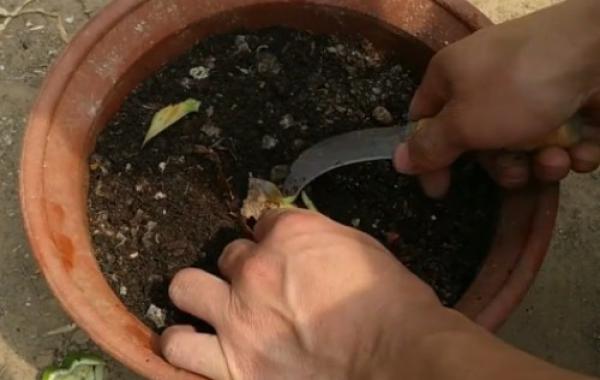
How to grow a Clivia so it turns into a clustered Clivia
How to make a Clivia turn into a clustered Clivia
-
How much does a colored silkworm cost? Silk-spitting colors and how to raise white silkworms into colored ones
Colored silkworms are the latest scientific research achievement introduced and absorbed by the Sericulture Research Institute from the latest scientific research results at home and abroad, and developed through years of research and innovation. It uses the most advanced sausage-type artificial feed (no mulberry leaves needed) and colored silkworm, colored cocoon (the colored silkworm and colored cocoon technology is provided by the Sericulture Research Institute of the Academy of Agricultural Sciences
-
At what size do crucian carp spawn, and how many days does it take for the eggs to hatch into fry?
Crucian carp, commonly known as crucian, with local names such as jiguazi, yuejizai and tuji, can produce many new varieties through artificial breeding and selective breeding. So at what size do crucian carp spawn? How many days does it take for the eggs to hatch into fry? According to farmer Mr. Zeng, the gonads of crucian carp mature earlier than those of other fish; fish in their second year can spawn, and they continue to grow in size while spawning. One-year-old crucian carp can already spawn. Moreover, the spawning period is long, lasting from spring all the way to autumn, and the number of eggs laid is large; the eggs are laid on aquatic plants or other objects in shallow water. The strong reproductive capacity of crucian carp is an important reason why it is widely distributed and abundant. There is another point: crucian carp still forage for food during the spawning period, which is different from other fish. <p style="text-align: center;"></p> <p style="text-indent:2em;"><span style="color:#FF0000">How many days does it take for the eggs to hatch into fry?</span></p> <p style="text-indent:2em;">Generally, it takes 3—7 days from the laying and fertilization of the eggs to the hatching of the fry. If the average water temperature is 15—20°C, the hatching time is 5—7 days; if the average water temperature is 20°C, the fry can hatch in 4—5 days; if the average water temperature is 20—25°C, only 2—3 days are needed. In short, the lower the water temperature, the longer the hatching time.</p> <p style="text-align: center;"></p> <p style="text-indent:2em;"><span style="color:#FF0000">Crucian carp farming techniques</span></p> <p style="text-indent:2em;">1. Pond conditions</p> <p style="text-indent:2em;">Crucian carp has the habits of liking to gather in groups, burrowing into mud, and leaping upstream to escape. The pond area for mainly farming crucian carp should not be too large; generally about 2 mu is suitable, and it should not exceed 4 mu. The pond bottom should be relatively hard, generally with a mud thickness within 10 cm; when it exceeds 10 cm, the mud must be cleared to facilitate the catching (catching) of crucian carp. The pond embankment should be solid and not leak water, and sturdy and reliable fish-blocking screens should be installed at the water inlet and outlet. The fish-blocking screen should be 50 cm higher than the highest water level of the pond.</p> <p style="text-indent:2em;">2. Variety selection</p> <p style="text-indent:2em;">At present, there are many crucian carp varieties sold on the market, and it is inevitable that good and poor ones are mixed. Practice has proved that allogynogenetic silver crucian carp and high-back allogynogenetic silver crucian carp (abbreviated as high-back crucian carp) are suitable for main farming, and their growth speed is 2 times and 3 times faster than ordinary crucian carp respectively. Allogynogenetic silver crucian carp and high-back crucian carp are similar. The differences between allogynogenetic silver crucian carp and ordinary crucian carp are: allogynogenetic silver crucian carp has 31-32 scales along the lateral line, while ordinary crucian carp has 28-29; allogynogenetic silver crucian carp and high-back crucian carp have the same number of lateral line scales, but high-back crucian carp has a short head, high back, thick body, and round abdomen.</p> <p style="text-indent:2em;">3. Stocking density</p> <p style="text-indent:2em;">From the perspective of farming economic benefits, if the stocking number exceeds 2000 fish/mu, although a higher yield can be obtained, the individual commercial fish raised are small, the selling price is low, and the benefit is not ideal; if the stocking number is less than 1000 fish/mu, although the individual commercial fish are larger, the total yield is not high and the sales income is low. Stocking 1400 fingerlings of 30 grams each per mu or 1200 fingerlings of 50 grams each per mu, with an appropriate amount of silver carp, bighead carp and summer grass carp, with the total number of mixed fish not exceeding 600, can achieve a net yield of more than 500 kg of crucian carp and about 200 kg of other fish, giving an ideal effect.</p> <p style="text-indent:2em;">4. Water quality management</p> <p style="text-indent:2em;">The calcium and phosphorus content in the body of crucian carp is more than 2 times that of other fish, so the water is required to be rich in calcium and phosphorus to meet the physiological needs of crucian carp. Apply quicklime solution once about every 20 days, with 60 kg per mu each time; apply superphosphate once every 15 days, with 15-20 kg per mu each time. Superphosphate can only be applied 3-5 days after applying quicklime, to prevent the water from being too alkaline and reducing the effect of phosphate fertilizer.</p>
-
7 common mistakes in treating pig diseases, how many have you made?
In the process of raising pigs, pig diseases are unavoidable, but there are also mistakes in treating pig diseases. Have you fallen into any of these 7 mistakes below? 1. Using antipyretics in large doses. Many people, when treating pig diseases, often cannot do without antipyretics, such as amino
-
Why Can Cat Poop Be Made Into Coffee and Why Is It So Expensive? A Look at Its Appearance and Price Per Jin
Cat poop is simply cat feces. And in the coffee market, coffee made from cat poop has become a hot commodity on the international market because of its mellow and delicious taste. So what does cat poop look like? Why can it be made into coffee? Why is it so expensive? How much does it cost per jin? From Changsha coffee
-
How do you grow Sedum adolphi (Golden Sedum) into a full, overflowing pot? What are the growing methods and points to note?
Sedum adolphi is a perennial succulent in the Crassulaceae family, Sedum genus. If you want to grow it large and plump, you have to pay very close attention to its daily care. So, how do you grow Sedum adolphi into a full, overflowing pot? What are the growing methods and points to note? Below, the editor introduces the growing techniques for Sedum adolphi.
条件筛选