-
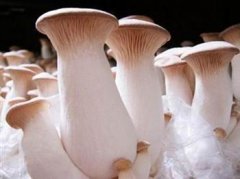
Growing mushrooms with coffee grounds: can you plant mushrooms with the stems stuck into coffee grounds?
Do you know how to grow mushrooms with coffee grounds? Let's find out below. First, you need to prepare the spawn you want to grow, then find the coffee grounds you need. Now let's take a look at how to grow them. 1. Fill the bag or container to 2/3 full, and the coffee grounds should ideally be fresh from the same day.
-

Wild mushrooms may be developed into anti-cancer drugs
Seemingly ordinary macrofungi, that is, wild mushrooms commonly parasitic on tree trunks, may actually be developed into antibacterial and even anti-cancer drugs. A research team composed of four lecturers and their students from the School of Chemical and Life Sciences at Nanyang Polytechnic in Singapore has, over the past two years, classified and studied more than 400 species of local wild mushrooms, and found that two of them contain anti-cancer compounds and 30 contain antibacterial compounds. At present, they have successfully identified the chemical structure of one wild mushroom with anti-cancer properties, and confirmed
-
Control Methods for Mushroom Mycelium Not Growing into the Casing Soil
Mycelium not growing into the soil means it does not grow into the casing layer. The main reason is that the soil used has not been properly treated, such as being too dry, too wet, too acidic, or too alkaline, the soil itself containing harmful substances, or improper soil disinfection causing chemical damage. Control methods: if the casing soil is too dry or too wet, adjust the moisture promptly and manage ventilation properly; if the casing soil is too acidic or too alkaline, adjust the pH value promptly; if the soil itself contains harmful substances or chemical damage has already occurred, replace the soil.
-
Control Methods for Mushroom Mycelium Failing to Grow into the Substrate
About 10 days after spawning, the mushroom mycelium should visibly grow into the substrate. If this is not the case, it is due to causes such as the compost being too wet or too thick, the interior of the substrate being too dry, or the substrate layer being compacted. The cause should be identified promptly to create favorable conditions for mycelial growth. Although a dry surface is not a problem, never spray water on the bed surface while cultivating the mycelium. If the interior of the substrate is too dry, supplemental nutrient water should be added to the substrate: for every 100 sq m, use 0.9 kg of soybeans, soak them until swollen and grind them into about 90 kg of juice, add 45 yeast tablets, 27 vitamin B1 tablets, and 0.45 kg of white sugar
-
What should you do if herbicide is accidentally mixed into oyster mushroom (Pleurotus ostreatus) substrate?
Herbicide should never be mixed into the substrate when growing oyster mushrooms. As for what adverse effects mixing herbicide into the substrate may have on the growth of oyster mushroom mycelium, we have not yet carried out experiments in this area. I think that mixing 50 grams of herbicide into 2000 jin of substrate is not a low concentration; even if it does not affect mycelial growth, at the very least herbicide residues will accumulate in the oyster mushroom fruiting bodies, making it very difficult to guarantee the safety and hygiene of the product. The solution is to repeatedly rinse the herbicide-containing substrate with water (5-6 times), then drain off some of the excess water, add an appropriate amount of carbendazim (reduced by about 20% from the original amount), pile it up for fermentation, and then use the original method for inoculation and cultivation.
-
High-yield cultivation method of cutting oyster mushroom blocks into pieces, standing them upright and covering with soil
Mushroom farmers in Dongkan Town, Binhai County, Jiangsu Province, through years of oyster mushroom cultivation practice, worked out the six-character high-yield formula for oyster mushrooms of "cutting into blocks, standing upright, covering with soil", which increased the oyster mushroom yield per mu by more than 2000 jin compared with the past, with an increase rate of about 30%, and at the same time, production costs dropped greatly. Their high-yield experience mainly consists of three steps: "cutting into blocks, standing upright, covering with soil". The so-called "cutting into blocks" means that at the end of harvesting the second flush of mushrooms in furrow-bed cultivation, the dead mushrooms, stipes and the like remaining on the bed surface are cleaned up, and a sharp knife is used to cut the cultivation substrate into multiple pieces of about 50 cm
-
Method for Processing Shiitake Mushroom Stems into Shiitake Floss
1. Raw material formula: 100 kg shiitake mushroom stems, 4-6 kg high-quality soy sauce, 3-4 kg white sugar, 2-3 kg peanut oil, 5 kg scallions, 0.2 kg monosodium glutamate, 4 kg yellow rice wine, 0.6 kg refined salt, appropriate amounts of ginger, fennel, food coloring, and five-spice powder. 2. Raw material preparation: Select shiitake mushroom stems free of sawdust, insect damage, and mold, cut into 1 cm pieces, wash clean with water, and soak for 1-2 days to allow full water absorption and softening. 3. Pre-boiling: Place the soaked mushroom stems into a pot and heat to a boil, then simmer over low heat
-
Shiitake mushroom stems processed into shiitake mushroom floss see their value multiply
1. Raw material formula: 100 kg shiitake mushroom stems, 4-6 kg high-quality soy sauce, 3-4 kg white sugar, 2-3 kg peanut oil, 5 kg scallions, 0.2 kg monosodium glutamate, 4 kg yellow rice wine, 0.6 kg refined salt, appropriate amounts each of ginger, fennel, food coloring, and five-spice powder. 2. Raw material processing: Choose shiitake mushroom stems free of sawdust, insect damage, and mildew, cut them into 1 cm pieces, wash them clean with water, and soak them for 1-2 days so they fully absorb water and soften. 3. Precooking: Put the soaked mushroom stems into a pot and heat to a boil, then
-
What are the methods for processing edible mushrooms into candied fruit?
Edible mushrooms are nutritious and delicious. Besides being eaten fresh, processed into dried products, or salted or canned, they can also be further processed and utilized to make various uniquely flavored, nutritious candied fruits, seasonings, candies, alcoholic beverages, and more. This is of great benefit to further improving the economic returns of edible mushrooms. Below are several methods for processing edible mushrooms into candied fruit. I. Small white oyster mushroom candied fruit. 1. Formula: 80 kg fresh small white oyster mushrooms, 45 kg white granulated sugar, 0.15 kg citric acid. 2. Material selection: Select grade-qualified raw material that is 80 to 90 percent mature
-
Key Cultivation Techniques for Converting a Cold Storage Facility into a Mushroom Farm
Cold storage facilities have good insulation and moisture retention, with easily controlled temperature and humidity and weak light, making them quite suitable for mushroom growth and development conditions. With slight modifications to the existing facilities inside the storage, year-round mushroom production can be achieved, with 3 cultivation cycles possible per year. 1 Cold storage conversion. Cold storage can be divided by temperature into high-temperature storage (fruit cold storage) and low-temperature storage (meat and aquatic product storage); by construction location, it can be divided into above-ground storage and cave storage. These cold storage facilities were originally designed and built for storing fruits and vegetables, and their performance is not quite suitable for mushroom cultivation, therefore
条件筛选