-

What are the common misunderstandings in the use of sugarcane herbicides
Common misunderstandings about sugarcane herbicides
-

What are the main herbicides used in wheat fields? Detailed guide to their application methods
Main herbicides for wheat fields and their application methods
-

Detailed Explanation of Guidelines for the Use of Common Pesticides on Vegetables
Guidelines for the Use of Common Pesticides on Vegetables
-

Using new technologies can save on pesticide use
Can save on pesticide use by using new technologies
-
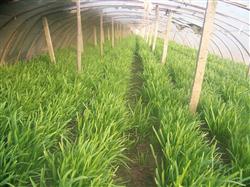
How do you clear weeds when growing chives in a greenhouse?
How do you remove weeds when growing chives in a greenhouse? Please explain the methods. Greenhouse chives are generally grown by transplanting; after transplanting, you can use pendimethalin, prometryn, or butralin for soil-closure treatment. Apply 150 ml of 330 g/L emulsifiable concentrate per mu or 200-250 ml of 48% butralin emulsifiable concentrate, add 50 kg of water...
-

What are the common contraindications for insecticide use?
1. Chlorpyrifos is prone to causing phytotoxicity when used during the melon seedling stage, and its use should also be avoided during the flowering stage of some crops. 2. Pesticides containing triazophos should not be used on fruit sugarcane, as they are prone to causing phytotoxicity. 3. Because phoxim decomposes readily in light, its use should be avoided during the watermelon growing period and at the seedling stage of radishes and leafy vegetables (even avoiding use during the growing period...
-
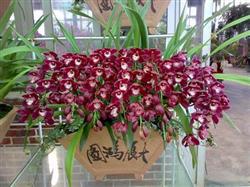
Sensitivity of Crops to Common Insecticides and Fungicides and Precautions for Use
① Take 200 g of scallions, chop them, soak them in 10 L of water for a day and a night, filter the liquid, and use it to spray the affected plants several times a day for 5 consecutive days. ② Take 200-300 g of garlic, crush it and extract the juice, dilute it with 10 L of water, and use it immediately to spray the plants. ③ Take 400 g of tobacco powder and soak it in 10 L of water for two days and two nights...
-
Why do insecticides become less and less effective the more you use them?
Chlorpyrifos is a highly effective, broad-spectrum organophosphorus insecticide that acts on pests through contact toxicity, stomach toxicity and fumigation, and is especially effective against the brown planthopper. The relevant application techniques are described below: 1. Product characteristics: 1. Chlorpyrifos is currently available in China in formulations such as emulsifiable concentrate, granules and microemulsion. Among them...
-
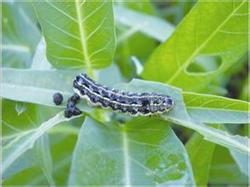
How can BT insecticide be used for the best results?
BT insecticide, namely Bacillus thuringiensis microbial insecticide, contains parasporal crystals and spore toxins that kill pests. It has good pest-killing effects, is safe for humans and livestock, causes no harm to natural enemies, and is relatively difficult for pests to develop resistance to, so it has been widely used to control crop pests. However, in practical application, because the methods are not mastered, ...
-
The key to cultivating spice crops lies in the skillful use of herbicides
What are herbicides? How many categories are there? Chemical pesticides used to control various weeds in fields are called herbicides. Herbicides can be classified by mode of action, translocation within the plant, method of use, and chemical structure system. (1) Classification by chemical structure system: they can be divided into inorganic herbicides, mineral oil herbicides, ...
条件筛选