-

What pests and diseases need to be controlled in mulberry trees in summer?
What pests and diseases need to be controlled in mulberry trees in summer? Please give guidance. In summer, mulberry trees have the following pests and diseases that need to be controlled: 1. Diseases. Mulberry red rust. The symptom is that after the young buds are damaged, they swell, become deformed and curved, and the surface is covered with small yellow slightly raised spots (aecium). When leaves are damaged, at first circular...
-
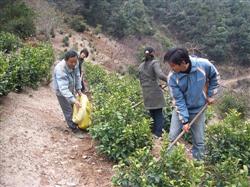
How to fertilize tea plants in summer? Key points of tea plant cultivation and fertilization techniques
How to fertilize tea plants in summer? Please allow the following introduction on how to apply summer fertilizer to tea plants for reference: After the spring tea is picked, the plant's nutrients are consumed in large amounts, the new shoots stop growing, and root growth intensifies, so fertilizer should be applied in time to replenish the plant's nutrients. According to experiments, generally for every 100 kg of dry tea harvested from a tea garden, ...
-
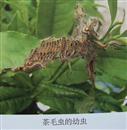
Tea Plant Cultivation Techniques: What Pests and Diseases Affect Tea Plants in Summer?
What pests and diseases affect tea plants in summer? An introduction and control methods. In summer, the key diseases to control in tea gardens are tea blister blight and tea bud blight, while the key pests are tea tussock moth and tea geometrid. Tea blister blight mainly damages new shoots and tender leaves; the lesions are sunken on the upper surface of the leaf and raised like a steamed bun on the underside, producing grayish-white powdery spores. For control...
-
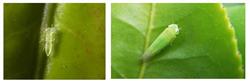
Tea Plant Cultivation Techniques: How to Control Pests in Tea Gardens in Summer?
How to control pests in tea gardens in summer? Please give an introduction to the control methods. In July, the main pests in tea gardens are the tea green leafhopper (Empoasca onukii), the citrus spiny whitefly (Aleurocanthus spiniferus), planthoppers and the tea geometrid (Ectropis obliqua), and they should be controlled early. Planthoppers, the citrus spiny whitefly and the tea green leafhopper are all piercing-sucking pests, and the application methods are similar. In pollution-free tea gardens, phoxim, imidacloprid, acetamiprid and other pesticides can be used for control. In organic tea gardens where the tea green leafhopper occurs, leaves can be picked in several batches, and when the temperature is suitable, Beauveria bassiana preparations can be used for control; whitefly fungal preparations, rotenone and matrine can be used to control the citrus spiny whitefly. To control the tea geometrid, pollution-free tea gardens can use bifenthrin, cypermethrin, deltamethrin, diflubenzuron and so on, while organic tea gardens can use light traps to kill adults, or spray rotenone and matrine.
-
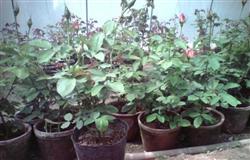
Rose cultivation: How to care for potted roses in summer?
How to care for potted roses in summer? Please give guidance. The reason potted roses die in summer is mostly because the potting soil was not properly mixed, and the pots were not repotted and the soil not changed in spring, so the nutrients in the original potting soil were largely depleted. As a result, the roses cannot withstand the high temperatures and die. In the hot summer season, roses are almost in a semi-dormant state, and some...
条件筛选