-
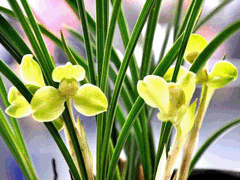
Sharing my experience reviving weak seedlings on a balcony, from Rizhao, Shandong
My balcony growing, Rizhao, Shandong --- reviving weak seedlings
-
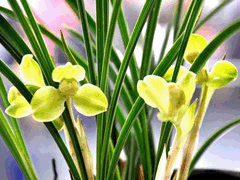
The correctness of "one flower blooms, two shoots are lost" (handling of the flower stalk)
The correctness of "one flower blooms, two shoots are lost" (handling of the flower stalk)
-
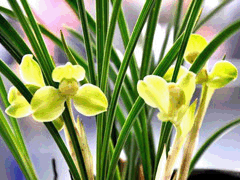
What to do if it does not sprout? Teach you the correct way to handle it
How to handle it when it does not sprout?
-

How to care for orchids in July? Keep this care guide handy
1. This month has two solar terms, Minor Heat (July 7 or 8) and Major Heat (July 23 or 24), entering the high-temperature period, with an average monthly temperature above 30°C. It is the hottest month of the year, with more than two-thirds of the days being clear days with the scorching sun overhead and unbearable heat. Therefore, the most important task this month is to strengthen shading, using...
-
How to care for orchids in June? Please keep this care guide handy
Climate characteristics this month: with Grain in Ear and the Summer Solstice marking the true start of summer, high temperatures, strong light and dry air are the hallmarks of this month! This month is mainly about protecting buds and leaves. On clear days, orchids can receive light freely before 10 o'clock, but after 10...
-
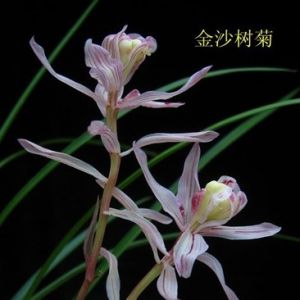
Jinsha Shuju (Thousand-Hand Guanyin) Cymbidium Lianban Orchid Variety Introduction
Jinsha Shuju, also known as Thousand-Hand Guanyin, is a broad-leaf Cymbidium Lianban orchid. The leaves are about 1CM wide and about 60CM long, usually 4-6 leaves, rarely 7. The leaf posture is slanted-upright, with the upper part semi-drooping, tall and imposing, and the plant color is light yellow-green, prone to tiny black spots; the buds are purplish-red, and the flower buds carry a purplish-red sandy blush when emerging from the soil, bloom easily, and leaf buds often sprout from the lower part of the flower stem. The flower...
-
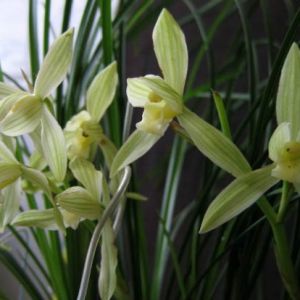
A handful of snow-like orchid petals, fully displaying the beauty of nature
Characteristics: leaves slanting upright, leaf margins with obvious serrations; leaves 0.6 cm wide and 50 cm long. Expert comments: "Yipengxue" has tall flower scapes, with 2-4 flowers per scape, large flowers reaching 6 cm in diameter, silvery white; sepals spindle-shaped, broad in the middle, tapering to a pointed tip, with flat shoulders and emerald green veins; petals short and round, mussel-shell shaped, forming a cylindrical shape together with the short and round lip, enclosing the column in the middle and exposing only the anther cap; fragrance rich and pure, flower appearance elegant, a rare Cymbidium tortisepalum.
-
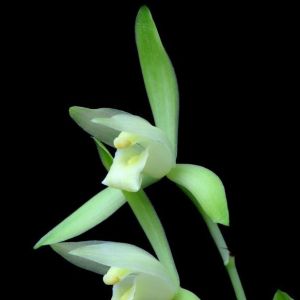
The 5th Shandong Provincial Flower Expo hosts a special orchid exhibition
Golden Silk Horse Tail (Jinsi Mawei) is the foremost traditional fine variety of the plain-heart (Suxin) leaf-art form of the Jianlan orchid (Cymbidium ensifolium) variant. Its leaves are broad and thick, with slightly curled leaf tips and a pendulous leaf posture, displaying the yellow-centered striped (Sanguang striped) art pattern. The Linghai Lanyan says: on both sides of the leaf and beside the central vein and side veins, there are altogether five strands of golden silk running from tip to base. This is what Japan calls yellow-centered striped. "Golden" refers to the golden-yellow color of the leaf's linear art pattern; "silk...
-
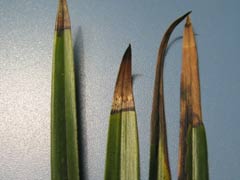
What to Do When Orchid Leaf Tips Dry Out? Teach You the Correct Way to Handle It
Orchids often develop dry leaf tips, and sometimes even entire leaves wither. Beginner orchid growers don't know what to do. Orchid leaf tip drying is mainly caused by orchid anthracnose and round spot disease. When orchids suffer frost damage or late frost injury, dry or discolored leaf tips also easily form. Below, let's look at the specific solutions....
-
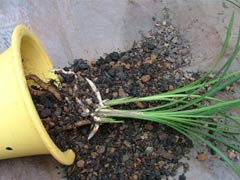
What to Do When Orchid Roots Rot? Teach You the Correct Way to Handle It
Orchid root rot means there is a problem with your orchid care. If even one factor - environment, planting method, watering, fertilizing, spraying - fails to meet the orchid's needs, and the tips of new shoot leaves begin to wither or black spots appear on the leaves, it means the orchid has started to become diseased and its roots are rotting. If you do not find the cause and improve it...
条件筛选