-
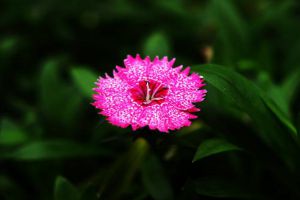
What fertilizer is best for Dianthus? Detailed guide to fertilizing methods
It loves fertilizer, so you can fertilize it several more times, but the amount should be small and the concentration low. Do not use chemical fertilizer on it often, as this will increase the salt content in the soil; do not use too much calcium fertilizer, as it will cause boron to leach away. In addition, note that trace elements must not be lacking, and the nutrition must be complete.
-
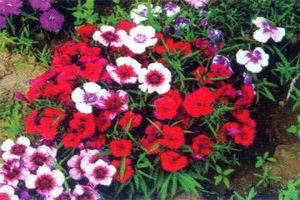
How to repot Dianthus? Detailed guide to the correct method and steps
First, score a circle around the edge of the pot with soil to make it easier to remove the whole plant. Then clean the old soil off the roots and remove the messy branches. After that, prepare the drainage for the new pot, plant it in the new pot, and finally water it thoroughly in one go.
-
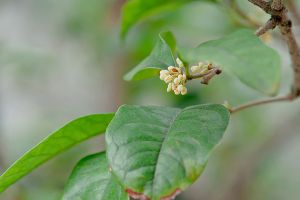
How Often to Water Osmanthus fragrans 'Semperflorens'? A Detailed Guide to Watering Frequency
Osmanthus fragrans 'Semperflorens' can be said to be a very good plant, but those who grow it still worry about watering it. In fact, watering differs in every season. Generally speaking, in spring and autumn you can water it once every two to three days, in summer it needs watering every day, and in winter it is usually watered once every seven to ten days. The above is only a general watering method; specifically, it still depends on how moist the potting soil is.
-
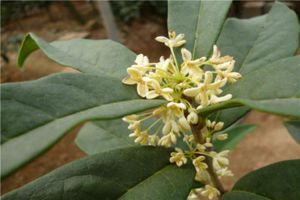
How to prune Osmanthus fragrans 'Rixiang Gui'? A detailed guide to the correct pruning method
It can be pruned at any time. Just go by its growth condition: you can cut off the upper branches to encourage the lower branches to grow. You can keep the thin, slender branches so that their thickness is more even, and pull the dense branches apart to make the crown larger.
-
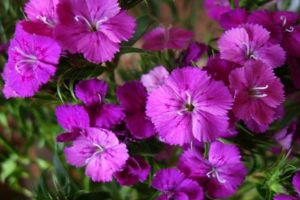
What is the difference between Lychnis coronata and Dianthus chinensis? A quick guide to tell them apart
Both belong to the same family, but there are still differences in flower form. The former has mutated into a raceme, while the latter is umbel-shaped. The latter also has a bicolor flower, but the former does not.
-
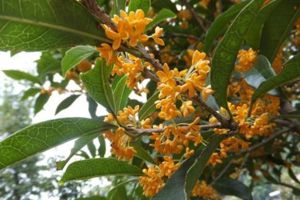
What is the difference between golden osmanthus and August osmanthus? A quick guide to telling them apart
The former is a type of the latter, and the latter also includes silver osmanthus. They can all stay green year-round, are relatively small in size, and have similar crown shapes. The former is more yellow in color, has a stronger fragrance, and its flowers drop easily; it is planted in many regions and is more popular.
-
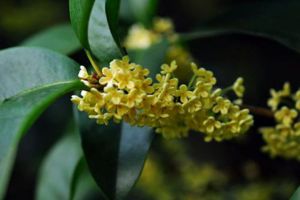
Detailed Guide to Growing and Caring for Golden Osmanthus (Osmanthus fragrans)
Be sure to use soil with good drainage; you can mix rotted leaves with garden soil and fine sand. In winter, keep the indoor temperature within the range of 5 to 10 degrees. On cloudy and rainy days, check whether water has accumulated in the pot. Use different fertilizers at different times of the year, and prune it to promote growth.
-
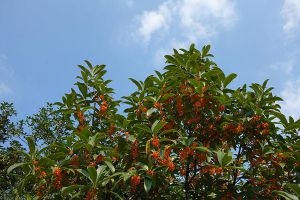
What is the difference between golden osmanthus and red osmanthus? A guide to telling them apart easily
Let's start with the flowers: golden osmanthus (Osmanthus fragrans 'Jingui') is the color of egg yolk, while red osmanthus (Osmanthus fragrans 'Dangui') comes in a wider range of colors, including orange-red and orange-yellow. Next, the leaves: the former has irregular toothed edges on its leaves, while the latter's leaf teeth follow a certain pattern. Finally, the fragrance: the former is already very strongly scented, but the latter is even more so.
-

-
条件筛选