-

How to Prevent and Treat Deformed Mushrooms? A Detailed Guide to Practical Methods
Deformed mushrooms manifest in many different forms. The most common ones in production mainly include: "landmine mushrooms", "hollow mushrooms", "big-bottom mushrooms", "hard opening and early opening", "red root", and "water rust spots". The main cause of "landmine mushroom" formation is that the casing soil material is too coarse, the soil is rather hard, the casing layer is thick, the surface layer of the casing contains less water, while the temperature and humidity conditions of its lower part and the substrate are suitable for fruiting body initiation and growth, so fruiting bodies tend to differentiate and form on the material surface or in the middle and lower layers of the casing soil, and then push through the soil surface. Solution: choose
-
Detailed Guide to Bag-Cultivated Casing Soil Cultivation Technology for the Tiger Milk Mushroom
The tiger milk mushroom, also known as Poria-sided oyster mushroom and called South Seas Poria by the Japanese, is a mushroom used both as medicine and food. The tiger milk mushroom is mainly used medicinally for its sclerotium, and its fruiting body contains 16%-45% protein and is edible. The sclerotium contains glucose, fructose, galactose, maltose, cellobiose, palmitic acid, inositol, oleic acid, and others. Some countries and regions in Africa have a very early tradition of eating and using the tiger milk mushroom medicinally. They cut the fruiting bodies of the tiger milk mushroom into small pieces, or remove the outer skin of the sclerotium, boil it in salt water, then slice it or grind it into powder, add other seasonings, and cook it into soup to eat.
-
A Detailed Guide to Post-Harvest Handling and Processing Methods for Wine Cap Mushroom
Wine cap mushroom, also known as King Stropharia, is a domesticated wild mushroom species, and in recent years there has been a trend of gradual expansion. Its mushrooms have a delicate fragrance, crisp and tender flesh, good palatability, high yield, high selling price, and very considerable economic benefits. However, its fresh products have a short storage time and are not easy to preserve. If not sold fresh in time, huge losses will be caused. In order to ensure that economic benefits are not lost, the salting processing and dried product processing techniques for wine cap mushroom are now introduced. 1. Salting processing of wine cap mushroom. 1. Harvesting. The mushroom bodies of wine cap mushroom used for salted export should be at 6-7
-
Detailed Guide to Tea Tree Mushroom Cultivation: A Full Analysis of Key Planting Techniques
Tea tree mushroom, also known as the tea plant mushroom, is a rare, precious and delicious edible fungus. Its caps are tender and its stems crisp, with a mellow, delicate fragrance and excellent texture, and it can be cooked into all kinds of delicious dishes. According to testing by the China Food Quality Supervision and Inspection Center, the fruiting bodies contain important nutrients such as glucose, fungal protein and minerals, and include all eight amino acids needed by the human body, among which lysine content is as high as 1.75%. It also has strong kidney-tonifying effects and antitumor activity, making it one of the top ten best-selling mushrooms on the international mushroom trading market, known as the "Chinese divine mushroom." In Japan, Singapore,
-
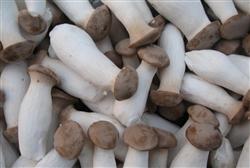
How to Grow King Oyster Mushrooms: A Detailed Guide to Cultivating Rare Edible Mushrooms
King oyster mushroom (Pleurotus eryngii) is a precious fungus valued both as food and medicine. Its caps are thick and fleshy with a crisp, tender texture, and its stems are densely structured, creamy white and firm, and rich in nutrients. It has been listed as one of the edible mushrooms with the greatest development potential in the 21st century. Because of its relatively high contamination rate and low biological conversion rate, production fluctuates greatly, and cultivation numbers and yields...
-
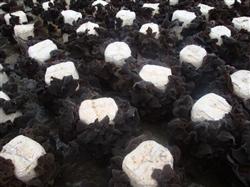
A Detailed Guide to Black Fungus Planting Methods and Cultivation Techniques
I. Overview Black fungus is also called wood ear, smooth wood ear, or cloud ear. Taxonomically it belongs to the class Basidiomycetes, order Tremellales, family Auriculariaceae, genus Auricularia. There are about a dozen or more species in this genus, such as black fungus, hairy wood ear, wrinkled wood ear, felt-cap wood ear, horny wood ear, shield-shaped wood ear, and so on. Among these wood ears, only the smooth wood ear has a plump, tender texture and a delicious flavor...
-
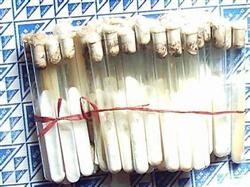
Detailed Guide to Methods and Tips for Selecting Straw Mushroom Spawn
Superior straw mushroom spawn is produced on a straw substrate and overwintered (10-15°C). After overwintering, those proven by early cultivation to be high-quality and high-yielding are selected. Mother spawn (first-generation spawn) is then obtained through tissue isolation and further expanded for culture, to supply spawn for that year's production. Mushroom growers should pay attention to the following points when selecting straw mushroom spawn: 1. Straw...
-
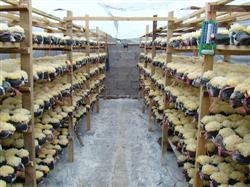
A Detailed Guide to Practical Multi-Tier Three-Dimensional Cultivation Techniques for White Wood Ear (Tremella fuciformis)
White wood ear, also known as white fungus, snow ear, or Sichuan ear, is a "prized fungus" used both as food and medicine, with broad market prospects. Artificial cultivation techniques for white wood ear are constantly being improved. Here we introduce the practical techniques for indoor multi-tier three-dimensional cultivation of white wood ear in Gutian County, Fujian Province, the "home of white wood ear": 1. Mushroom house setup: The specifications of a professional cultivation house or shed...
-
What Are the Characteristics of the King Oyster Mushroom? A Detailed Guide
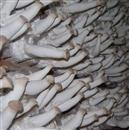
The king oyster mushroom, also known as the eryngo oyster mushroom (Pleurotus eryngii), has an almond-like aroma and thick flesh resembling abalone, which is how it got the name "king oyster mushroom." In Japan it is called "yukitake." From late spring to early summer it grows saprophytically and parasitically on the roots and surrounding soil of plants in the Apiaceae family such as field eryngo (Eryngium campestre). Its...
-
How to prevent and control green mold in oyster mushrooms? A detailed guide to integrated control techniques
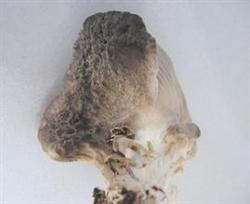
1. The tall-stemmed mushroom has a small cap and poor differentiation, with a relatively long stem. The cause is that during the primordium formation and differentiation stage, the mushroom house is short of oxygen and light, while the temperature is on the high side, which affects the normal differentiation and development of the cap. Control method: increase ventilation and adjust light and temperature. 2. The tumor-capped mushroom's cap appearance is mainly at the edge...
条件筛选