-
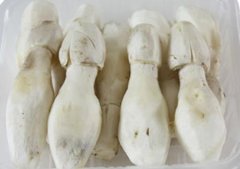
A Detailed Guide to the Cultivation Methods and Growing Techniques of the Shaggy Mane Mushroom
The shaggy mane mushroom is a common edible mushroom. Would you like to try growing it yourself? In fact, growing it is quite easy. As long as you have the needed materials and pay a little extra care, you can cultivate shaggy mane mushrooms. Cultivation materials Main materials: horse manure, cow dung, wheat
-
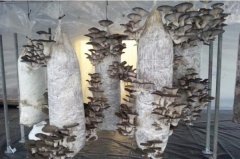
Can Coffee Grounds Be Used to Grow Mushrooms? A Detailed Guide to Substrate Recipes
Do you know what coffee grounds are good for? As far as we know, they can be used as a raw material for dehumidifying and deodorizing, and they are also rich in nutrients. Because of these rich nutrients, some people saw a business opportunity and started using coffee grounds to grow mushrooms,
-
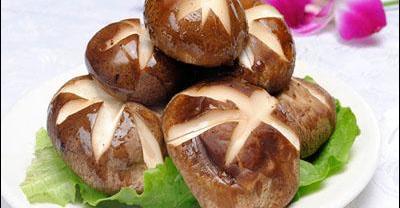
How to Grow Edible Mushrooms? A Detailed Guide to High-Yield Cultivation Techniques
The edible mushrooms currently cultivated on a large scale, such as oyster mushrooms, shiitake, enoki mushrooms, lion's mane mushrooms, wood ear, silver ear, and button mushrooms, can be roughly divided into the mycelium stage and the fruiting body...
-

A Complete Guide to New Summer Cultivation Methods for Straw Mushrooms
Straw mushrooms are the only high-temperature, fast-growing variety among edible fungi. The cultivation substrate is mainly rice straw and wheat straw. They are delicious and nutritious. The summer cultivation techniques are introduced as follows: Preparation of mushroom beds. The mushroom beds are set up inside a plastic greenhouse, and the greenhouse is covered with plastic film and straw mats to retain warmth and moisture. The mushroom beds are 1 m wide, with unlimited length, and the spacing between beds is 30 cm, which can serve both as walkways and as water storage ditches. On the beds, sunken mushroom troughs are dug crosswise. The troughs are 30 cm wide and 20 cm deep, with a 20 cm small soil ridge left between troughs. Within the troughs, spray 0.2
-
How to Grow Straw Mushrooms? A Detailed Guide to Two Cultivation Techniques
The straw mushroom production season has now arrived. What are the detailed cultivation techniques for straw mushrooms? Straw mushroom cultivation includes waste cotton residue cultivation and rice straw cultivation, which are introduced separately below: Waste cotton residue cultivation 1. Soaking and composting fermentation: Soak the waste cotton residue in lime water, adding about 5 kg of lime per 100 kg of waste cotton residue. After thorough soaking, scoop it out and pile it up, cover with plastic film and ferment for about 2 days, controlling the moisture content at about 70% (when squeezing the material by hand, a small amount of water seeping through the fingers is ideal), with a pH value of about 8.5. 2. Secondary fermentation: Move the material into a
-
What to Do About Dead Straw Mushrooms? A Detailed Guide to New Prevention and Control Techniques
I. Causes of Dead Straw Mushrooms 1. Poor coordination between ventilation and moisture retention in the mushroom house. Straw mushrooms are aerobic fungi and need plenty of water; too much ventilation easily leads to water loss and death. Insufficient ventilation easily causes excessive carbon dioxide and death from oxygen deprivation. 2. Sudden temperature changes in the mushroom house. In southern China, most straw mushroom cultivation uses foam mushroom houses, which play an important role in maintaining constant temperature and humidity. However, if doors and windows are not closed in time when a typhoon strikes, or heating is not applied in time when freezing damage occurs, or ventilation and cooling are not carried out early enough during sustained high temperatures, or too much well water is sprayed on the floor,
-
A Detailed Guide to the New Bag-Cultivation Method and Growing Techniques for Straw Mushroom
Straw mushroom cultivation originated in South China and was later spread by overseas Chinese to Southeast Asia and parts of Africa; it has a cultivation history of more than 200 years to date. Its flesh is plump, tender and crisp-smooth, its flavor is delicious, and it has high nutritional value, containing abundant protein, essential amino acids for the human body, and vitamin C. Regularly eating straw mushroom can strengthen the body's immunity to disease. It also has certain anti-cancer and therapeutic effects, lowers plasma cholesterol, and has a blood-pressure-lowering effect; it is also a good food for diabetes. It is a food that is both tasty and health-promoting, and it is extremely popular in domestic and international markets
-
Detailed Guide to Straw Mushroom Sowing: Key Points on Sowing Time and Methods
1. Sowing period. When using a sun-heated bed for cultivation, the bed should be prepared in advance and covered with plastic film in May. The specific sowing period should be determined by the bed temperature, which should generally reach a stable 22°C or above. Sowing cannot be done if this is not reached. In central and southern North China, sowing is generally done in late May or early June. 2. Sowing rate. Generally, each square meter of sun-heated bed can take 15-20 kg of rice straw or 15-25 kg of cottonseed hulls, with the spawn amount being 6-8% of the weight of the cultivation substrate, that is, 1.2-1.5 kg of spawn per square meter. For first-time cultivation, the spawn amount should be appropriately increased
-
A Detailed Guide to the Morphological Characteristics and Cultivation Techniques of the Button Mushroom
I. Morphological characteristics. The button mushroom, also known as the cultivated mushroom, belongs to the Agaricaceae family. The fruiting body is medium-sized, with a cap diameter of 5-12 cm. It is initially hemispherical or broadly hemispherical, later becoming nearly flat, white and nearly smooth, pale yellow when dry. The stipe is 4.5-9 cm long and 1.5-3.5 cm thick, white and smooth, sometimes silky, nearly cylindrical, solid to soft inside. The annulus is single-layered, membranous, borne at the middle of the stipe and easily shed. The spores are brown, elliptical and smooth, generally two spores per basidium, mainly
-
A detailed guide to the clever preparation of pollution-free mushroom fertilizer
1. Soybean milk fertilizer: Take 500-1000 grams of soybeans, soak them in water and grind them into a slurry, filter out impurities, add 50 kg of clean water, stir well and spray. This can make mushrooms white and tender with thick, sturdy stems. 2. Salt water fertilizer: Take 150-250 grams of table salt, put it into 50 kg of clean water, stir until dissolved and spray. This can make the mushrooms pure white in color, with thick, sturdy and high-quality fruiting bodies. 3. Yeast fertilizer: Take 25 grams of pure yeast powder, add it to 50 kg of clean water, stir well and spray. This can promote the formation of fruiting bodies, increase the number of mushrooms and make the fruiting bodies robust. 4. Glucose fertilizer:
条件筛选