-
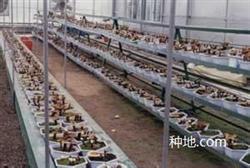
How are lingzhi (Ganoderma lucidum) bonsai cultivated in a greenhouse?
Question: How are lingzhi bonsai cultivated in a greenhouse? Lingzhi bonsai is a shaped handicraft that has emerged in recent years, made by processing dried mature lingzhi. By using foam plastic greenhouse technology to pot living lingzhi at the growth stage, live lingzhi bonsai can be made, just like potted flowers, allowing you to observe the lin...
-
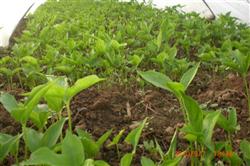
Open-field and greenhouse cultivation methods and techniques for Pinellia ternata (dry Pinellia)
How to grow dry Pinellia in a greenhouse? Please give an introduction. Dry Pinellia, also known as three-leaf Pinellia, Sanbujiao, and Mayuguo, is a commonly used Chinese medicinal herb, found growing wild in both northern and southern China. In recent years, due to the reclamation and use of barren hillsides and the heavy use of herbicides in farmland, its ecological environment has been damaged, resources have decreased year by year, and prices...
-
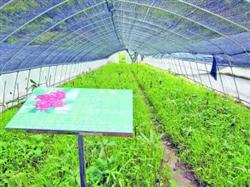
Greenhouse Cultivation Methods and Technical Key Points for Pinellia ternata
How to grow Pinellia ternata in a greenhouse? Please introduce the methods. Pinellia ternata, also known as three-leaf pinellia, three-step jump, and hemp jade fruit, is a commonly used Chinese medicinal herb, with wild distribution throughout both northern and southern China. In recent years, due to people's reclamation and utilization of barren hillsides and the heavy use of herbicides in farmland, its ecological environment has been damaged, resources have been decreasing year by year, and prices...
-

Detailed Explanation of Pollution-Free High-Yield Cultivation Techniques for Goji Berry in Greenhouses
Goji berry (Lycium barbarum) is a perennial deciduous small shrub of the genus Lycium in the Solanaceae family. Its tender shoots and leaves (also known as goji tips) are eaten as a vegetable and can be stir-fried, served as a cold dish, or used in soups. They are nutritious, delicious and refreshing, and are highly favored by consumers. Lishui County, Jiangsu Province began introducing and cultivating it in 2002. The products are mainly sold to large and medium-sized cities such as Shanghai, Nanjing and Wuxi, and demand in the market exceeds supply, achieving relatively high economic returns. The pollution-free high-yield cultivation techniques for goji berry in greenhouses are introduced as follows: 1. Variety selection: Choose the large-leaf goji. This variety has large, green, oval-shaped leaves, with leaves
-
Detailed Explanation of Key Cultivation Techniques for Greenhouse Gogi Berry Greens
Gogi berry greens are a vegetable that is planted once and yields benefits for many years. When growing gogi berry greens in a greenhouse, plastic film is used in winter to keep the greenhouse warm, and in summer bitter gourd and loofah are grown to provide shade and increase humidity, making year-round supply possible. The cultivation techniques are introduced as follows: 1. Seedling raising. Generally, from mid-to-late February to early March, healthy branches of wild gogi berry are cut for cutting propagation. ① Seedbed preparation. Choose a plot that is sheltered from the wind, faces the sun, has convenient irrigation and drainage, and is far from pollution. In mid-January, remove weeds, deep-plow 15-20 cm, and apply 1000 kg of decomposed human and livestock manure and 1200 kg of burnt soil ash per 667 sq m, then rake evenly; in mid-February, rake once more, and make flat beds with a bed surface width of 1.2 m, a ditch width of 20 cm, and a ditch depth of 20 cm. ② Cutting. From mid-February to early March, cut one-year-old healthy branches of wild gogi berry, cut them into short cuttings about 15 cm long, with flat cut ends, and insert them obliquely into the seedbed at a row spacing of 5 cm and a plant spacing of 2 cm, with the axillary buds facing up. The insertion depth is 3/4 of the cutting, and the density is 500,000-600,000 per 667 sq m. After insertion, water thoroughly, insert one 2 m long bamboo hoop every 1 m, then cover with 0.014 mm thick, 2 m wide polyethylene agricultural film to keep warm and moist.
-
Detailed Guide to Pollution-Free Greenhouse Cultivation Techniques and Growing Conditions for Reishi Mushroom
Reishi mushroom has been regarded since ancient times as a symbol of auspiciousness, preciousness, beauty and longevity, and is known as the "immortal herb" and "auspicious herb." Traditional Chinese medicine has long regarded it as a precious Chinese herbal medicine that nourishes and strengthens the body and supports vital energy. Today, with the rapid development of the edible mushroom industry, large-scale artificial cultivation is no longer difficult. 1. Conditions required for growth and development. Reishi mushroom is a wood-rotting fungus. In artificial cultivation, broadleaf tree branch wood, sawdust, cottonseed hulls and corn cobs are used as the main materials, with wheat bran, cornmeal and rice bran added as supplements.
-
Dry Pinellia Greenhouse Planting Methods and Technical Key Points
Dry Pinellia, also known as three-leaf pinellia, three-step jump, and hemp jade fruit, is a commonly used Chinese medicinal herb, with wild distribution throughout both northern and southern China. In recent years, due to people's reclamation and utilization of barren hillsides and the extensive use of herbicides in farmland, its ecological environment has been damaged, resources have decreased year by year, and prices have continued to rise. According to surveys, dry Pinellia products are currently scarce in seventeen specialized medicinal herb markets nationwide, supply has fallen short of demand, and the market price has remained firm at 36-42 yuan/kg. Therefore, the market prospects for artificially cultivating dry Pinellia are very broad. In recent years, we
-
Characteristics and Cultivation Methods of Greenleaf Schisandra
Medicinal name: Greenleaf Schisandra. Aliases: Neifengxiao, Xiaoxueteng, Guoshanfeng, Zizuan, Fengshateng. Chinese pinyin: luyewuweizi. Latin botanical animal/mineral name: SchisandraviridisA.C.Smith. Efficacy: dispels wind and invigorates blood; moves qi and relieves pain. Family and genus classification: Schisandraceae. Indications: rheumatic bone pain; stomach pain; hernia pain; irregular menstruation; urticaria; herpes zoster. Ecological environment: grows in forests, on hillside roadsides and by mountain gullies and streams at 250-1200m. Harvest
-
Schisandra chinensis asexual propagation and seedling raising: Rootstock method for green-branch cleft grafting
For the cultivation of rootstocks for green-branch cleft grafting, refer to open-field direct seeding for seedling raising. If the rootstocks are not dug out before winter arrives, pruning must be carried out before the ground freezes. Leave 3 to 4 buds on each rootstock and cut at about 5 cm, then water thoroughly with winter-protection water to prevent freeze damage and drying out. If the rootstock seedlings are to be planted out the following year, the seedlings can be dug out and stored in cellars or trenches, which is more beneficial for rootstock seedling management. When planting out the following year, they also need to be cut back to 3 to 4 buds to establish the trunk. Rootstock seedlings that overwinter in place should be irrigated promptly after the ground thaws the following year and given a topdressing of quick-acting nitrogen fertilizer to promote new shoot growth. Keep 1 to
-
Semi-hardwood green shoot cutting propagation technique for Schisandra chinensis
In early to mid-June, collect semi-hardwood new shoots of Schisandra chinensis varieties or superior lines as test material for cutting propagation. Generally, it is more suitable to collect cuttings before 10:00 a.m. The cuttings should be 15-20 cm long and more than 0.3 cm thick, retaining the leaves on the middle and upper parts, removing the leaves 3-5 cm above the base (cut end), with the lower cut made on a semi-hardwood node and the cut surface slanted. Soak the cuttings in 0.1% carbendazim solution for 1-2 minutes, shake off the water droplets, then use 1000 mg/kg naphthaleneacetic acid (NAA) or 100 mg/kg ABT
条件筛选