-
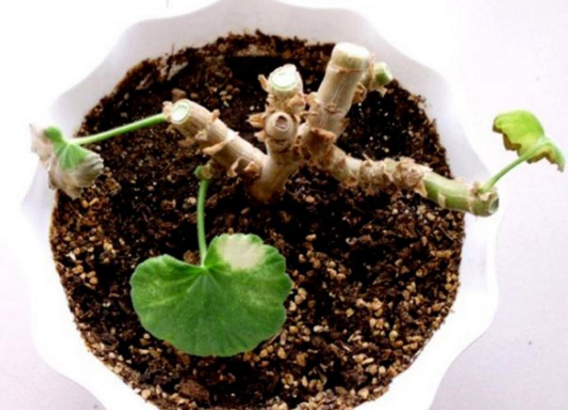
How to correctly prune and care for geraniums in summer
Geraniums grow quickly and send out shoots rapidly; if you are not careful, stray branches grow everywhere, so they basically need pruning every year. Master the correct pruning method to keep your geranium's shape beautiful! How to prune and shape geraniums. Geranium pruning tools: if you want a beautiful plant shape and many flowers, you have to be ruthless. Scissors, saws, knives, daggers
-
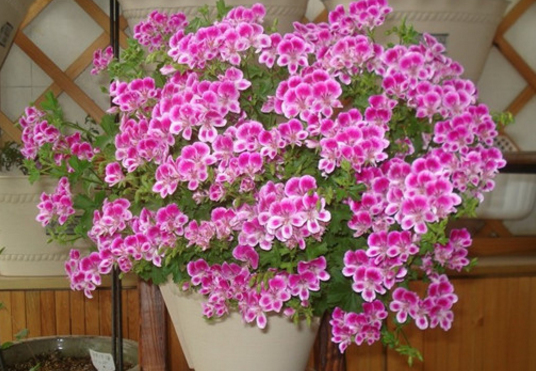
Is Geranium Toxic? A Detailed Guide to Keeping It During Pregnancy and Propagating It from Cuttings
Geraniums can be elegant or vividly bright, with endlessly varied, graceful forms. You may fall in love with them at first glance. But such a beautiful flower makes people wonder whether it is toxic, because beautiful things always seem to protect their stunning looks with weapons.
-
Can Geraniums Repel Mosquitoes? A Detailed Guide to Cutting Propagation Timing
Geranium is a plant with a certain ornamental value. Can geraniums repel mosquitoes? When should they be propagated by cuttings? Can geraniums repel mosquitoes: Geraniums can repel mosquitoes. The geranium that repels mosquitoes is the scented geranium (rose-scented geranium), which, as the name suggests, is a plant that gives off fragrance, just like night-blooming jasmine, jasmine, and rosemary.
-
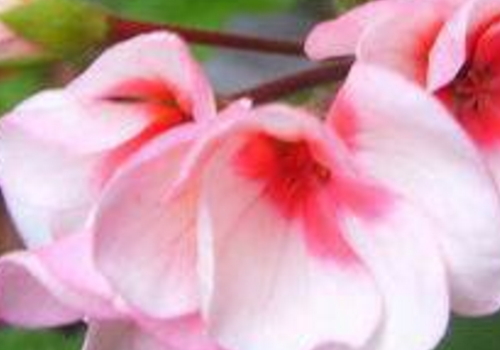
When should geraniums be sown, and how do you plant them?
Geraniums are loved by many people, and quite a few buy them and grow them at home. When should geraniums be sown? And how do you plant them? When to sow geraniums: geraniums can be sown in either spring or autumn, and indoor pot sowing in spring is best. The ideal germination temperature is 20-25°C. The seeds are not large, so do not cover them with too deep a layer of soil after sowing.
-
Can potted geraniums be grown indoors? A detailed guide to their care
Geraniums are very popular and have considerable ornamental value. How do you grow potted geraniums? Can they be grown indoors? How to grow potted geraniums: 1. Soil: Geraniums are highly adaptable and can grow in all kinds of soil, but they grow best in sandy loam rich in humus. 2. Watering: Geraniums like dry conditions and dislike dampness
-

Ivy Geranium: The Ideal Flower Material for Creating Hanging Flower Beds
Ivy geranium, also known as ivy-leaved geranium, is the main material for European balcony flower troughs, hanging flower baskets, and flower pots. It was introduced in China starting last year, mainly used for hanging flower baskets, tall flower pots, etc., and in areas with suitable temperatures, the flowering period lasts up to half a year. Currently, commonly used varieties include 'Tornado' and 'Summershowers', among which 'Tornado' has advantages such as strong branching ability, short internodes, good plant shape, heat tolerance, and rain resistance. 'Summershowers' has obvious trailing characteristics. Colors include rose red, purple red, carmine, purple, white
-
Are trailing geranium and ivy geranium the same plant?
Family: Geraniaceae Latin name: PewlargoniumPeltatum Alias: Ivy geranium Origin and habits: Native to the Cape of Good Hope, Africa. Cultivated throughout China. Growth habits: Likes sunlight, but is also fairly shade-tolerant. Afraid of cold, needs to be cultivated in a greenhouse. Not tolerant of waterlogging. Likes loose, well-drained soil. Morphological characteristics: Trailing, stems and branches brown, young stems green or with a red flush. Leaves ovate or obovate, smooth, thickly leathery, with sparse
-
A Complete Guide to Geranium Care in Autumn
After the scorching summer, geraniums in a semi-dormant state begin to gradually revive, growing new leaves and blooming again, adding color to the golden autumn. However, geraniums that have just made it through the hot summer inevitably suffer from old roots and declining leaves, with weak growth. The newly emerging leaves are small and dark green, the petioles and flower stalk stems are rather short, the flower heads are small, and the overall plant shape is clumped, reducing its ornamental value. Treating geraniums with gibberellin can effectively promote lush leaves and abundant flowers, improving their ornamental value. The method is as follows: after the geranium plant resumes growth following the summer, when the flower stalk stems of the first batch of flowers change from curved to upright
-
What are the propagation methods for geraniums?
For home gardening, in-pot cuttings are generally the most practical method of propagation. The best time for cuttings is April to May or August to September, and the specific cutting time should be determined according to the local growing season with suitable temperatures (18-20°C); the growing medium should be loose, well-aerated and well-draining, ideally a mix of one part sand, one part perlite and one part leaf mold, or medium-coarse river sand, matured soil or expanded perlite, all of which must be sterilized by methods such as exposure to strong sunlight before use. Cuttings can be taken in conjunction with spring or autumn pruning, selecting healthy one-year-old soft shoots free of pests and diseases as cuttings, about 8 cm long,
-
A Detailed Guide to Geranium Cultivation Methods and Key Technical Points
Geranium is also called "foreign hydrangea" and "balahong." Its flowering period is quite long, from October of the current year to June of the following year, with the peak bloom period being April to May. Flower colors include red, peach red, magenta, flesh red, white, and others. Other cultivated species include large-flowered geranium, shield-leaved geranium, scented geranium, musk geranium, horse-shoe geranium, and others. Geranium is a perennial herbaceous plant, originally growing in the Cape of Good Hope area of South Africa. Because it is drought-tolerant, light-loving, not particular about soil, highly adaptable to the environment, and relatively easy to cultivate, although it was introduced to China only
条件筛选