-

Capital flowing to the countryside generally does not grow grain: three major difficulties behind it
Regarding the phenomenon noted by China Youth Daily reporters during interviews in Xingtai, Handan and other places, that capital going to the countryside has the strength to compete for land but not the ability to farm it, He Xuefeng, director of the China Rural Governance Research Center at Huazhong University of Science and Technology and doctoral supervisor, said this situation is not uncommon nationwide.
-
Corn prices in southern sales areas are generally stable, and this is how the industry sees it
Corn prices in southern sales areas are generally stable. Currently, the enthusiasm for temporary state reserve corn purchases has declined, grain prices in production areas lack support, and prices have weakened slightly. Holders of grain in sales areas have become more calm in their mindset, purchasing imported sorghum and corn from North China and the Northwest to maintain production, and for the time being are not stockpiling in large quantities, waiting to observe the starting auction prices for Northeast corn. In the future, several main factors affecting the sales area market are the recovery of the livestock industry, the amount of imported corn, and when relocating corn will broadly begin auctions. It is precisely because these factors are not yet clear that feed mills remain observant and purchasing demand is not strong.
-
In 2014, the national flood disaster situation was generally mild
Reporters learned from the Office of the State Flood Control and Drought Relief Headquarters that in 2014 China's flood control and drought relief work achieved remarkable results. No major dikes nationwide breached, no large or medium-sized reservoirs collapsed, and the number of deaths from floods nationwide was the lowest in history. Over the year, the flood-affected population was reduced by 19.9 million, 20.08 million mu of cropland was saved from inundation, 2.98 million tons of grain losses from floods were avoided, 93 cities at or above the county level were prevented from being inundated, and the flood control and disaster reduction benefit reached 37.9 billion yuan. Drought relief recovered 31.39 million tons of grain and 29.8 billion yuan in cash crop losses, and resolved drinking water difficulties caused by drought for 16.56 million people and 7.9 million large livestock.
-
In 2014, domestic supply of agricultural products was generally ample
In 2014, international bulk agricultural product prices continued the previous year's downward trend, while domestic market supply was generally ample, prices fell more often than they rose, and imports continued to grow. Grain prices rose slightly amid stability. Supported by the minimum purchase price and temporary storage policies, domestic grain prices continued to rise slightly amid stability this year.
-
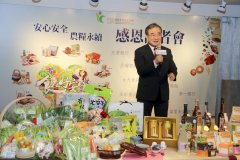
Fruit and vegetable prices generally fall after the Spring Festival; building dedicated cold-chain fruit and vegetable trains to prevent fruit and vegetable prices from falling
Last year, Taipei Agricultural Products Marketing Corporation saw overall vegetable auction prices drop by 30% due to multiple factors such as a surge in fruit and vegetable supply, weak consumption, and consecutive market closures. This year, subsidies are expected to help Taipei Agricultural Products Marketing Corporation build a cold-chain system to extend the freshness period of fruits and vegetables. Let's take a look. Connecting production areas, using cold chain
-
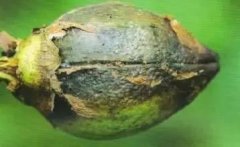
Common diseases of cotton bolls and control methods for cotton boll blackening
Do you know what diseases can occur during cotton cultivation? Below we introduce the most common cotton boll blackening disease. Do you know this disease? What do the symptoms of this disease look like on cotton? What are the control methods? Let's take a look together.
-
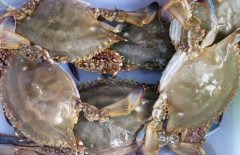
Can you still eat a swimming crab after it dies? How long can it generally be stored?
Seafood is something many people enjoy eating nowadays, and among sea crabs, the swimming crab is very popular. However, fresh swimming crabs are generally hard to come by, and the swimming crabs you buy are usually already dead by the time you get home. So can you eat a dead swimming crab? How long can a dead
-
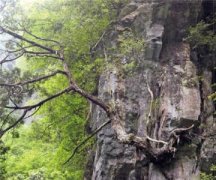
What Tree Species Is the Chinese Arborvitae? A Complete Collection of Wild Chinese Arborvitae Pictures and a Price Overview
What tree species is the Chinese arborvitae? The Chinese arborvitae is a shrub or tree of the Cupressaceae family, genus Thuja; it generally grows in the crevices of cliffs at an altitude of 700-2100 m, in areas with shallow soil and rock; but now this tree has become an endangered species. It is mainly produced in Sichuan, China
-
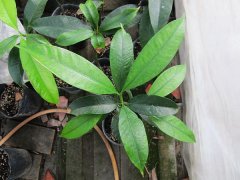
What Happens When Mangosteen Is Planted in Full Sun? Differences Between the Leaves of Common Mangosteen and Mesta Mangosteen
Mangosteen varieties: there are currently no officially certified varieties. It is said that only a few variant types are known, for example in the Sulu Islands (Sulu Islands) the variety has larger fruit, thicker rind than normal, and a more sour flesh flavor. How do you grow mangosteen? Climate and soil
-
What happens when mangosteen is planted in full sun? Differences between mangosteen and mesta mangosteen leaves
Mangosteen varieties currently have no officially certified cultivars. It is said that only a few variant types are known, for example in the Sulu Islands the variety has larger fruit, thicker rind than normal, and a more sour flesh flavor. How do you grow mangosteen? Climate and soil
条件筛选