-

Functions of Essential Nutrient Elements in Garlic and Detailed Explanation of Deficiency Symptoms
Garlic prefers loose soil rich in humus, has strong adaptability to soil pH, and grows well under slightly alkaline conditions. Among the different growth stages of garlic, the demand for nitrogen is the highest, followed by potassium, calcium, phosphorus, and magnesium. For every 1000 kg of fresh garlic produced, it needs to absorb 4.5-5.0 kg of nitrogen, 1.1-1.3 kg of phosphorus, and 4.1-4.7 kg of potassium, with a ratio of about 1:0.25-0.9. The root system of garlic is a string-like fleshy root system, mainly distributed within the 5-25 cm plow layer, and it belongs to shallow-rooted vegetables.
-
Research and Development Progress of Functional Rice and Its Food Products
Functional rice refers to rice products that regulate human physiological functions, are suitable for consumption by the general population, and are not intended for the treatment of diseases. In addition to containing the seven major nutrients necessary for human growth and development - protein, fat, carbohydrates, vitamins, minerals, water and fiber - functional rice also contains certain special components that regulate and balance human physiological functions. It can enhance physiological defense mechanisms, prevent specific diseases, delay aging, and control physical strength and energy status. 1. Processing of functional rice
-
Detailed Explanation of the Growth, Development and Functions of Rice Roots
After the seeds are pre-germinated, they sprout and grow roots. At first, only one root grows, called the seminal root (primary root), which develops from the radicle of the seed. The fibrous roots that later grow from the root primordia at the stem nodes are called adventitious roots. The coleoptile node and the incomplete leaf node produce about 5 roots, the first, second and third leaf nodes produce about 10 roots each, and the nodes above the fourth leaf position produce about 10 to 20 roots each. This is because the leaves increase in size in sequence from bottom to top, so the nutrients supplied for root growth increase in sequence, and the number of roots produced also increases. The nodes of the aboveground part generally do not produce roots. The nutrients produced by the leaves are
-
Detailed Introduction to the Functions and Roles of Rice Leaves
The rice leaf is composed of two main parts: the leaf blade and the leaf sheath, in addition to accessory organs such as the auricle and ligule. The junction where the leaf sheath connects to the stem is called the leaf node. The junction where the leaf sheath connects to the leaf blade is called the leaf collar. When the seed germinates, the first thing to grow out is the coleoptile that protects the young shoot as it emerges, also called the sheath leaf. The sheath leaf differs from other leaves in that it is white and shaped like a cylinder. The second leaf has only a leaf sheath and no leaf blade, and is called an incomplete leaf. Leaves beginning from the third node have both a leaf sheath and a leaf blade, and are called complete leaves. Counting the number of leaves of a variety
-
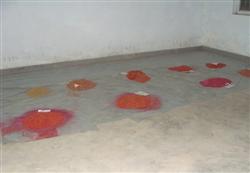
What are the functions and benefits of wheat seed dressing?
What is the use of wheat seed dressing? Please explain. Specifically, wheat seed dressing: first, it is safe for the seeds, so wheat emerges uniformly and the seedlings grow robustly; second, it has good preventive effects on both seed-borne and soil-borne diseases of wheat, and can effectively control various diseases during the wheat seedling stage; third, it has a long duration of effect and can provide long-term...
-
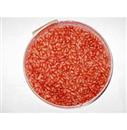
What are the functions and benefits of wheat seed coating?
What is the use of wheat seed coating? Please explain. Coating seeds and treating them with chemicals before sowing wheat is a key measure to reduce the base number of pests and diseases, move the prevention and control threshold earlier, and lessen the occurrence and damage of pests and diseases in the coming year. Through seed coating and dressing, it is possible to effectively prevent and control wheat rust, powdery mildew, sheath blight, smut, take-...
条件筛选