-

What are the key technical points for autumn fingerling management?
Pond clearing. Transfer the fingerlings into a pond that has been cleared and disinfected for rearing. If water source and pond rotation are difficult, all fingerlings can be transferred out for temporary holding, then the original pond disinfected with 75 kg to 100 kg of quicklime per mu, and the water quality fertilized by conventional methods; once the lime's potency has dissipated, transfer the fingerlings back. Separate rearing. Adjust and separate the fingerlings according to different sizes so that the fingerlings stocked in the same pond are of uniform size. Large fingerlings have a big appetite and strong food-grabbing ability; if small fingerlings are stocked in the same pond, the small fish will decline in condition because they cannot get enough feed. Fish
-
What measures are there to ensure the supply of fish fry and fingerlings?
Purpose and application: In response to problems such as severe damage to farmed fish fry and fingerlings in disaster areas and tight supply, countermeasures such as strengthening breeding and collecting broodstock are proposed to make every effort to ensure the supply of fry and fingerlings. Technical measures: 1. Gather statistics to understand the quantity of fry and fingerlings needed for restoring production in the region and the fry and fingerling production capacity, identify the shortfall in fry and fingerlings, and contact fry and fingerling production farms as early as possible to supplement high-quality healthy fry and fingerlings for restoring production. 2. Pay attention to understanding and grasping market information on broodstock and do a good job of collecting broodstock.
-
What are the key technical points for autumn management of fingerlings?
In autumn, the weather turns cold and then warm again, and the water temperature is suitable. This is the peak season for fingerling growth. Doing a good job of autumn fingerling management is a direct means of improving economic returns. The author believes that the following tasks should be done well in autumn fingerling management techniques. 1. Clear the pond in time. Generally speaking, for ponds that have been used to raise fingerlings for 23 months, the water quality will deteriorate, natural feed will decrease, and harmful substances such as hydrogen sulfide and pathogenic bacteria will increase. After the beginning of autumn, fingerlings should be transferred to ponds that have been cleared and disinfected for cultivation. In places where there are difficulties in water source and pond turnover, all fingerlings can be transferred out for temporary holding,
-
Detailed Explanation of Key Technical Points for Autumn Management of Fingerlings
Autumn water temperatures are suitable, making it the peak season for fingerling growth. The following tasks should be carried out well in autumn fingerling management. 1. Timely pond clearing. After 2 to 3 months of fingerling cultivation, pond water quality tends to deteriorate, natural food organisms decrease, and harmful substances such as hydrogen sulfide and pathogenic bacteria increase. After the beginning of autumn, fingerlings should be transferred to ponds that have been cleared and disinfected for cultivation, purifying the aquaculture environment. 2. Scientific feeding. Autumn climate is suitable, fingerlings have a large food intake and grow rapidly, so feed supply must be guaranteed. For grass carp fingerlings as the main species, with silver carp
-
Autumn management of fingerlings takes know-how: these key technical points must be mastered
1. Clear the pond in good time. After 2 to 3 months of rearing fingerlings, pond water quality generally has deteriorated, natural food organisms have decreased, and harmful gases such as hydrogen sulfide and pathogenic bacteria have increased. After the beginning of autumn, the fingerlings should be transferred to a pond that has been cleared and disinfected for rearing. Where there are difficulties in water supply and pond rotation, all the fingerlings can be transferred out for temporary holding, then the original pond should be disinfected with quicklime at 75 kg to 100 kg per 667 sq m, and water quality should be fertilized by conventional methods; after the efficacy of the lime has dissipated, transfer the fingerlings back to ensure purification of their living environment.
-
Key Technical Points for Autumn Release and Autumn Cultivation of Fingerlings to Ensure Survival
Doing a good job of intensive autumn cultivation of fingerlings is the key to improving their overwintering survival rate. Improving the environment: before releasing the fingerlings, drain half of the original pond water, then add fresh water. Apply 150 kg of fermented manure per mu of pond, once every 9 days, for a total of 3-5 applications. Appropriately apply additional chemical fertilizers mainly of nitrogen and phosphorus; generally apply 1.5-2.5 kg of urea and 3-5 kg of superphosphate per mu of pond, once about every 7 days. After each fertilization, add fresh water to keep the pond water transparency at 20-30 cm. Every half month, use 10-15 kg of quicklime per mu of water surface
-
How to Grow Potted Small-Fruited Golden Finger Citron? A Detailed Guide to Care Techniques
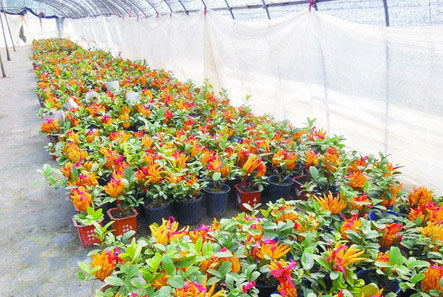
Potted small-fruited finger citron differs somewhat from large-fruited finger citron, and several issues need attention in its management. First, pruning must be timely. When summer temperatures are high, humidity is great, and nutrition is abundant, the plant will produce large numbers of branches with slender internodes, unsubstantial tissue, and no flower buds
-
What nutritional value does finger citron have? How should finger citron be eaten?
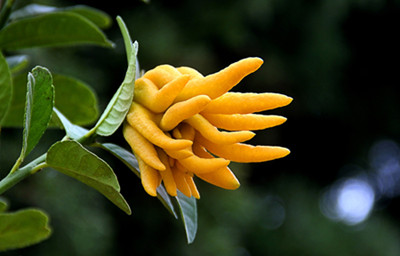
The fruit of the finger citron is the chayote, a vegetable variety of the Cucurbitaceae family. Chayote is crisp and juicy, delicious and palatable, with relatively high nutritional value. It can be used in dishes, and can also be eaten raw as a fruit; it is also a traditional Chinese medicine that strengthens the stomach and regulates qi. The leaves, flowers and fruit of the finger citron can be brewed as tea or steeped in liquor for drinking.
-

How to Grow Finger Citron: A Detailed Guide to Finger Citron Cultivation Methods and Techniques
How to Grow Finger Citron
-

How to prune finger citron? A detailed guide to the correct pruning method
How to prune finger citron
条件筛选