-

Guo Chunmei, the "Index Finger Girl" of Hebei: My world is still very wide
Hebei "Index Finger Girl" Guo Chunmei: "My world is still very wide"
-
Comprehensive Utilization Techniques for Fish Fingerling Ponds During the Winter Fallow Period
Using Winter-Fallow Fingerling Ponds to Raise Marketable Fish Raising a crop of marketable fish in winter-fallow fingerling ponds can both increase production and help regulate the "summer shortage" in the aquatic product market. Because the rearing period is relatively short and temperatures are low, the following techniques should be adopted: 1. Stock early, that is, stock immediately after the fingerlings are concentrated in ponds, so as to make full use of the growing period. Based on a maximum water depth of 2 m, the usual stocking rate is 125-150 kg per mu. The usual stocking ratio is about 40% silver carp, about 10% bighead carp, about 30% grass carp and bream, and about 20% black carp and common carp. Stocked fish
-
High economic returns from raising adult crabs as a supplementary crop in fingerling ponds
Raising adult crabs as a supplementary crop in fingerling ponds, relying on high density for success, practicing ecological farming, and replacing concentrated feed with coarse feed, is a new low-input, high-output farming model that the author has summarized from years of practice. Last year, in a pond of two mu, the author invested a total of 1,000 yuan in fingerling costs and feed costs. The result was an output of 70,000 "huopian" fingerlings worth 3,000 yuan, 20,000 one-year-old fingerlings worth 4,000 yuan, and 40 kg of adult crabs worth 1,000 yuan, for a total output value of 8,000 yuan. After deducting costs, the per-mu
-
Detailed Explanation of Key Points in Mullet Fry and Fingerling Production Technology
The fry and fingerling production of mullet and Liza mullet includes two major steps: artificial propagation and fry and fingerling rearing. The former is further divided into broodstock rearing, induced spawning (artificial induction of ovulation), artificial insemination, and artificial incubation; the latter is further divided into fry rearing and fingerling rearing. Research on artificial propagation of mullet dates back to 1930, when Italy completed the first artificial spawning of mullet. It was not until the past one to two decades that it attracted widespread attention from relevant countries around the world and became an important subject of international biological research. China, the United States, India, the former
-
How to manage fish fingerlings in autumn? These technical points must be mastered
(1) Pond clearing. After the beginning of autumn, the fingerlings should be transferred to a pond that has been cleared and disinfected for cultivation, so that the fingerlings can safely overwinter. Where there are difficulties in the turnover of water sources and fish ponds, all the fingerlings can be transferred out for temporary holding, and the original pond can be disinfected with 75-100 kg of quicklime per mu, the water quality can be fertilized according to conventional methods, and the fingerlings can be transferred back after the drug has dissipated. (2) Separate rearing. The specifications of the fingerlings stocked in the same pond must be consistent. Large-sized fingerlings have a large food intake and a strong ability to compete for food. If small-sized fingerlings are stocked at the same time, the small-sized fingerlings will
-
Things to Keep in Mind When Selecting Fish Fingerlings in Winter and Spring
1. Pay attention to whether the fingerlings are uniform. If the fingerlings in the same pond vary in size, have relatively straight belly lines, thin and elongated tails, and slender bodies, then after being placed in a fish cage for 30 minutes they will show weak, sluggish movement, and some may even show symptoms of disease. Such fish cannot be stocked into ponds, nor are they suitable for long-distance transport; you may reduce the stocking density or move them to fertilized water for rearing. If they are indeed diseased, timely treatment is also needed. 2. Pay attention to the body length of the fingerlings. Whenever seining exercise is carried out, the fingerlings jump vigorously
-
What are the technical measures for autumn fingerling rearing
Autumn water temperatures generally range between 20 and 30°C, which is a good time for fish growth. If autumn is not used promptly to rear fingerlings into plump, strong, large-sized fingerlings, then when the cold winter arrives, most fingerlings will die because of weak constitution, and the average survival rate is often less than 60%. Therefore, strengthening autumn fingerling rearing is the top priority for farmers. The specific rearing measures are: disinfect and clear the pond, then transfer to a new pond. In the original pond used for rearing fingerlings, after several months of culture in spring and summer,
-
How to cultivate large-size fingerlings? Key measures to master
Fingerlings are the material basis for stable and high yield in adult fish production. Practice has proved that large-size fingerlings have stronger adaptability to the environment, ability to escape enemies, disease resistance and feeding ability, so the survival rate is high, the harvested size is large, and high yield can be achieved. To cultivate large-size fingerlings, in addition to carrying out feeding work such as "four fixed" feeding, "three looks" fertilizing, daily pond patrols and fish disease prevention and control, the following measures should also be taken: 1. Add fresh water to improve water quality. "When the water rises one cun, the fish grows three fen," "wide water raises big fish." During the rearing process
-
Management Methods and Technical Key Points for Introduced Snakehead Fry and Fingerlings
There are 3 sources of snakehead fry and fingerlings: first, artificial breeding; second, purchasing from other places or other units; third, catching wild fry and fingerlings in places with lush aquatic plants in reservoirs, lakes, and ditches. How to manage the latter two types of fry and fingerlings is described below: 1. Fry and fingerlings purchased from other places or other units. When purchasing fry and fingerlings, carefully select fish that are robust and of good quality. The specific standards are: from the external appearance of the fish, the scales and fin rays are required to be intact, the color bright and glossy, the body shape normal, and there is no external injury or disease. From the physique, a high degree of plumpness is required,
-
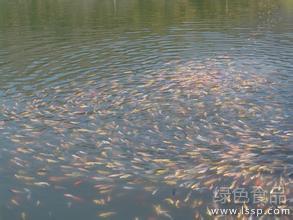
What should be noted when cultivating fish fingerlings in summer? Good-quality fingerlings are the foundation of successful fish farming
Good-quality fingerlings are the foundation of successful fish farming: precautions for cultivating fish fingerlings in summer
条件筛选