-

-
Cotton production outlook not optimistic, experts recommend focusing on four management measures
Reporters learned from the province-wide cotton production and high-yield creation work conference held on August 26 that this year's cotton production situation in our province is extremely unoptimistic. In response to the current realities of cotton production, attending experts recommended that cotton farmers focus on four measures. This year's cotton production in our province is characterized by reduced area, lower per-unit yield, and decreased total output. According to incomplete statistics, the province's actual harvested cotton area is around 11 million mu, a decrease of more than one million mu compared to last year. Cotton per-unit yield is expected to be 70-75 kg, with total output of 75-80 million tons, a decrease of 10
-
Chongqing Agricultural Drought Relief: National Rice Experts Offer Advice
Recently, based on discussions organized among relevant experts within the municipality, and after consultation and revision with the rice expert group of the Ministry of Agriculture, the Chongqing Municipal Agriculture Bureau proposed five technical measures for drought-resistant rice seedling cultivation to ensure transplanting, and specially compiled the "Technical Questions and Answers on Drought-Resistant Rice Seedling Cultivation to Ensure Transplanting," to help grassroots agricultural technicians and farmers further advance autumn grain sowing and ensure full transplanting. Affected by the continuation of last year's severe drought, most rice fields in Chongqing were unable to store water before winter. Since last winter and this spring, temperatures have been higher than usual and precipitation has decreased compared to normal years, causing the current
-
Gastrodia cultivation prospects look promising, experts say so
According to Associate Professor Wang Kangcai from the Chinese Medicinal Materials Research Laboratory of the College of Horticulture at Nanjing Agricultural University, Gastrodia elata is a precious Chinese medicinal herb. Due to a large gap between market supply and demand, Gastrodia cultivation is particularly booming. Based on current market conditions, the price of dried Gastrodia is 150-200 yuan per kg, with a profit of about 200 yuan per sq m, and the prospects for Gastrodia cultivation look promising. Gastrodia growth does not require light, only suitable temperature, humidity and other environmental conditions. In most parts of the country, wherever there are broadleaf tree resources and slightly acidic
-
Russian experts discover a new type of fish feed additive
Russian fish farming experts have recently found that chitosan, a biopolymer extracted from the shells of marine crustaceans, can be used as a fish feed additive, making fish feed easier to transport; fish that eat feed containing chitosan become plumper and finer. Ordinary fish feed is processed into loose pellets, but during transport it easily crumbles from friction or squeezing, and once put into water it quickly swells and breaks apart from soaking, causing waste. Therefore, when processing fish feed, adhesive ingredients need to be added to strengthen
-
How to choose sweet potato varieties? Provincial Crop Institute experts recommend varieties for spring, summer and autumn planting
Sweet potatoes can be planted in spring, summer and autumn. Spring planting is generally done in March to April, summer planting is generally done in May, and autumn planting is done within one week after the Start of Autumn. Below are several sweet potato varieties suitable for planting in our province. Jinye: a new stem-tip vegetable sweet potato variety. This variety has tender stem tips, low crude fiber content, and good palatability after cooking, making it suitable for use as a vegetable. With open-field cultivation, the stem tips can be picked about 10 times over the whole growing period, with 250 kg of stem tips picked per 667 sq m each time, and a picking interval of 15 days. Per 667 sq m, it can yield
-
Wheat drought conditions will worsen further; experts advise watering as soon as possible
In the second half of this month, our province will remain dry with little rain, and relevant experts advise promptly irrigating wheat fields in drought-affected areas to minimize the reduction in the summer grain harvest. In early May, temperatures in most parts of our province were on the high side, and precipitation continued to be below normal. Varying degrees of drought disaster occurred in Linzhou, Puyang, Lushi, Luanchuan, Yichuan, Xuchang, Xiangcheng, Shangqiu and other places, and soil moisture was lost relatively quickly, which had a certain adverse impact on the grain filling of winter wheat and the sowing of spring-sown crops and seedling growth. The meteorological department forecasts that by May 18, except for some local areas in northern Henan, eastern Henan and southern Henan where soil moisture is suitable,
-
How should wheat be planted this year? Hear what the experts say
Liu Fakui, a researcher and wheat cultivation expert at the Wheat Institute of the Provincial Academy of Agricultural Sciences, reminds farmers to pay attention to the following issues in this year's wheat sowing: Drain waterlogged fields and remove excessive moisture, and free up stubble and prepare the soil in good time. Where rainfall has been excessive and there is standing water in the fields, effective measures such as digging ditches to drain water should be taken to remove the standing water from the fields as quickly as possible; where rainfall has been relatively light and the moisture is not excessive, the autumn harvest should be rushed to free up the stubble, and the soil should be dried and prepared in good time. Grasp the suitable tillage period well and improve the quality of soil preparation. For clay soil, remember never to plow or harrow while wet; no-till direct seeding can be adopted
-
-
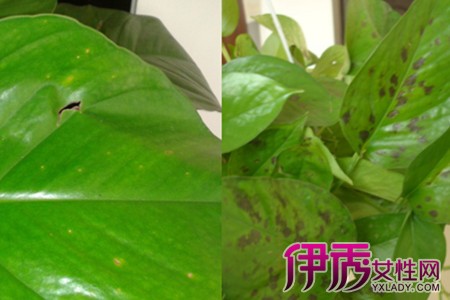
Why do pothos leaves have black spots? Experts teach you to treat flower diseases
Pothos is very popular in many regions because it can absorb formaldehyde. But some people find that the leaves of their pothos develop spots. Today we will explain why pothos leaves have black spots and how to treat them.
条件筛选