-
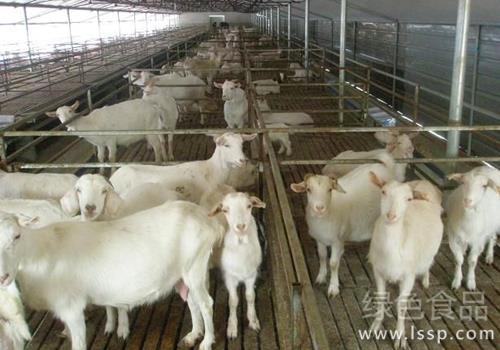
Key points of goat barn feeding technology, solving the problem of limited environments for traditional grazing
Technical points of goat barn feeding due to environmental restrictions on traditional grazing
-

How to create the right environmental conditions for growing-finishing pigs (Part 1)
Intensive pig production is carried out under high-density housed conditions, and the microclimate inside the pig house is the main environmental condition. The microclimate of a pig house includes: temperature, humidity, wind speed, gases, sound, and so on. These environmental factors all directly affect the weight gain rate, feed utilization rate and ultimately the economic benefits of pigs. 1. Suitable temperature and humidity Pigs have a poor ability to regulate their own body temperature; they have only very few sweat glands that can help regulate it in hot weather, and only very little hair coat to resist the cold of winter. Therefore, pig houses must have good heat insulation and warmth retention, and
-
What kind of growing environment suits licorice?
The native range of licorice belongs to continental arid and semi-arid desert zones, characterized by drought, low rainfall, strong light and large temperature differences. Growing under these climatic conditions for a long time has given licorice its traits of cold resistance, heat tolerance, drought tolerance, fear of waterlogging and love of light, and it especially favors calcareous soil; it can grow in the arid regions of Northeast China, Northwest China and North China. The seeds exhibit hard-seediness, with a hard seed rate between 70% and 90%; alternating temperatures of -5 to 20°C give good germination, generally above 50%, and the seeds live for 1 to 2 years. Seed
-
What are the characteristics of the ecological environment in which licorice grows?
Licorice is widely distributed in the warm temperate and cold temperate continental monsoon climate zones of the arid and semi-arid regions of northern China. The suitable average annual growing temperature is between 3 and 10°C, and the altitude range is 250 to 1400 m. Licorice is an indicator plant of calcareous soils in the dry regions of China. Its requirements for soil are not very strict: it can grow in sandy loam, light loam, heavy loam and clay, and it grows best in sandy-covered loam with a sandy upper layer. Licorice has extremely strong cold resistance and drought tolerance; at an absolute minimum temperature of -47°C it still
-
What is the relationship between diseases of eels raised in earthen ponds and the water environment?
The water environment is the decisive factor in eel farming. The water environment not only determines whether eels can be farmed, but also directly affects the level of production and ultimately the economic benefits of farming. Therefore, only by improving the water environment can eels be farmed well. The following analysis focuses on the relationship between eel diseases and the water environment from the following aspects. 1. pH level. The pH value in water is an important comprehensive water quality indicator, and it directly affects the physiological condition of eels. When the biological, chemical or physical components in the water body change, they will all be reflected in the pH value. Eels in earthen ponds require the pond water
-
Detailed Explanation of Key Technical Points for Environmental Control of Nursery Pigs
1. Keeping Warm 7-8 kg weaned piglets entering the nursery barn should have their appropriate ambient temperature maintained at 24.5°C; at 20-25 kg, the appropriate ambient temperature is 23.0°C-24.5°C (generally the barn temperature is raised by about 2°C-3°C after weaning). 2. Creating Good Environmental Conditions Nursery pigs are highly susceptible to infection by pathogenic bacteria and becoming ill, so the barn should be kept dry, with a clean and hygienic environment and fresh air. Use wooden boards or electric heating plates as bedding to prevent piglets' abdomens from getting cold and to prevent their feet and knees from being worn sore
-
Growing Environment and Variety Selection for Mini Sweet Potatoes
1. Environment selection: Select the planting site according to the environmental conditions standard for pollution-free food - vegetable production areas. At the same time, the soil is required to be loose newly opened red or yellow soil or sandy paddy-upland rotation land, with acidic soil. 2. Variety selection 2.1 Jinyu (formerly Zhe 1257). Bred by the Zhejiang Academy of Agricultural Sciences, skin color pink, flesh color pure yellow, tuberous roots short and round, smooth skin, taste mealy, sweet, and glutinous, fine texture, no coarse fiber (strings), rich aroma, drying rate 30%-32%, 5-7 tuberous roots per plant, uniform tuberous root size, good early maturity, can be harvested in about 110 d (days), suitable for planting in different seasons, marketable tuberous root rate can reach 85%, small tubers below 50 g also have distinctive features and are suitable for hotel and restaurant consumption. This variety emerges well, drought tolerance is average, the main disadvantage is susceptibility to vine cutting disease, effective disease avoidance measures are selecting disease-free seed tubers, high vine cutting, and avoiding continuous cropping, paddy-upland rotation has a better control effect. 2.2 Liangyuan (formerly ais). Introduced variety from abroad. Skin color golden yellow, flesh color red, tuberous roots round, skin relatively smooth, taste soft, sweet, and glutinous, excellent quality, rich aroma; drying rate 25%-26%, suitable for steaming or roasting, 5-6 tuberous roots per plant, uniform tuberous root size. Good emergence, medium maturity, growth period about 130 d (days). 2.3 Xinxiang. A new variety bred by the Zhejiang Academy of Agricultural Sciences. Purple-red skin and yellow flesh, tuberous roots oval, skin relatively smooth, taste relatively mealy, fine texture, relatively sweet, drying rate 27%-29%. Underground tuberous roots are shallow and concentrated, suitable for mechanized harvesting, 6-7 tuberous roots per plant, uniform tuberous root size. This variety has good early maturity and high yield, when cultivated with plastic film mulching from late April to early May, it can be harvested in 90 d (days), yield and maturity are comparable to the high-yielding variety Sushu No. 8, and it can be planted for two seasons a year in Zhejiang Province. 2.4 Zheshu 6025. Purple-red skin and orange-red flesh, tuberous roots oval, skin relatively smooth, when just harvested, taste mealy, after storage (November), starch continuously degrades; taste relatively soft, glutinous, and sweet, good flavor, better to supply the market starting in November, a small amount of coarse fiber at both ends, drying rate 28%-32%. 5-7 tuberous roots per plant, good emergence, aboveground part semi-erect, vigorous growth, dark green leaf color, medium vine, medium maturity, growth period more than 120 d (days), better planted in early to mid-June. 2.5 Zheshu 78. Red skin and orange-red flesh, tuberous roots round, skin relatively smooth, taste soft, sweet, and glutinous, a small amount of coarse fiber at both ends, relatively good flavor, drying rate 25%-26%, good early maturity, suitable for early planting and early harvest, quality declines if harvested after October.
-
What kind of growing environment does the garden balsam (Impatiens balsamina) like?
It prefers sunny, warm and humid environmental conditions; it is not cold-hardy, tolerates shade, and fears frost. It adapts well to soil and does not need very high fertility; it grows luxuriantly in moist, well-drained soil. It dislikes drought, otherwise it will wilt and cause leaves to drop. Light and temperature: it likes light and also tolerates shade, and needs to receive at least 4 hours of scattered sunlight every day. In summer, shade it to prevent excessively high temperatures and blazing sun exposure. The suitable growing temperature is 16-26°C, and during the flowering period the ambient temperature should be kept above 10°C. In winter it should be moved into a greenhouse to prevent freezing.
-
What are the growing environment requirements for primroses?
They prefer a cool summer and warm winter climate and a humid, well-ventilated environment. They require plenty of sunlight, with medium day length being ideal. They are not cold-tolerant, not tolerant of high temperatures, and sensitive to direct strong sunlight; they are not shade-tolerant, slightly drought-tolerant, and tolerant of moisture and fertilizer. They grow best in loose, fertile, well-drained sandy loam rich in humus. Light and temperature: preferring cool conditions and avoiding high temperatures are the basic temperature requirements for primroses. The suitable growing temperature is 20°C during the day and 5-10°C at night. They can grow well at 12-22°C. When the temperature is too high, the plants grow slowly, while at lower
-
Key Technical Points for Environmental Control in Greenhouse Lily Cultivation
In lily cultivation, besides having high-quality bulbs, strict control of the growing environment according to the requirements of different varieties throughout the entire growth process is also needed to produce lily products with good plant form and high quality. If conditions are not well controlled, it will not only affect the plant form of the lilies, but in severe cases also affect plant growth, and may even prevent normal flowering. The following briefly introduces environmental control during lily cultivation based on the requirements of lily planting. 1. Greenhouse A good growing environment can ensure the normal growth of lilies.
条件筛选