-
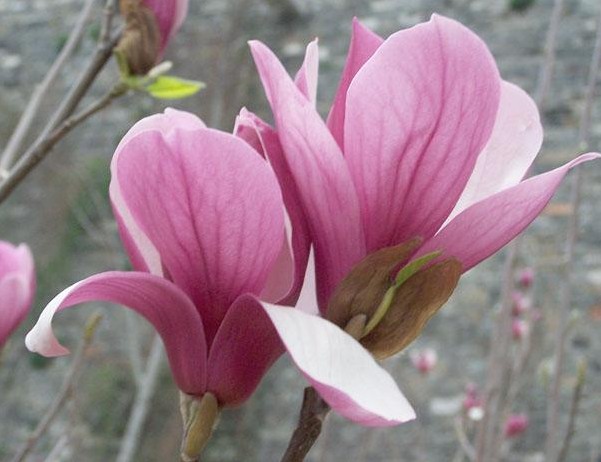
What are the growing environment requirements for the purple magnolia?
The purple magnolia, also known as Xinyi or Mubi, is a deciduous large shrub of the Magnoliaceae family, native to central China. It prefers sunlight and a warm, humid climate; it is cold-hardy but not drought-tolerant, and dislikes waterlogging and saline-alkaline conditions. It requires loose, fertile, well-drained slightly acidic to neutral soil; its root system is well developed and it suckers readily.
-
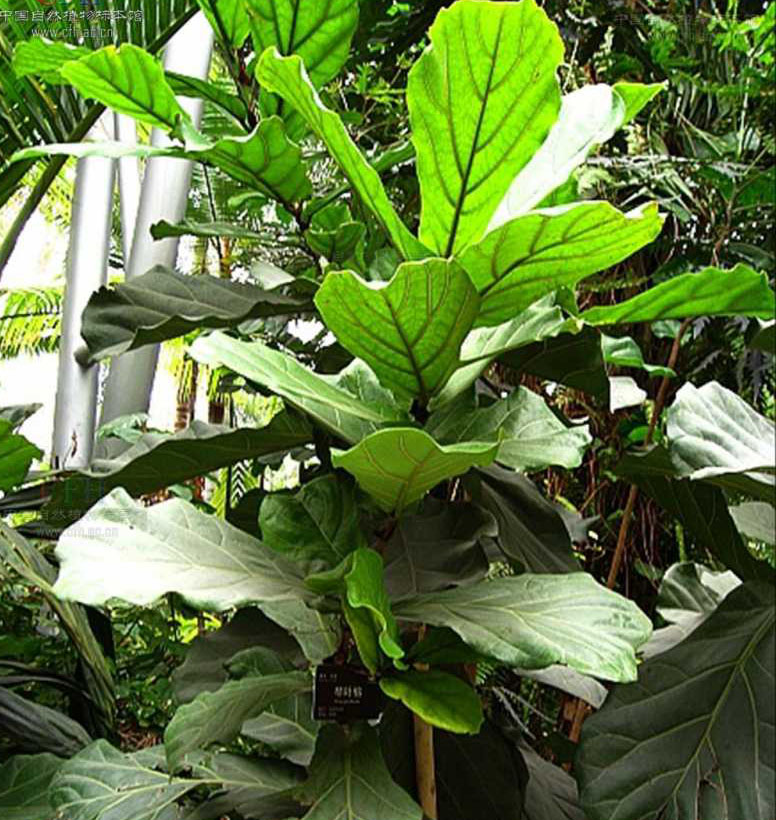
What are the growing environment requirements of the fiddle-leaf fig?
The fiddle-leaf fig (Ficus lyrata) is a plant of the genus Ficus in the mulberry family (Moraceae), native to tropical Africa. In recent years, together with its relative the big-leaf fig, it has been introduced into China for use in garden landscaping. The fiddle-leaf fig prefers a hot and humid climate, and can tolerate anything from partial sun to full sun. It is highly resistant to air pollution and dust, but has poor cold tolerance.
-
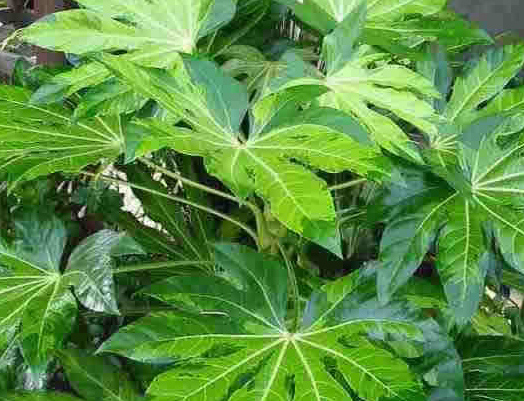
What are the growing environment requirements for Fatsia japonica?
Fatsia japonica, also known as Ba Jin Pan, Ba Shou and Shou Shu, originated in Taiwan, China and Japan. It prefers warmth, fears intense heat, is relatively tolerant of moisture, fears drought, is extremely shade-tolerant, fears strong direct sunlight, and has strong resistance to harmful gases. It is best grown in a relatively shady environment with moist, loose, fertile soil, and the winter temperature should not fall below minus 5 degrees.
-

Detailed Explanation of the Morphological Characteristics and Suitable Growing Environment of Pinellia ternata
[Morphological Characteristics] A perennial herb, 15-30 cm tall. The tuber is spherical or flattened-spherical. Leaves are basal, with long petioles; seedlings have a single leaf that is ovate-cordate, with a pointed tip and entire margin; from the 2nd and 3rd years onward, the leaves are trifoliolate compound leaves, elliptical to lanceolate. On the inner side of the lower part of the petiole, bulbils are produced, which can be used as propagation material. Monoecious; flowers are small and pale green. [Suitable Growing Environment] It prefers moisture and fears drought; it is averse to strong light; it is shade-tolerant and cold-tolerant, and the tubers can overwinter naturally. It is advisable to choose moist, fertile, deep, neutral sandy loam soil.
-
Growing environment requirements and suitable cultivation conditions for Pinellia ternata
Pinellia ternata is a shallow-rooted plant that prefers fertile soil, and was originally mostly found growing wild on moist, loose, and fertile sandy loam or humus soil. It prefers a mild, humid climate and a shaded environment, is afraid of drought, and avoids high temperatures. In summer, it is best grown in a semi-shaded, semi-sunny environment; it grows relatively well when soil moisture content is 20%-40%; drought and water shortage easily cause the seedlings to fall over. Generally, with changes in the growing environment, it can fall over 1-3 times a year. For Pinellia ternata, falling over is, on the one hand, an adaptation to adverse conditions, and more importantly, it increases the number of bulbils, that is, it carries out one round of asexual
-
What kind of ecological environment does Codonopsis pilosula need to grow?
One-year-old Codonopsis pilosula seedlings are trailing and rarely flower. Plants more than two years old are twining and generally flower. During the growing period, it has strong adaptability to the environment. Wild Codonopsis pilosula is distributed vertically at altitudes of 1400-2100 m, growing in zones with half shade and half sun or on shady slopes, with a slope of about 15°-20°. Codonopsis pilosula is a deep-rooted plant, suitable for growing in deep, loose, well-drained sandy loam rich in humus. The soil pH should preferably be neutral or slightly acidic, generally with a pH value between 5.5 and 7.5. Codon
-
Detailed Explanation of the Morphological Characteristics and Suitable Growing Environment of Codonopsis pilosula
[Morphological characteristics] Codonopsis pilosula is a perennial herbaceous vine. The root is cylindrical, with a light gray surface layer and a chrysanthemum-heart pattern inside. The stem twines, and its cut surface exudes white milky sap; the stem is long and much branched, with short rough hairs on the lower part and smooth on the upper part. The leaves are opposite or alternate, stalked, with ovate or broadly ovate blades and entire margins. The flowers are borne singly in leaf axils or at the tips; the corolla is broadly bell-shaped, pale yellow-green, with pale purple spots, 5-lobed at the apex, with triangular lobes. The capsule is conical. The seeds are small, brown, and glossy. The flowering period is August to September, and the fruiting period is September to October.
-
What kind of environmental conditions does Codonopsis pilosula cultivation require?
Codonopsis pilosula is also known as three-leaf vegetable, single leaf, and stinking codonopsis. It is a perennial climbing herbaceous plant of the Campanulaceae family. Codonopsis pilosula is a commonly used traditional Chinese medicine, originally from Shangdang, Shanxi; its root resembles ginseng, hence the name codonopsis. The root is used medicinally and has the functions of tonifying qi and nourishing blood, harmonizing the spleen and stomach, promoting fluid production and clearing the lungs. There are many varieties of codonopsis medicinal material, such as Western codonopsis, mainly produced in Gansu, Shanxi, Sichuan and other provinces; Eastern codonopsis, mainly produced in the northeastern provinces; Lu codonopsis, mainly produced in Shanxi, Henan and other provinces. The Tai codonopsis among the Western codonopsis is especially the best in quality. Codonopsis is a deep-rooted plant that prefers a cool and moist climate.
-

What environmental conditions are needed for snapdragon growth
Environmental condition requirements for snapdragon growth
-

What environmental conditions does gardenia need to grow
Environmental requirements for gardenia growth
条件筛选