-

Is the Alocasia macrorrhizos (dumb cane) poisonous? Meaning, feng shui role, and whether it is suitable for keeping at home
Alocasia macrorrhizos, also known as giant taro, is a large green foliage plant. Its form is elegant and it has the ability to purify the air, making it favored by many flower growers. It is said that keeping a pot of Alocasia macrorrhizos can enhance marital affection and create a warm atmosphere. However, it should be noted that Alocasia macrorrhizos is toxic, and how strong is its toxicity
-
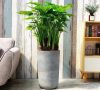
Is the Alocasia (Dumb Cane) Poisonous? How to Grow It at Home So It Thrives and Develops a Thick Old Stem
Alocasia, a common indoor foliage plant, is loved by many households for its unique form and good air-purifying effects. However, before considering bringing it into the home environment, an important question stands before us: is Alocasia poisonous? The answer is yes, the entire Alocasia plant is toxic,
-

How to Grow Dieffenbachia (Dumb Cane)? Master These Cultivation Methods
Temperature: Keep the room temperature between 10°C and 18°C, water according to temperature changes, and master the amount of watering. Fertilizing: In the early growth stage, it has a high demand for nutrients, so apply phosphate fertilizer once every half month. Light: About 6 hours of light per day, do not expose it to the scorching sun.
-
What are the cultivation methods and precautions for Dieffenbachia (spotted dumb cane)?
The Dieffenbachia plant has splendid leaf colors and stays green all year round, making it an excellent indoor foliage plant. However, the sap of this plant is toxic, so be sure not to let it touch your skin, and even more importantly, never ingest it. Below we introduce the cultivation methods and precautions for Dieffenbachia! 1. Cultivation of Dieffenbachia
-
What to Do When Alocasia (Dumb Cane) Leaves Turn Yellow? Causes and Solutions
The ornamental value of Alocasia (Dumb Cane) lies mostly in its lush, verdant leaves. When watered or when air humidity is high, water droplets drip from the leaf edges, which is very endearing. Once Alocasia shows drooping leaves, yellow leaves, or leaves curling and sagging, the drip
-
What to Do When the Leaves of the Dumb Cane 'Camille' Turn Yellow? Causes and Solutions
Every plant has its own unique habits, and only by understanding its growth patterns and characteristics can we identify the relevant causes in our cultivation and planting and provide reasonable solutions. The Dumb Cane 'Camille' is no exception, and the solutions differ depending on the degree of leaf yellowing.
-
Where is the best place to put an Alocasia (Dumb Cane)? A full analysis of placement locations
Alocasia is a plant that can be both ornamental and used medicinally, and its medicinal value is also very high. It can grow in humid or semi-dry environments and is a plant with relatively strong adaptability. Many people who keep Alocasia do not know where to put it
-
How to Grow Alocasia (Dumb Cane)? A Detailed Guide to the Latest Care Methods
Alocasia is a flower species that is inherently toxic, but as long as you pay extra attention it is still a potted plant very suitable for growing at home. It is mainly the sap that is toxic; everything else is very safe. When it blooms it looks beautiful, and its leaves are large, making it very eye-catching in the home.
-
Why Are the Leaves of the Dumb Cane (Dieffenbachia) Drooping?
Dieffenbachia (dumb cane) is an ornamental plant with very high ornamental value, and many people in China grow it as a potted plant. However, Dieffenbachia is not as easy to grow as one might imagine. If it is not grown properly, many problems can easily arise. One of them is drooping leaves.
-
Detailed Guide to the Latest Beheading Method for Alocasia (Dumb Cane)
Take the original plant out of its pot, being careful not to damage the roots. Prune away all problematic stems and leaves, and also cut off any rotten roots. After pruning, dilute carbendazim with water and soak all the cut ends in it for 20-30 minutes. Finally, plant it in soil and
条件筛选