-

Dracaena Cuttage Propagation Methods and Things to Note When Repotting
Dracaena is surely familiar to many people. It is a very special tree. If you cut into it, a red sap will flow out, just like bleeding. Even so, this has not affected people's love for it. Now many people choose to plant
-
How to Propagate Elderberry? Detailed Explanation of Cuttage and Seed Sowing Methods
Elderberry can generally be propagated by cuttage, division, and seed sowing, and since cuttage and seed sowing are easier to carry out, these two methods are more commonly used. So how exactly should elderberry cuttage and seed sowing propagation be carried out
-
Detailed Explanation of Key Technical Points for Softwood Cuttage in Summer
Summer Softwood Cuttage Techniques
-
Detailed Explanation of Key Points of Vegetable Leaf Cuttage Cultivation Technology
Vegetable Leaf Cuttage Cultivation Technology
-

Techniques for Cultivating One-Year-Old Seedlings and Large Seedlings of Photinia × fraseri by Cuttage
Photinia × fraseri is also known as Flame Red, Qiannian Hong, Red Robin, Red Lip, Sour-Leaf Photinia, and Sour-Leaf Tree. It is mainly distributed in the subtropical and temperate regions of southeastern and eastern Asia and North America, and is now cultivated in many parts of our country. Its flowering period is from May to July, and its fruit ripens from September to October.
-
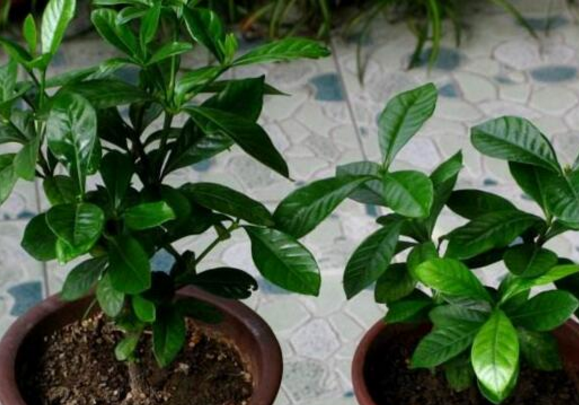
Detailed Explanation of Gardenia Cuttage Methods and Steps
Timing for Gardenia Cuttage The usual time for gardenia cuttage is mid-April, when the temperature is very suitable for gardenia rooting. It can also be done at other times such as June, August, October, and November, but because the temperature is harder to control, the survival rate will be greatly reduced. Specific cuttage methods: soil cuttage
-
Detailed Explanation of Rapid Propagation Technology for Euonymus japonicus by Cuttage
Euonymus japonicus (evergreen euonymus) stays green all year round, has strong adaptability, and tolerates pruning extremely well. It is a good hedge material, easy to shape, and resistant to pollution, making it one of the indispensable evergreen tree species for urban greening in northern China. Its seedling rapid propagation technology is particularly important. Rapid propagation is mainly done by cuttage, using softwood cuttings, with a survival rate of over 96%. 1. Seedling facilities and cutting bed: Use bricks and cement to build a seedbed about 20 cm high and 1 m wide, fill it with 18 cm of substrate, with the lower layer of the substrate being 5-8 cm of coarse sand and the upper layer being fine sand. Install a water pipe at a height of 50 cm from the bed surface
-
Detailed Guide to Spring Cuttage Propagation Techniques for Oleander
Oleander (Nerium oleander) has leaves like bamboo and flowers like peach blossoms, with a very long flowering period that can last from mid-April to mid-September. When in bloom, it is a mass of gorgeous flowers with dense green foliage, and in winter it braves frost and snow, giving it high ornamental value as an excellent landscaping tree species. At the same time, it has strong resistance to sulfur dioxide, making it an ideal plant for factory landscaping. Oleander is relatively easy to propagate and can be propagated by layering, division, cuttage and other methods. Propagation by layering and division is limited by the number of mother plants and is not suitable for mass propagation. Using the spring field cuttage method,
-
Improved Cuttage Propagation of "Geranium"
In cuttage propagation of geraniums, because their stems are semi-succulent and contain a lot of water, rot often occurs and affects survival. For this reason, over the past few years the author has made certain improvements in combination with heavy pruning after flowering, so that when cuttings are taken at that time, the survival rate can be markedly increased. The specific method is as follows: select thick, strong branches on the plant, and from the top tip downward, at intervals of every 4 to 6 true leaves, or cut sections 7 to 10 cm long, until reaching the height of the usual heavy pruning of the plant after flowering, and plan in advance to divide them into several cuttings. Then, at a distance of
-
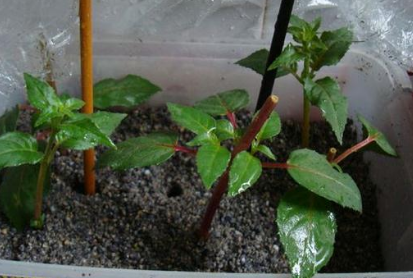
Fuchsia Cuttage Methods and Common Varieties Introduction
Fuchsias have peculiar shapes, like little lanterns, but not every variety has the same shape. There are long-tubed ones, short-tubed ones, and the colors are not all the same either. So fuchsias also have many different varieties. Let's uncover the mysterious veil of the fuchsia together.
条件筛选