-
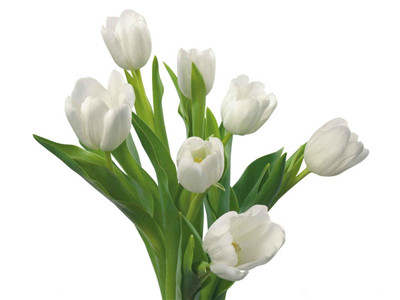
What causes tulip petals to show different colors?
When cultivating tulips, sometimes the petal colors are not pure, showing color variations of different shades. This happens because the tulips have contracted color-breaking petal disease. Tulip color-breaking petal disease is a viral disease that has a major impact on tulips, reducing the value of cut flowers, and
-
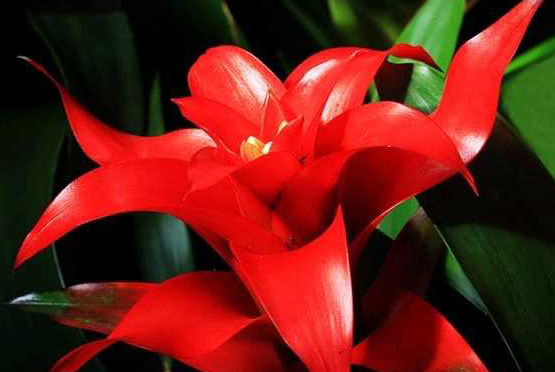
How to grow Aechmea fasciata to keep its flower colors vivid
Aechmea fasciata, also known as the silver vase plant. It is a perennial epiphytic evergreen herbaceous plant. The leaves are green, leathery, with beautiful silvery-white stripes; the panicle is pyramidal, bearing pale rose-red bracts, and the small flowers are sessile and pale blue. It blooms in summer, and the flowering period can last up to 3 months. Aechmea fasciata prefers a semi-shaded environment
-

How to keep the beautiful leaf color of the ripple peperomia
Ripple peperomia is also known as wrinkled-leaf peperomia. The leaves grow in clusters, with fairly long tea-brown petioles; the leaf blades are heart-shaped and dark green, with an uneven, wrinkled surface, and the entire leaf is wavy and glossy. In summer and autumn it sends up creamy-yellow spike inflorescences. It likes a warm, humid environment
-
What to Do When Wheat Seedlings Show Abnormal Leaf Color? A Full Analysis of Causes and Solutions
After wheat is sown and the seedlings emerge, various abnormal discolored seedlings often form due to the influence of natural conditions and cultivation practices. To make it easier to manage according to the specific seedling condition and the specific cause, they are introduced separately below: Yellow-leaf seedlings - the causes of yellowing of wheat leaves. First, soil drought. This situation mostly occurs in wheat fields with insufficient subsoil moisture or where moisture escapes through cracks. Its characteristics are: tillers emerge slowly, leaf color is grayish green, the central leaf is short and small, growth is slow or stagnant (people call this "shrunken-heart seedlings"), the middle and lower leaves gradually turn yellow and dry up, and roots are few and fine. Management
-
A Detailed Guide to Managing Wheat Seedlings Before Winter by Leaf Color
1. Causes of yellow leaves in wheat seedlings and their management. First, soil drought, which mostly occurs in wheat fields with insufficient subsoil moisture or where moisture escapes through cracks in the soil. Its characteristics are slow tiller emergence, grayish-green leaf color, short and small heart leaves, slow or stalled growth (known as "shriveled-heart seedlings"), gradual yellowing and drying of the middle and lower leaves, and few, thin roots. The key management point is to apply 15 kg of ammonium bicarbonate per mu along with irrigation. Second, nitrogen deficiency, in which seedlings are thin and weak and grow upright, tillering is reduced, leaves are narrow and short, and the lower leaves gradually turn yellow and dry starting from the leaf tips and progressing upward. The key management point is to use urea per mu
-
Crystal Grass Emerald Jade Plum of Douban Orchid, with lovely flower colors
Douban Orchid, also called Line-art Spring Orchid, as a member of the large family of Chinese orchids, has a long history of cultivation in Yunnan Province, with many varieties, wide distribution and rich resources. After years of selection, cultivation, development and utilization by orchid circles, some excellent varieties have appeared among Douban Orchids, attracting the attention of the orchid world and increasingly favored by orchid art lovers at home and abroad. Among them, Emerald Jade Plum, developed by Mr. Zhang Qilin, standing director and deputy secretary-general of the Dali Prefecture Orchid Association, combines crystal flowers, plum petals, flying shoulders, hard lips, crystal-clear color and strong fleshy texture
-
Unique and Colorful: A Brief Discussion of Butterfly-Type Floral Art in Chinese Cymbidiums
The "butterflies" among Chinese orchids, in all their myriad forms, have formed one of the most captivating groups in Chinese cymbidiums, collectively known as "Chinese Cymbidium Butterfly-Type Floral Art." Concept: In the flowers of Chinese cymbidiums, if 2 sepals (lateral sepals) or 2 petals (petals) undergo partial or complete mutation into a lip, then the flower colors of this type of orchid become richer and more varied. Usually the lip-transformed perianth segments bear colors such as green, white, red, and pale yellow. These mutated perianth segments curl backward or outward at the tip just like a lip (labellum), and their shape and color resemble butterfly
-
Natural color-enhancing feeds for laying hens include pine needles, black locust leaves and mugwort leaves
Pine needle powder: made by air-drying and grinding pine needles. Generally, adding 3 percent to 5 percent to the feed gives a good color-enhancing effect, and can increase the egg production rate by 13 percent. Black locust leaf powder: the added amount of black locust leaf powder accounts for 5 percent of the feed, and the effect is better than pine needles; the yolk color can be raised from grade 1 to grade 9 and can remain stable without changing. Mugwort leaf powder: mugwort leaves contain nutrients such as fat, protein and various amino acids. Adding 2 percent to 3 percent mugwort leaf powder to the chicken diet can increase egg production by 12 percent to
-
Management Methods and Technical Key Points for the Color-Changing Stage of Shiitake Mushrooms
When the shiitake mushroom mycelium grows and develops into the physiological maturity stage, the white mycelium on the surface gradually turns into a brown layer of mycelial film under certain conditions, which is called mycelial color change. The depth of the color change and the thickness of the mycelial film directly affect the occurrence and development of shiitake mushroom primordia, and have a great relationship with the yield and quality of shiitake mushrooms. It is the most important link in the management of shiitake mushroom fruiting. There are many methods for color change, and the commonly used one is the bag-removal color-change method. It is necessary to accurately grasp the timing of bag removal, that is, remove the bag when the mycelium reaches physiological maturity. If the bag is removed too early, it is not easy to change color; if too late, the mycelium ages, often produces yellow water, and is prone to
-
Introduction to the Characteristics of Colorful Mini Eggplant Varieties
Colorful mini eggplant, also known as gold-and-silver fruit, gold-and-silver eggplant, color-changing eggplant, colorful eggplant, pellet eggplant, cherry eggplant, pocket eggplant, mini small eggplant, etc., belongs to the Solanaceae family, Solanum genus, a perennial shrub-like herbaceous plant. It combines edible and ornamental value in one and is a rare advantageous variety of specialty vegetable today. We have incorporated various aspects of modern science and technology into it. Not only is it delicious and rich in nutritional and health benefits, but its young fruit is as white as silver with a smooth surface, as exquisite and lovely as a sparrow's egg; when the fruit is approaching maturity, the skin appears to have a natural wax
条件筛选