-
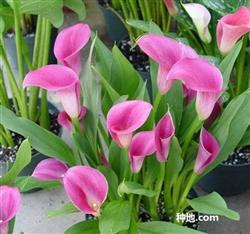
What are the care precautions for potted colored calla lilies?
What should be noted when growing potted colored calla lilies? We have asked experienced netizens to help introduce this. Zhongdi Web has compiled the key points to note for potted colored calla lilies, listed below for netizens' reference. Point one: The potting soil for potted colored calla lilies should be mainly sandy loam, and can be mixed with 1/3 garden soil and 1/3 leaf mold, then mixed in...
-
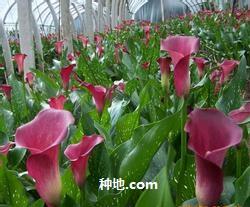
What are the care and management methods for colored calla lilies?
How should colored calla lilies be managed when planting? 1 Current production status of colored calla lilies. Colored calla lily is a perennial bulbous flower of the genus Zantedeschia in the Araceae family, and is an excellent cut flower and potted flower. In recent years, because of its bright colors, elegant form and wide range of applications, colored calla lily has occupied an increasingly important...
-

-

How many colors do lycoris radiata come in? A full analysis of common flower colors
How many colors do lycoris radiata come in?
-

Rose Meanings: The Meanings of Different Colors and Numbers
Rose Meanings by Different Colors and Numbers
-
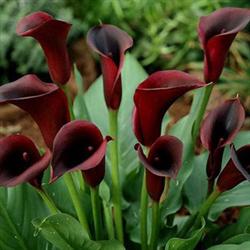
What are the common pests and diseases of colored calla lilies?
The common diseases of colored calla lilies mainly include bacterial diseases, fungal diseases and pest infestations, which are introduced separately below. Bacterial diseases Erwinia: Erwinia disease, also known as soft rot, is caused by Pectobacterium carotovorum subsp. carotovorum. Infected leaves and stems turn dark green, with necrotic spots and rot spots...
-
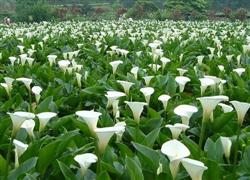
What are the common pests and diseases of colored calla lilies?
The common diseases of colored calla lilies mainly include bacterial diseases, fungal diseases and pest damage, which are introduced separately below. Bacterial disease Erwinia: Erwinia disease, also known as soft rot, is caused by the pv. carotovora pathovar of Pectobacterium carotovorum subsp. carotovorum. Infected leaves and stems turn dark green, with necrotic spots and rotting spots...
-

Crystal Grass Emerald Jade Plum of Douban Orchid, with lovely flower colors
Douban Orchid, also called Line-art Spring Orchid, as a member of the large family of Chinese orchids, has a long history of cultivation in Yunnan Province, with many varieties, wide distribution and rich resources. After years of selection, cultivation, development and utilization by orchid circles, some excellent varieties have appeared among Douban Orchids, attracting the attention of the orchid world and increasingly favored by orchid art lovers at home and abroad. Among them, Emerald Jade Plum, developed by Mr. Zhang Qilin, standing director and deputy secretary-general of the Dali Prefecture Orchid Association, combines crystal flowers, plum petals, flying shoulders, hard lips, crystal-clear color and strong fleshy texture
-
Unique and Colorful: A Brief Discussion of Butterfly-Type Floral Art in Chinese Cymbidiums
The "butterflies" among Chinese orchids, in all their myriad forms, have formed one of the most captivating groups in Chinese cymbidiums, collectively known as "Chinese Cymbidium Butterfly-Type Floral Art." Concept: In the flowers of Chinese cymbidiums, if 2 sepals (lateral sepals) or 2 petals (petals) undergo partial or complete mutation into a lip, then the flower colors of this type of orchid become richer and more varied. Usually the lip-transformed perianth segments bear colors such as green, white, red, and pale yellow. These mutated perianth segments curl backward or outward at the tip just like a lip (labellum), and their shape and color resemble butterfly
-
Natural color-enhancing feeds for laying hens include pine needles, black locust leaves and mugwort leaves
Pine needle powder: made by air-drying and grinding pine needles. Generally, adding 3 percent to 5 percent to the feed gives a good color-enhancing effect, and can increase the egg production rate by 13 percent. Black locust leaf powder: the added amount of black locust leaf powder accounts for 5 percent of the feed, and the effect is better than pine needles; the yolk color can be raised from grade 1 to grade 9 and can remain stable without changing. Mugwort leaf powder: mugwort leaves contain nutrients such as fat, protein and various amino acids. Adding 2 percent to 3 percent mugwort leaf powder to the chicken diet can increase egg production by 12 percent to
条件筛选