-

Rural collective land will implement the separation of ownership rights, contract rights and management rights into three distinct rights
CNR News, Beijing, October 18 (Reporter Shen Jingwen) According to China National Radio's "News and Newspaper Digest" report, recently the central authorities reviewed and approved the "Opinions on Guiding the Orderly Transfer of Rural Land Management Rights to Develop Moderately Scaled Agricultural Operations". Regarding rural land
-
Rural Collective Assets Must Not Become the Private Property of a Few
Because property rights and powers are unclear and the attribution of interests is undefined, the collective economy has encountered quite a few problems in actual operation. Only when farmers have clear protection of property rights and stable income from property rights can the moderately scaled land management, the growth of new types of business entities
-
Land reform shelved, collective ownership faces challenges
Continuing to shelve reform of collective ownership and merely tinkering with the separation of the three rights makes it difficult to resolve the institutional predicament facing China's rural development. At a forum recently held by China Agricultural University, Liu Shouying, deputy director of the Rural Department of the Development Research Center of the State Council, put forward this argument
-
A Comparative Analysis of Two Models of China's Agricultural Collective Economy
In the 1950s, based on the Marxist theory of using cooperative systems to transform the small-peasant economy and in light of China's actual conditions, our country successfully transformed the vast ocean-like individual peasant economy into a socialist collective economy, eliminated the system of exploitation, and established a social
-
What month does the rain lily bloom? A detailed guide to its flowering period
The rain lily is a collective term for multiple similar-looking bulbous plants in the Amaryllidaceae family. Because it often blooms suddenly after heavy rain in spring and summer, and its flower shape resembles a lily, it is also called the rain lily. Do you know what month the rain lily blooms? The rain lily's flowering period is generally
-
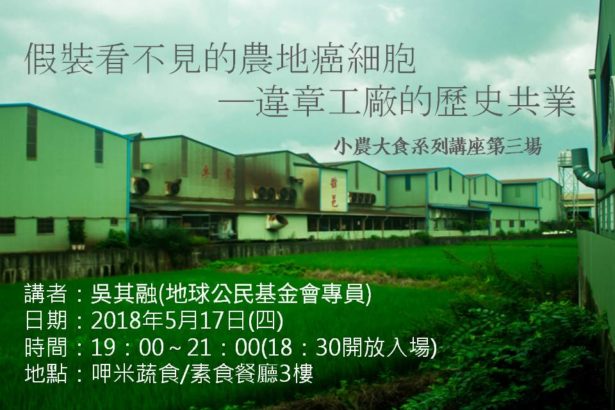
Farmland Cancer Cells, Illegal Factories, Historical Collective Karma, Small Farmers Big Eaters Lecture Three, Pretending Not to See
Small Farmers Big Eaters Lecture Series (3): The Farmland Cancer Cells We Pretend Not to See - The Historical Collective Karma of Illegal Factories
-
Why do humans collectively love to seek out suffering?
Chili peppers - for someone from Chongqing (which was still part of Sichuan Province when I was born), they seem like a label written into my genes. When I introduce my hometown to international friends, most of them draw a blank upon hearing the words Chongqing or Sichuan, and after I explain
-
Conditions Required and Main Technical Requirements for Collective Rearing of Young Silkworms
I. The Purpose of Collective Rearing of Young Silkworms. As the saying goes, "Rearing young silkworms well is half the harvest," which fully illustrates the importance of rearing young silkworms. The purpose of collective rearing of young silkworms is to strengthen the constitution of young silkworms, ensure the safety of grown silkworms, and achieve high-quality and high-yield cocoons. Advantages of collective rearing of young silkworms: (1) It facilitates scientific silkworm rearing, adopts advanced silkworm rearing techniques and facilities, promotes uniform development and strong constitution of young silkworms, provides a guarantee for grown silkworm rearing, and lays the foundation for high and stable cocoon yields. (2) It facilitates disinfection and disease prevention. It overcomes the difficulties of young silkworms' weak resistance to adverse environments and susceptibility to pathogen infection, reduces lost silkworms, and ensures the number of silkworms. Collective rearing of young silkworms can achieve comprehensive disinfection of rearing rooms and equipment and strict disease prevention measures, reducing opportunities for pathogen infection and effectively controlling the occurrence of silkworm diseases. (3) It helps improve work efficiency. Collective rearing of young silkworms can save mulberry leaves, labor, fuel, equipment and housing, reduce silkworm rearing production costs, and improve economic benefits.
-
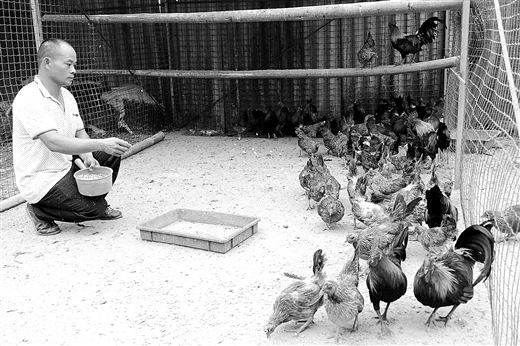
Taming red junglefowl and taking a new path to prosperity through collective effort
Taming "red junglefowl" and prospering together
-
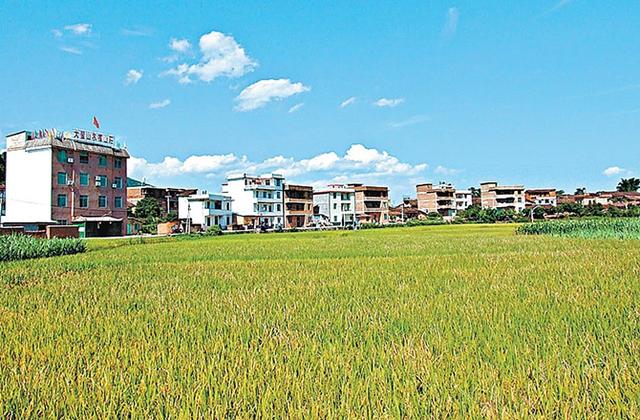
Are small property rights houses protected after collective operating construction land enters the market?
Collective operating construction land enters the market: are "small property rights houses" protected?
条件筛选