-

Detailed Explanation of Harvesting and Processing Methods for Codonopsis pilosula
For direct-sown fields, harvest in the third year; for transplanted fields, harvest after two years of growth following transplanting. For medicinal Codonopsis pilosula, the harvest period runs from when the aboveground parts wither until before the ground freezes, but the best quality is obtained when harvested within the half-month before and after the White Dew solar term. When harvesting, first remove the support stakes, cut off the stems and vines, then dig up the roots. Take care not to damage the roots while digging, to prevent the loss of sap. Remove the residual stems from the dug roots, wash off the soil, and sort them by size, length and thickness into old, large and medium grades for drying in the sun. After drying until half-dry, briefly blanch in boiling water, then sun-dry or oven-dry (oven-drying must use only a low fire, with the temperature around 60°C
-
A Detailed Guide to Identifying and Controlling Pests and Diseases of Codonopsis pilosula
Pests and Diseases of Codonopsis pilosula and Their Control
-
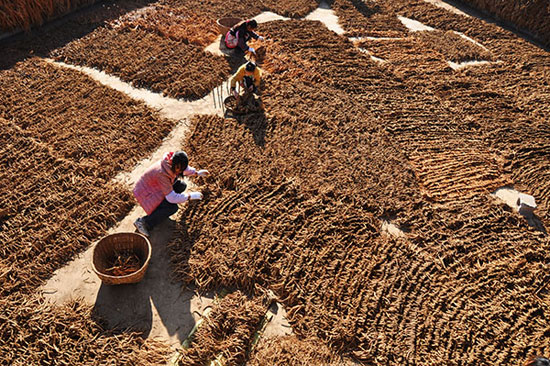
Busy drying Codonopsis pilosula in Weining, Guizhou: a bumper harvest of medicinal herbs helps farmers increase income
Drying Codonopsis pilosula in Weining, Guizhou: a bumper harvest of medicinal herbs brings wealth
-
Identification and Control Methods for White Grub Infestation in Codonopsis pilosula
Belonging to the order Coleoptera, family Scarabaeidae. It is the larva of the scarab beetle, mainly active in the soil, damaging the roots of Codonopsis pilosula. White grubs generally have one generation per year, with larvae or adults overwintering in the soil. After temperatures rise in the following spring, white grubs gradually move upward in the soil; when the soil temperature reaches above 15°C, they move into the topsoil layer above 10cm to feed. When summer temperatures rise and the soil dries out, they descend to deeper soil layers and stop feeding or moving. In autumn they return to the topsoil layer to be active, and after October they successively burrow down below 30cm to overwinter.
-
What kind of ecological environment does Codonopsis pilosula need to grow?
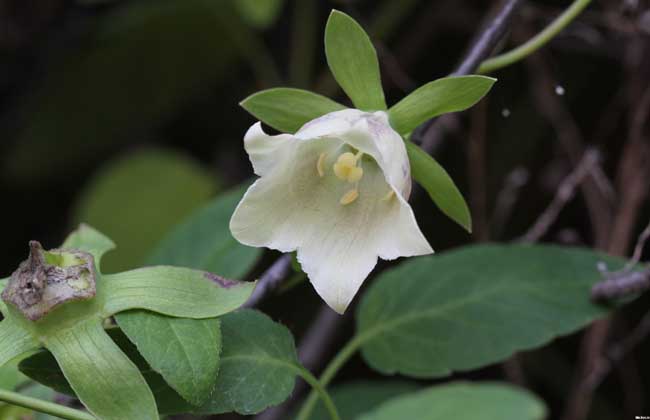
One-year-old Codonopsis pilosula seedlings are trailing and rarely flower. Plants more than two years old are twining and generally flower. During the growing period, it has strong adaptability to the environment. Wild Codonopsis pilosula is distributed vertically at altitudes of 1400-2100 m, growing in zones with half shade and half sun or on shady slopes, with a slope of about 15°-20°. Codonopsis pilosula is a deep-rooted plant, suitable for growing in deep, loose, well-drained sandy loam rich in humus. The soil pH should preferably be neutral or slightly acidic, generally with a pH value between 5.5 and 7.5. Codon
-
Detailed Explanation of Harvesting Methods and Primary Processing Techniques for Codonopsis pilosula
1. Harvesting and Storage of Codonopsis pilosula Seeds Although one-year-old Codonopsis pilosula plants can produce a small amount of flowers and seeds, many of the seeds are shriveled and do not easily sprout after sowing, or the seedlings that emerge are weak in growth, so they are not suitable for seed use. Two- to three-year-old Codonopsis pilosula plants produce more flowers and seeds, with plump grains, high yield, and good quality, and the seedlings grown from them are robust, making them suitable for seed use. Codonopsis pilosula seeds are generally harvested from September to October, when the fruits of two- to three-year-old Codonopsis pilosula turn yellowish-white and the seeds turn brown. After harvesting, dry them in the shade, place them in cloth bags or burlap bags, and store them at low temperature; the suitable temperature is below 10°C. 2. Codonopsis pilosula
-

How to grow Codonopsis pilosula so it thrives? Key points of Codonopsis pilosula cultivation techniques
How to grow Codonopsis pilosula well
-
-
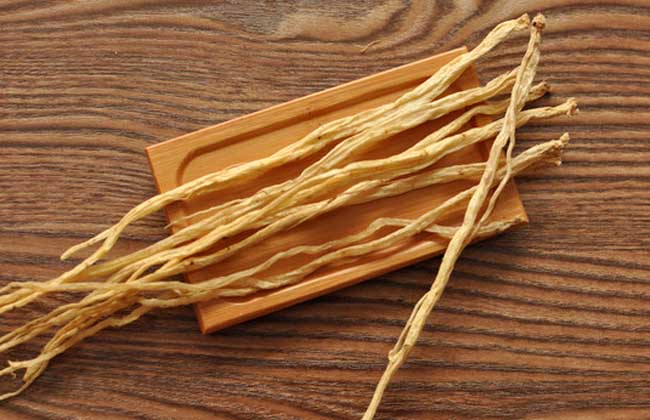
Where is codonopsis produced? A list of the main producing areas
The distribution of codonopsis producing areas
-
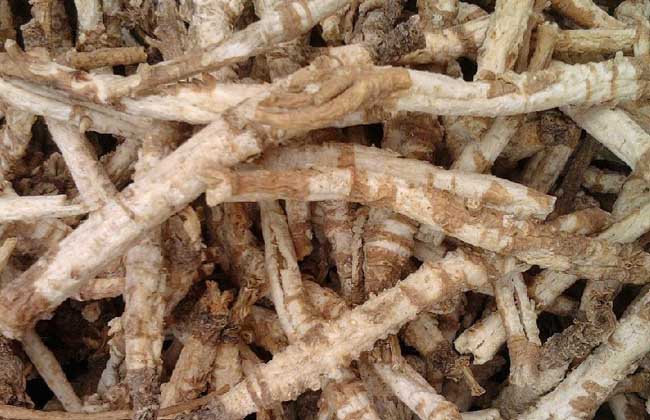
What is the difference between sand ginseng and codonopsis? A quick guide to telling them apart
The difference between sand ginseng and codonopsis
条件筛选