Detailed Explanation of Codonopsis Seed Sowing Methods
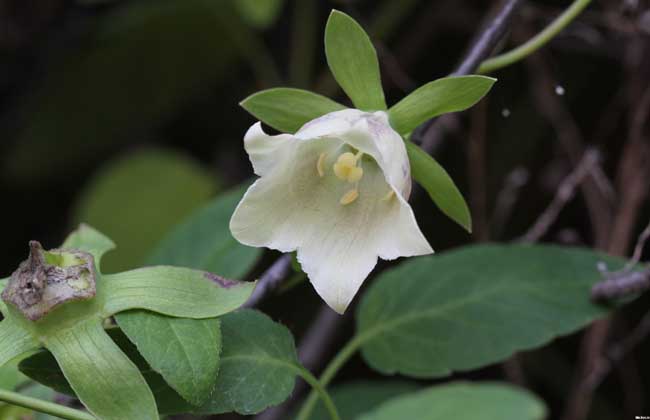
Codonopsis prefers a mild and cool climate. For propagation, two methods are commonly used: direct seeding and seedling transplanting, but direct seeding is better. The seedling nursery should be chosen on a semi-shaded and semi-sunny slope, close to a water source, on hillside land or secondary wasteland free of underground pests and perennial weeds. New seeds should be selected. Let's take a look at the sowing methods for Codonopsis seeds.
Sowing Time for Codonopsis
1. Winter sowing: Winter sowing is done between "Frost's Descent" and "Start of Winter." The seeds do not need treatment that year. After being soaked by winter rain and snow, they emerge early and grow vigorously the following year, with strong drought resistance. Since Codonopsis seeds are small, the soil cover should be shallow. If strong winds occur during winter sowing, the seeds are easily blown away, resulting in missing plants.
2. Spring sowing: Spring sowing is best done around the "Spring Equinox." The seeds need treatment. Select plump seeds free of mold and put them in a cloth bag. Place the bag in 40°C warm water and rub immediately for about half an hour, until no yellow water flows out. Remove the bag, cover it with a wet burlap sheet, and place it in a 25-30°C location for germination. Wash once each morning and evening with 40°C water to keep it moist. After 4-5 days, when the seeds have sprouted, they can be sown.
Sowing Methods for Codonopsis
1. Drilling: In a prepared seedbed, open furrows about 1 cm deep at a row spacing of 15-20 cm. Mix the treated seeds with fine sand, scatter them into the furrows, cover with soil and level it, press firm, then cover with 1 cm of fine sand.
2. Broadcasting: On the prepared seedbed surface, mix the seeds with 10 times their volume of fine sandy soil, scatter evenly over the seedbed surface, rake once with an iron rake so the seeds combine with the soil, then level and compact the seedbed surface, and cover with 1 cm of fine sand. The seeding rate is about 1 kg per mu. Codonopsis can also be intercropped with corn, which both provides shade for the seedlings and serves as a support for the Codonopsis stems and vines. Strengthening field management can achieve a double harvest of grain and medicine.
Seedling Stage Management of Codonopsis
1. Cultivation and weeding: After sowing, keep the seedbed moist. Seedlings emerge in about 9-13 days (if drought occurs, emergence takes longer). When the seedlings have grown 2 true leaves, begin cultivation and weeding. Cultivate and loosen the soil shallowly to avoid burying seedlings or damaging roots. Once the Codonopsis seedlings close their rows, stop cultivation and weeding. Any weeds should be pulled by hand to prevent damage to the Codonopsis seedlings.
2. Removing covers: When the Codonopsis seedlings have two pairs of true leaves and reach more than 1 cm, choose a cloudy afternoon and remove all the cover at once. Alternatively, when the Codonopsis is 1.5 cm tall, first remove half the cover, and when the seedlings are 3 cm tall, remove all the cover. If there is a lot of rain in the early covering period, the cover is pressed close to the ground and partially rotted, and most seedlings can grow through the cover, then there is no need to remove the cover; keep it covered until the seedlings are lifted.
3. Proper thinning: For plots where seedlings are densely growing, thin when the small seedlings reach 5-7 cm. The minimum spacing between seedlings is about 1.0 cm, the average spacing is 3.0-3.5 cm, and the density should preferably be within 800-1000 plants per sq m.
4. Fertilizer and water management: Apply topdressing according to seedling condition. Urea and monopotassium phosphate, 50 g each, can be added to 10 kg of water and sprayed on the seedbed. Before the seedlings emerge and during the seedling stage, keep the seedbed surface moist. If excessive rain causes waterlogging, drain promptly. In cases of severe drought, water promptly where conditions permit. Before the soil freezes, cover the seedling bed with a small amount (about 0.5 cm thick) of fine soil to prevent winter soil cracks from damaging the seedlings.
5. Lifting seedlings at the right time: Codonopsis seedlings overwinter in the field. After the soil thaws the following spring, lift the seedlings before transplanting, taking care to avoid root damage. The method is to first dig up the seedlings with a three-toothed iron fork, then gently turn them over, pick out the seedlings, shake off the soil, and tie the lifted seedlings into small bundles of 400-500 g with 20% soil attached. Put them into burlap sacks or plastic woven bags and transport them to the transplanting site for transplanting.
6. Planting, storage and transport: Generally, most Codonopsis production areas can raise seedlings. When transplanting, lift and transplant the seedlings at the same time, but sometimes in areas with irrigation conditions, seedlings can be raised centrally and then sold and transported to other areas for planting. In this case, the lifted seedlings cannot be planted temporarily and need to be heeled in for storage.