What is the difference between sand ginseng and codonopsis? A quick guide to telling them apart
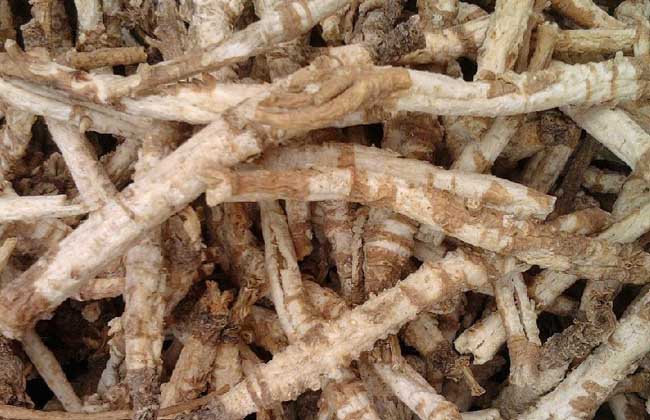
Sand ginseng is a perennial herb of the genus Adenophora in the Campanulaceae family, and its root is used as medicine; it has the effects of nourishing, dispelling cold and heat, and clearing the lungs and stopping cough. Codonopsis is the dried root of plants in the Campanulaceae family such as Codonopsis pilosula, Codonopsis pilosula var. modesta, or Codonopsis tangshen, and it has the effects of tonifying the middle and boosting qi, quenching thirst, strengthening the spleen and benefiting the lungs, and nourishing blood and promoting fluid production. Let us now take a look at what differences there are between sand ginseng and codonopsis!
Differences in family and genus between sand ginseng and codonopsis
1. Sand ginseng: Sand ginseng is a perennial herb of the plant kingdom, Angiosperms, Dicotyledons, Sympetalae, Asterales, Campanulaceae, Campanuloideae, Platycodoneae, and the genus Adenophora.
2. Codonopsis: Codonopsis is a plant of the plant kingdom, Angiosperms, Dicotyledons, Sympetalae, Asterales, Campanulaceae, Campanuloideae, Platycodoneae, the genus Codonopsis, and the subgenus Codonopsis.
Differences in producing areas between sand ginseng and codonopsis
1. Sand ginseng: Sand ginseng is also known as Nanshashen, Paoshen, Paoshashen, Baishen, Zhimu, Yangru, Yangponai, Linger grass, Huxu, etc. It prefers warm or cool climates and is distributed in Jiangsu, Anhui, Zhejiang, Jiangxi, Hunan and other places in China.
2. Codonopsis: Codonopsis is also known as Fangfeng Dangshen, Huangshen, Fangdangshen, Shangdangshen, Shitoushen, Zhonglingcao, Huangdang, etc. It prefers mild and cool climates and is mostly produced in Tibet, Sichuan, Yunnan, Gansu, Shaanxi, Guizhou, Ningxia, Qinghai, Henan, Shandong, Shanxi, Hebei, Inner Mongolia and other places.
Differences in morphology between sand ginseng and codonopsis
1. Sand ginseng: Sand ginseng can reach a height of 1 m, has white milky juice, a carrot-shaped root, unbranched, often covered with short stiff hairs or long soft hairs; the inflorescence is often unbranched and forms a false raceme, the pedicels are often extremely short, the capsule is elliptical-spherical, rarely elliptical, the seeds are brownish yellow, slightly flattened, with one ridge, and the flowering period is from August to October.
2. Codonopsis: The stem base of codonopsis has many tumor-like stem scars, the root is often thick and spindle-shaped or spindle-shaped cylindrical, the stem twines about 1-2 m long, the leaves on the main stem and lateral branches are alternate, the leaf blade is ovate or narrowly ovate, the flowers are solitary at the ends of branches, alternate or nearly opposite with the petiole, stalked, the lower part of the capsule is hemispherical and the upper part is short conical. The seeds are numerous, ovate, brownish yellow, smooth and hairless, and the flowering and fruiting period is from July to October.
Differences in effects between sand ginseng and codonopsis
1. Sand ginseng: Sand ginseng tastes sweet and slightly bitter, is slightly cold in nature, and enters the lung and stomach meridians. It has the effects of nourishing yin and clearing heat, moistening the lungs and resolving phlegm, and tonifying the stomach and promoting fluid production. It is mainly used for prolonged cough due to yin deficiency, phlegm and blood in consumptive cough, dry cough with little phlegm, throat impediment due to deficiency heat, and thirst due to fluid damage.
2. Codonopsis: Codonopsis tastes sweet, is neutral in nature, and enters the spleen and lung meridians. It has the effects of tonifying the middle and boosting qi, and promoting fluid production and nourishing blood. It is used for insufficient middle qi, poor appetite and loose stools, cough and asthma with shortness of breath, thirst due to fluid damage, blood deficiency with sallow complexion, and palpitations and dizziness.