-
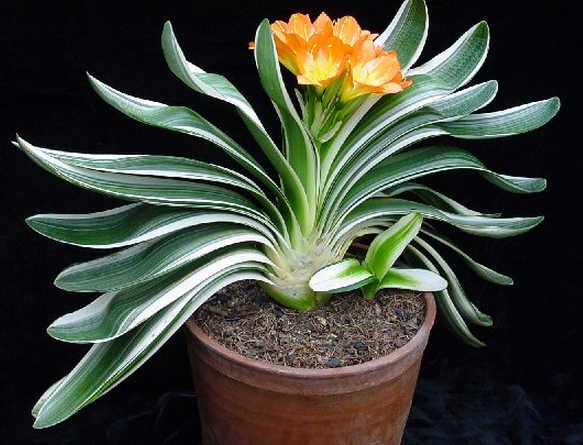
Grow Clivias Well by Building a Strong Foundation: Seedling Cultivation Methods for Clivias
When doing anything, you should lay a solid foundation, and the same goes for growing flowers. Take the clivia as an example: if you want it to bloom and look beautiful, you must put in some effort, and you should start cultivating it properly from the seedling stage.
-

Fruit and vegetable prices generally fall after the Spring Festival; building dedicated cold-chain fruit and vegetable trains to prevent fruit and vegetable prices from falling
Last year, Taipei Agricultural Products Marketing Corporation saw overall vegetable auction prices drop by 30% due to multiple factors such as a surge in fruit and vegetable supply, weak consumption, and consecutive market closures. This year, subsidies are expected to help Taipei Agricultural Products Marketing Corporation build a cold-chain system to extend the freshness period of fruits and vegetables. Let's take a look. Connecting production areas, using cold chain
-
Li Chien-wei's 8 years of observing farmers' markets: Selling products or building community to avoid boredom
Li Chien-wei / 8 years of observing farmers' markets: Is it about selling products or building community? How can we avoid boredom?
-

Questions and Answers on Building a Raccoon Dog Farm and Introducing Breeding Stock
Q: What are the prospects for raccoon dog farming? Can it make money? A: The prospects for raccoon dog farming are promising, and it can make money. Q: Which regions are suitable for developing raccoon dog farming? A: The raccoon dog's place of origin is in the northern regions of our country, and it can be raised in any area north of 30°N latitude. The quality of raccoon dog pelts produced in higher-latitude regions is superior to that of pelts from lower-latitude regions (30°--40°). To ensure pelt quality, breeding stock should be introduced from high-latitude regions (north of 40°) as much as possible, and preferably a portion of new breeding stock should be introduced every year to renew the bloodline and improve
-
Method for building a greenhouse for raising Schisandra chinensis seedlings in nutritional pots
Build a plastic greenhouse of a suitable size according to the number of seedlings to be raised (or use a solar greenhouse). For general vegetable (cucumber) cultivation, a plastic greenhouse is used, with a width of about 12 m, a length of 80-100 m per greenhouse, and a height of more than 2 m, with doors at the front and rear, welded from steel bars. A small shed can also be set up, using materials such as steel bars, bamboo strips or wooden poles. Building a simple shed costs little but has a short service life.
-
What are the considerations for building a snake enclosure?
A good snake farm should have a spacious activity area set aside, that is, an exercise yard for the snakes. However, climbing vines such as Boston ivy cannot be planted in the exercise yard.
-
Key points and precautions for building a rooftop rice field eel pond
What should be noted when building a rooftop rice field eel pond? Considering the load-bearing capacity of the rooftop, it is recommended that all rooftop ponds be built with bricks laid upright (wall thickness 6 cm); except for breeding ponds, all should use soil-free culture. From the perspective of cooling, the wall that is often exposed to the sun should be built higher than the height of the culture pond, and then the pond should be started about 10 cm back from it, to prevent prolonged sunlight on that pond wall from causing the water temperature in that pond to rise abnormally compared with other ponds, resulting in an undetected high water temperature that causes the death of rice field eels.
-
Detailed Explanation of Key Techniques for Building a Goji Berry Garden-Protecting Fence
Goji berry (Lycium barbarum) is a perennial vine-like trailing plant with extremely strong adaptability. It can grow vigorously and flower and fruit normally in fertile soil, poor soil, sandy soil and saline-alkali soil (pH 4-10.5) across regions ranging from high temperatures of 40°C in the south to low temperatures of -43°C in the north. Its fruit is an important traditional Chinese medicinal material. The tender stems, leaves, flowers and fruits (dried for winter use) can be used in congee, soup, tea, wine or eaten dry without any side effects, making it a nourishing tonic suitable for all four seasons. It is of great significance for enhancing human immunity and promoting good health.
-
Building cozy foreign-style mushroom houses to achieve year-round mushroom production
Fengdu Town in Gutian County, Fujian Province, has taken breaking through the seasonal cultivation of mushrooms as a difficult problem to overcome in developing the edible fungi industry, increasing investment in science and technology, building European-style "foreign mushroom houses," changing traditional cultivation methods, and achieving off-season constant-temperature cultivation and year-round production. At the site, rows of distinctive European-style "foreign mushroom houses" can be seen; they are a newly built edible fungi production base of Gutian County "Gugu Yizu" Biotechnology Co., Ltd., covering an area of 20 mu, with a total of 24 modern specialized rooms, and each mushroom house is equipped with a large
-
Detailed explanation of the method for building a banded krait (Bungarus fasciatus) snake house
For artificial rearing of banded kraits, a snake garden or snake house can be used; for small-scale rearing, a snake box can be used. The snake garden and snake house for banded kraits should be built in a place that is sheltered from the wind and facing the sun, on high and dry ground, with dense soil, relatively close to a water source yet far from residential areas, and quiet. The snake garden should simulate the wild environmental conditions of the banded krait. The surrounding wall of the snake garden should be 2.5 m high, the inner surface of the wall should be smoothed with cement, the corners of the wall should be built into an arc shape, the wall foundation should extend 1.5 m underground, and at a depth of 1.5 m in the soil layer, lime-sand-clay mixture should be tamped solid to prevent rodents from burrowing and the snakes from escaping.
条件筛选