-

How Do Angelfish Breed? Detailed Breeding Methods and Techniques
Angelfish, English name AngelFish, scientific name Pterophyllum scalare, belongs to the cichlid family and is a quite representative species of fish. Cichlids have a characteristic: when breeding, unless they are naturally paired by mutual affection, they will absolutely not produce the next generation, and they have an innate tendency to care for their offspring. However, when spawning, angelfish are extremely afraid of disturbance. If they are disturbed during paired breeding, the tragedy of eating their own eggs or fry can occur. Therefore, an environment free from external interference during breeding is
-
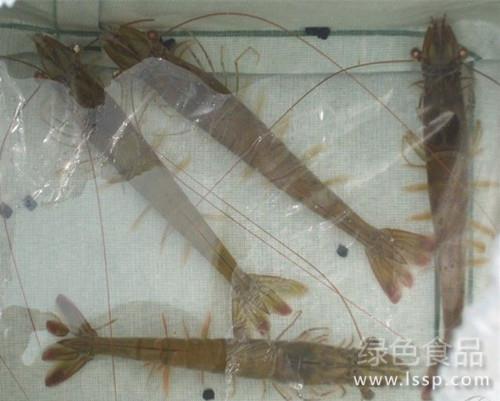
8 key points for the safe overwintering of broodstock shrimp: raise them well and get high breeding returns
Raise broodstock shrimp well for high breeding returns: 8 key points for safe overwintering of broodstock shrimp
-
China's pioneer in cotton marker breeding was initiated by Lu 05H9
Recently, the new red-flower-marked insect-resistant hybrid cotton variety Lu 05H9, bred by the Cotton Center of the Shandong Academy of Agricultural Sciences, passed the approval of the National Crop Variety Approval Committee. The red flower marker is like putting an anti-counterfeiting label on transgenic insect-resistant hybrid cotton. This variety pioneered red-flower trait marker breeding in cotton in China, and it is also the first of its kind worldwide. According to researcher Wang Liuming, the breeder of the variety, Lu 05H9 red-flower-marked insect-resistant cotton was developed over 12 years through distant hybridization, transferring the HB red-flower trait of wild G. bickii cotton onto cultivated
-
Construction of High-Yield Schisandra Orchards and Seedling Selection and Breeding Techniques
Terrain conditions: Different terrains have a considerable impact on cultivated Schisandra. Under natural conditions, Schisandra is mainly distributed on shaded forest edges and open woodlands in mountainous areas, growing naturally with extremely low yields. Through artificial cultivation and 5 years of observational practice, it has been proven that more than 10 hours of all-day sunlight, an open field of view, no major obstacles around, good ventilation and light penetration, access to water, drainage capability, and a soil layer of 50 cm constitute the optimal location. Water source conditions: Schisandra is relatively drought-tolerant. To obtain higher yields and ensure good plant growth, strengthen rapid division of growth cells
-
Successful breeding of new edible mushroom varieties
Recently, the golden pholiota mushroom cultivation trial carried out by the Hengxian Economic Crop Workstation was successful. Edible mushroom cultivation is one of the pillar industries of agriculture in Hengxian. In 2005, the county's edible mushroom cultivation area was 8.9 million sq m, with a total output of 39,663 tons and sales revenue of 144 million yuan. It was rated by the Agriculture Department of the autonomous region as "Guangxi's largest county for edible mushrooms" and was honored with the "2005 Guangxi Agricultural Emerging Advantage Industry Development Award" issued by the autonomous region government. In order to break through the situation of a single variety in the edible mushroom industry, the relevant departments of Hengxian
-
What is the most suitable body weight for snakes used for breeding
Like other poultry and livestock, snakes that are too heavy or too light in body weight cannot be used for breeding. Snakes used for breeding must be in their youth, and the same species also has specific weight limits, so as to ensure the quality of the breeding snakes. Generally speaking, the body weight specifications of breeding snakes must be controlled as follows: small snake species about 100-150 g each; medium snake species 150-350 g each; large snake species about 250-700 g each. Those that are too large or too small cannot be included in the range of breeding snakes.
-
What are the principles for selecting breeding pairs in dogs? A detailed explanation of the precautions
Selecting breeding pairs in dogs means choosing suitable male and female dogs to mate, that is, how to choose suitable mates for male and female dogs. The principles are as follows: (1) Choose male and female dogs that share common strengths to mate, so that their strengths are maintained, consolidated and developed in the offspring. (2) Male and female dogs that share common faults must not be mated; if they are mated, the faults of both will become more firmly established. (3) When good breeding dogs are in short supply, a dog with a certain strength may be mated with another dog that has the corresponding fault, using the strength to overcome the fault.
-
Snake breeding and selection is carried out in three steps, with the specific methods explained in detail
Strengthening the artificial breeding and selection of snakes is of great significance for improving the reproductive survival rate, growth and development speed, product quality and economic benefits of snakes. It is a task that cannot be neglected in a snake farm and must be carried out year-round with persistent effort. In breeding and selection, the following three points should be done well: 1. Selection of breeding eggs. The breeding eggs placed in incubation must be fresh and of high quality. Eggs stored for a long time have a low hatching rate and a high mortality rate, and the hatchling snakes are weak and grow slowly. Therefore, the female snake should be checked frequently before laying eggs, and when the eggs are found to be approaching the cloaca,
-
What kind of water is best for breeding kissing gouramis?
(1) Activated carbon filtered water: Put activated carbon into a plastic or enamel bucket, let tap water flow in from the inlet at the bottom and out from the outlet at the top. The filtered water is stored in an aquarium or other container and can be used both as daily rearing water and as breeding water for common tropical fish. (2) Ion exchange resin filtered water: Use ion exchange resin as the filter material. With the adsorption capacity of anion and cation exchange resins, calcium ions, magnesium ions and nitrite in the water can be adsorbed. The filtered water is neutral soft water, suitable for
-
Breeding Methods and Keeping Tips for the White Cloud Mountain Minnow
Morphological Characteristics of the White Cloud Mountain Minnow The White Cloud Mountain Minnow, also known as the White Cloud Mountain fish, Tang fish, red-tailed fish, or golden striped minnow, belongs to the carp family and originated in Guangdong, China. The White Cloud Mountain Minnow was first discovered on Baiyun Mountain in the northern suburbs of Guangzhou, Guangdong, China, hence the name White Cloud Mountain fish. The White Cloud Mountain Minnow is about 3-4 cm long, with a spindle-shaped, slender body that is slightly laterally compressed, a small head, large eyes, and a bluntly rounded snout. The back of the fish is tea-brown with a slight blue tint, the belly is silvery white, the dorsal fin and caudal fin are bright red, the tips of the pelvic fins are yellow, and the center of the tail is also red. From the snout
条件筛选